With more than 10‑year industry experience, Shandong Headpowder delivers full‑service pneumatic‑conveying systems and blowers, undertaking nationwide turn‑key powder‑handling projects.
Muscovite, a naturally occurring mica mineral, is prized for its excellent dielectric properties and thermal stability, making it a key component in numerous industrial applications. The efficient and reliable transportation of muscovite powder from storage to processing or packaging stages is essential for maintaining production efficiency and ensuring product quality. This article delves into the fundamental principles governing muscovite powder conveying and outlines the critical working scene characteristics that define effective handling solutions.
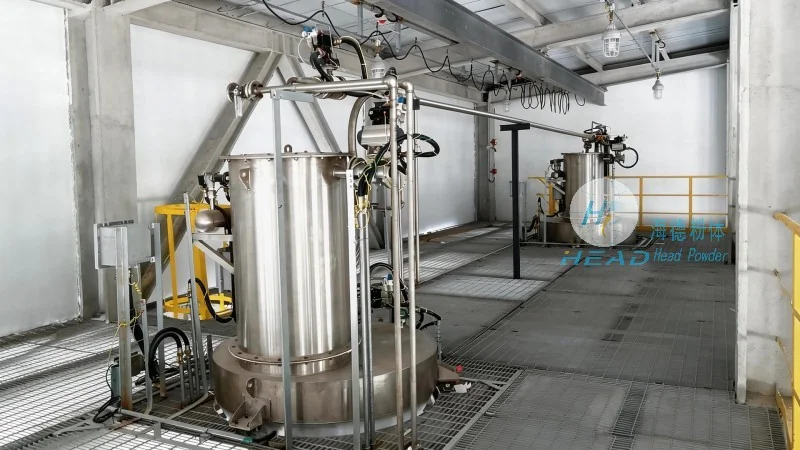
The primary principle of muscovite powder conveying revolves around the selection of appropriate equipment and system design to accommodate the unique physical properties of the powder. Muscovite powder is typically fine, lightweight, and prone to dust generation, which necessitates specialized handling techniques. Pneumatic conveying systems, which utilize compressed air to move powders through pipelines, are widely adopted for muscovite due to their ability to handle fine particles and maintain a controlled, dust-free environment. These systems can be categorized into positive pressure (blow-through) and negative pressure (suction) designs, each with distinct advantages depending on the application requirements.
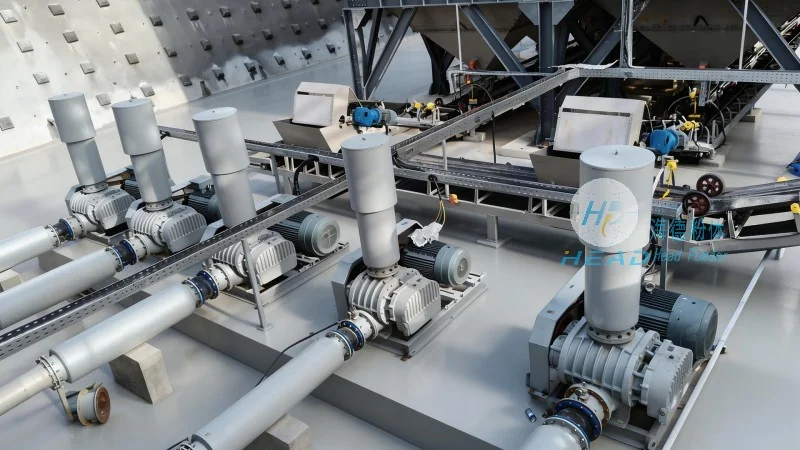
Positive pressure systems are often preferred for long-distance or high-volume conveying, as they can maintain consistent air flow and pressure, ensuring reliable transport of the powder. Negative pressure systems, on the other hand, are suitable for applications where dust containment is paramount, as they draw powders into the system while preventing air leakage. Mechanical conveying methods, such as screw conveyors and belt conveyors, are also used in certain scenarios, particularly when the powder is less prone to dust or when the system requires a more direct, contact-based transport method. However, these methods may not be as effective for fine muscovite powders, as they can lead to particle degradation or agglomeration.
HeadPowder Engineering Co., Ltd., a leading provider of powder handling solutions, emphasizes the importance of matching the conveying system to the specific characteristics of the muscovite powder. The company’s engineers conduct thorough analyses of particle size distribution, moisture content, and bulk density to determine the most suitable technology. For muscovite powder, which often exhibits a wide range of particle sizes and a tendency to stick to surfaces, HeadPowder recommends pneumatic systems with advanced filtration and agglomeration prevention measures. The company’s expertise in customizing solutions ensures that the conveying process is optimized for each client’s unique needs, minimizing operational challenges and maximizing efficiency.
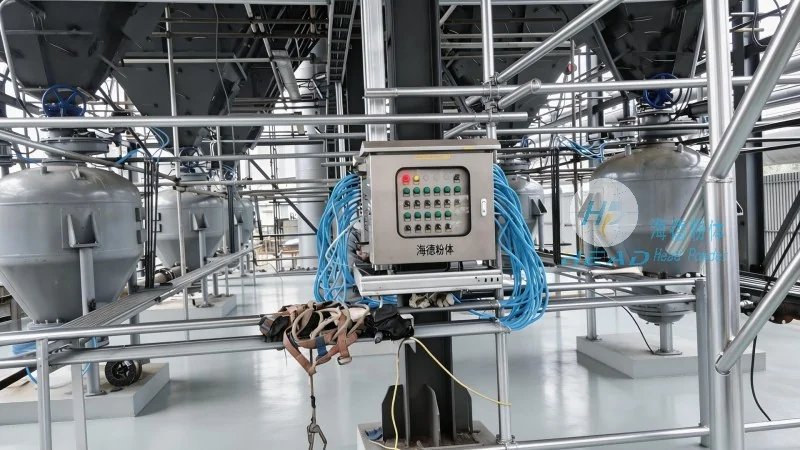
The working scene characteristics of muscovite powder conveying systems are shaped by several key factors, including the scale of the operation, the environmental conditions, and the downstream processes. In large-scale industrial settings, such as mining and processing facilities, the conveying systems must be robust, high-capacity, and capable of integrating with existing production lines. These systems are typically installed in dedicated powder handling areas, with storage silos, conveying pipelines, and processing units arranged in a logical flow to minimize material handling distances and reduce downtime.

 Shandong Headpowder Engineering Co., Ltd.
 156-6277-7102(Manager Zhang)
  0531-83386006
  Zhangqiu District, Jinan City, Shandong Province, China
telephone
WeChatconsult
top