With more than 10‑year industry experience, Shandong Headpowder delivers full‑service pneumatic‑conveying systems and blowers, undertaking nationwide turn‑key powder‑handling projects.
Shandong HeadPowder Engineering Co., Ltd. is a professional manufacturer specializing in pneumatic conveying equipment, with a base in Shandong, China. The company focuses on providing efficient solutions for material handling in various industrial applications, particularly in the lithium battery material sector. With years of experience in the field, HeadPowder has developed advanced pneumatic conveying systems tailored to the unique requirements of lithium battery material processing.
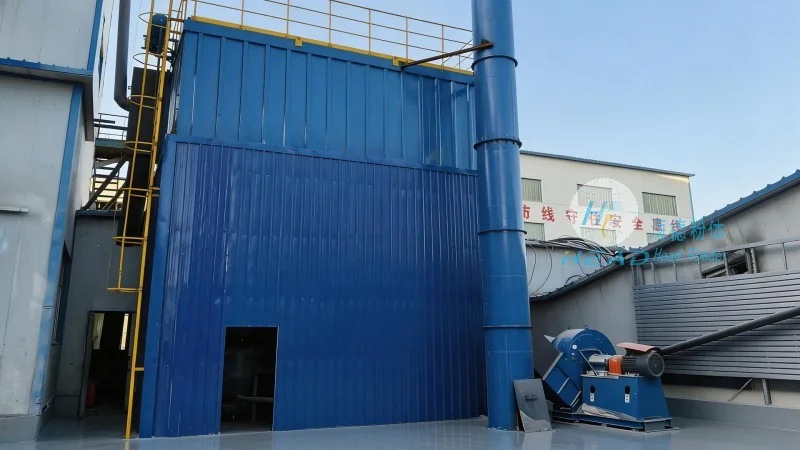
Pneumatic conveying equipment operates on the principle of using air to transport bulk materials. The system typically consists of a feeding device, a conveying pipeline, a control system, and a discharge device. For lithium battery materials, which often include powders and granules with specific properties like high conductivity or chemical reactivity, the design of the pneumatic conveyor must consider factors such as material flowability, particle size distribution, and dust control. The equipment may use positive pressure or negative pressure systems, with positive pressure being more common for conveying fine powders as it ensures a stable flow and reduces the risk of material degradation. The positive pressure system involves blowing air into the pipeline, creating a pressure higher than the ambient air, which propels the material forward. This method is effective for transporting materials over long distances and through complex piping networks, making it suitable for large-scale battery production facilities.
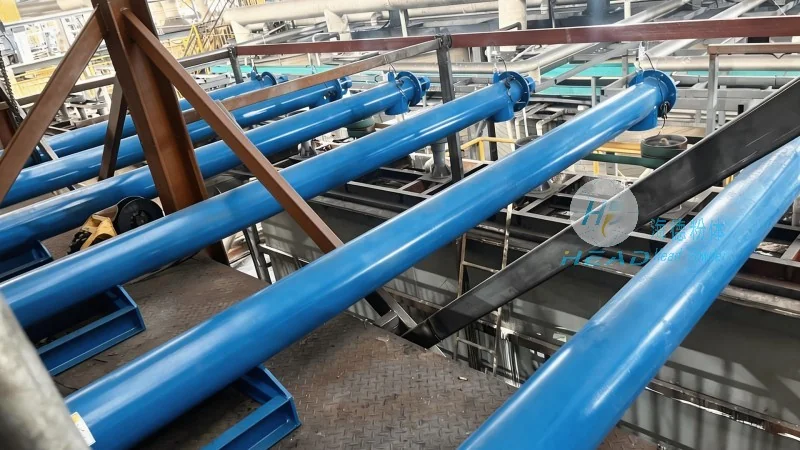
The working scene characteristics of pneumatic conveying equipment for lithium battery materials vary based on the production process and material handling requirements. In battery cell manufacturing, the equipment is used to transport raw materials like lithium carbonate, nickel oxide, and cobalt oxide from storage to processing lines. The key features in these scenarios include high precision in material dosing, minimal contamination, and compatibility with cleanroom environments. Additionally, the equipment must be able to handle materials with varying moisture content and particle sizes, ensuring consistent performance throughout the production cycle. In large-scale battery production facilities, the pneumatic conveyor may be integrated with automated material handling systems to enhance efficiency and reduce labor costs. The equipment is also designed to minimize material loss and prevent cross-contamination, which is critical in the production of high-purity battery materials. For example, in the mixing stage of battery materials, the pneumatic conveyor can deliver different raw materials to a central mixer with precise control, ensuring uniform composition and quality. In the packaging stage, the conveyor can transport finished battery materials to packaging lines, maintaining the integrity of the product and meeting strict quality standards.
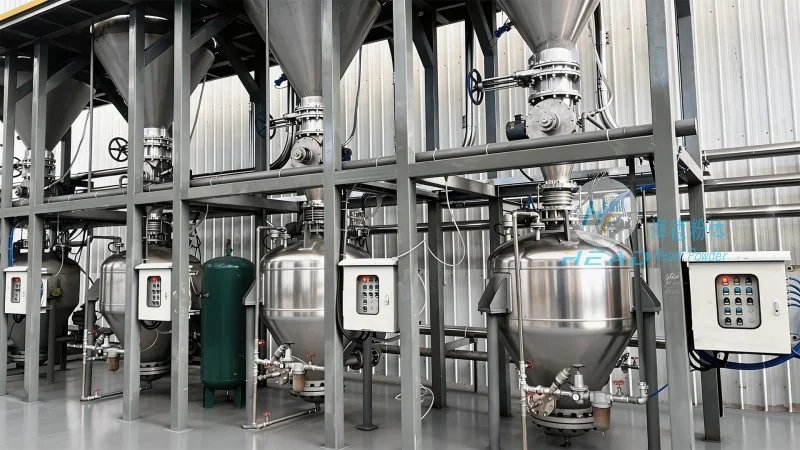
When used in the lithium battery material industry, pneumatic conveying equipment offers several advantages that make it an ideal choice for material handling. Firstly, it eliminates the need for mechanical contact between the material and the conveying system, reducing the risk of contamination and material degradation. This is particularly important for battery materials, which are sensitive to impurities and moisture. Secondly, the equipment can handle a wide range of material types and particle sizes, from fine powders to larger granules, without the need for additional processing. Thirdly, the system is highly flexible and can be easily integrated into existing production lines, allowing for scalability and adaptability to changing production demands. Finally, pneumatic conveying is energy-efficient compared to other material handling methods, such as belt conveyors or bucket elevators, making it a cost-effective solution for large-scale battery manufacturing.
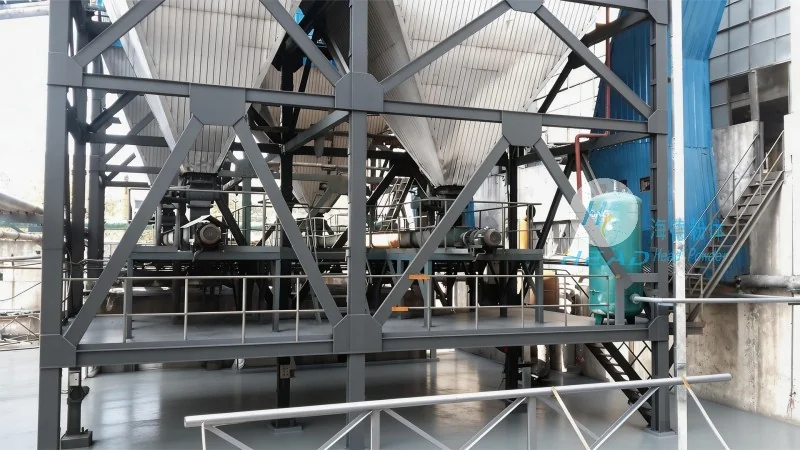
Shandong HeadPowder Engineering Co., Ltd. provides reliable pneumatic conveying equipment tailored to the specific needs of lithium battery material processing. By understanding the principles and working scene characteristics of these systems, manufacturers can optimize their material handling processes, improve efficiency, and ensure the quality of their battery products. The company's expertise in designing and manufacturing advanced pneumatic conveying solutions helps meet the growing demands of the lithium battery industry, supporting the transition to sustainable energy technologies.

 Shandong Headpowder Engineering Co., Ltd.
 156-6277-7102(Manager Zhang)
  0531-83386006
  Zhangqiu District, Jinan City, Shandong Province, China
telephone
WeChatconsult
top