With more than 10‑year industry experience, Shandong Headpowder delivers full‑service pneumatic‑conveying systems and blowers, undertaking nationwide turn‑key powder‑handling projects.
Anhydrous aluminum trichloride is a critical chemical compound used across multiple industries, and its efficient handling through powder conveying systems requires specialized design considerations. This article explores the fundamentals of anhydrous aluminum trichloride powder conveying and the key design principles that ensure safe, reliable, and effective operation. HeadPowder, a prominent company based in Shandong, China, provides tailored solutions for this application, leveraging extensive expertise in powder handling technology.
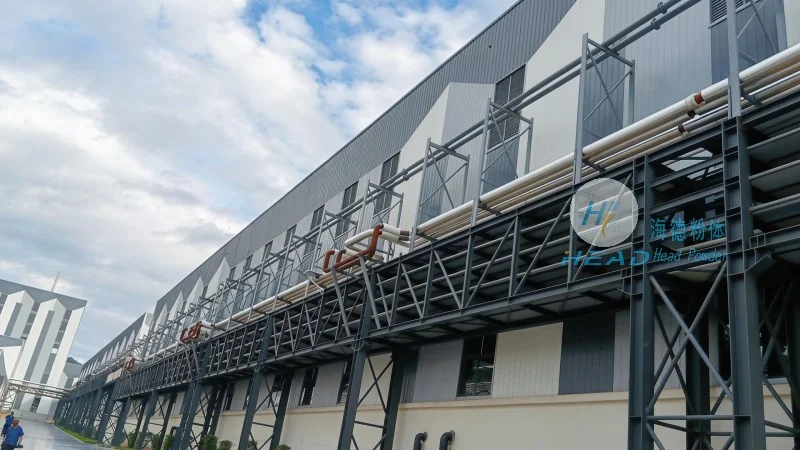
Anhydrous aluminum trichloride is highly reactive and hygroscopic, meaning it readily absorbs moisture from the air. This property makes its transportation and storage challenging, as exposure to water can cause exothermic reactions and degrade the material. Powder conveying systems for anhydrous aluminum trichloride must therefore prioritize moisture control and minimize particle degradation. HeadPowder specializes in designing systems that address these challenges, ensuring the chemical integrity of the material is maintained throughout the conveying process.
The design of anhydrous aluminum trichloride powder conveying systems is guided by several critical principles to ensure safety and efficiency. First, the system must be fully sealed and airtight to prevent moisture ingress. This typically involves the use of stainless steel or corrosion-resistant materials for all components, including hoppers, pipelines, and valves. Second, the conveying mechanism must be gentle to avoid agglomeration or particle breakage. Low-speed, high-torque conveyors or controlled pneumatic systems are often employed to achieve this, as they minimize mechanical stress on the powder. Third, effective dust control measures are essential, as fine powders can pose respiratory and environmental hazards. This includes the integration of dust collectors, filtration systems, and proper ventilation to capture and remove airborne particles. Finally, all system components must be chemically compatible with anhydrous aluminum trichloride, ensuring no reaction or degradation occurs over time.
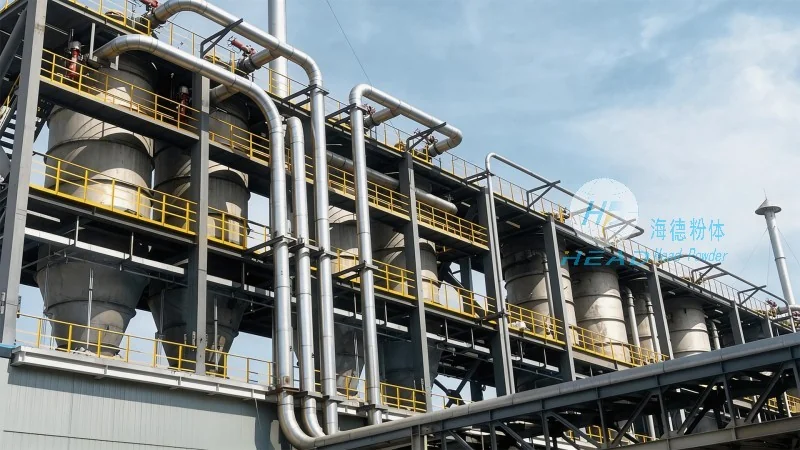
HeadPowder's anhydrous aluminum trichloride powder conveying systems incorporate advanced components and technologies to meet these design principles. Pneumatic conveying is a common method due to its ability to handle fine powders and maintain low moisture levels. These systems use compressed air to transport the powder through sealed pipelines, with air flow carefully regulated to prevent particle degradation. The system typically includes a hopper or feeder, which is designed to feed the powder at a consistent rate. Rotary valves or star feeders are often used to control discharge, ensuring smooth and controlled material flow. Additionally, a dust collection system, such as a cyclone or baghouse, is integrated to capture any escaped particles, maintaining environmental safety and compliance. These components work in unison to create a closed-loop system that minimizes contamination and ensures the powder remains in its anhydrous state.
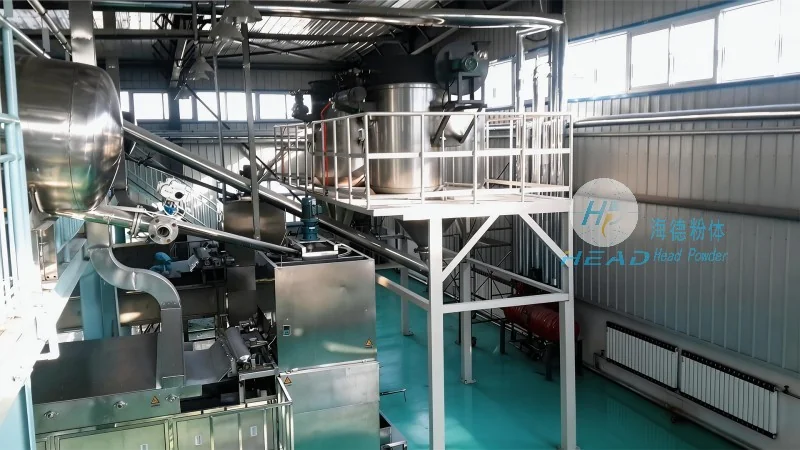
Anhydrous aluminum trichloride is widely utilized in industries such as chemical manufacturing, petroleum refining, and aluminum production. In chemical manufacturing, it serves as a catalyst in organic synthesis and the production of other aluminum compounds. In petroleum refining, it is employed as an alkylation catalyst to improve gasoline octane rating. The efficient conveying of anhydrous aluminum trichloride is vital in these applications to maintain product quality and process efficiency. Industries relying on this material benefit from HeadPowder's specialized systems, which are engineered to handle the unique challenges associated with anhydrous aluminum trichloride powder, including moisture sensitivity and dust control.
In conclusion, the design of anhydrous aluminum trichloride powder conveying systems is a critical factor in ensuring the safe and effective handling of this important chemical. The principles of moisture control, gentle handling, dust management, and material compatibility are essential to maintain the powder's integrity and operational safety. HeadPowder, with its expertise in powder handling technology and presence in Shandong, China, provides tailored solutions that adhere to these principles, helping industries meet their operational needs and product quality standards. By prioritizing these design considerations, companies can ensure the reliable transportation of anhydrous aluminum trichloride powder, supporting their production processes and maintaining compliance with safety regulations.

 Shandong Headpowder Engineering Co., Ltd.
 156-6277-7102(Manager Zhang)
  0531-83386006
  Zhangqiu District, Jinan City, Shandong Province, China
telephone
WeChatconsult
top