With more than 10‑year industry experience, Shandong Headpowder delivers full‑service pneumatic‑conveying systems and blowers, undertaking nationwide turn‑key powder‑handling projects.
Understanding the Ceramic Particle Pneumatic Conveying System and Its Design Principles
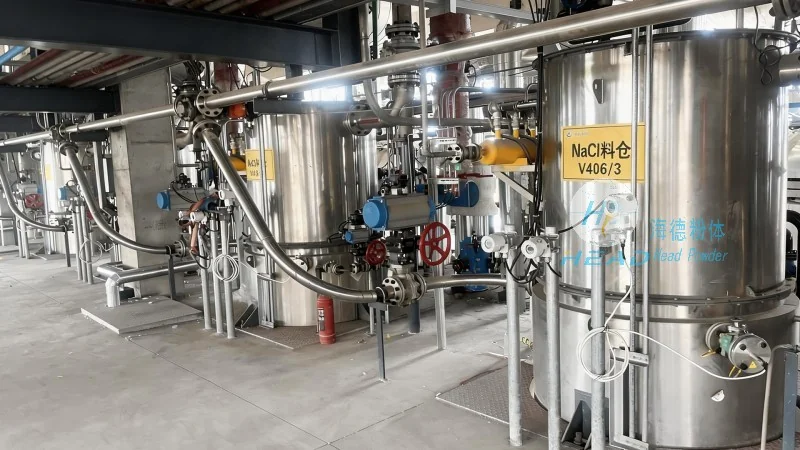
For industrial applications involving the transport of ceramic particles, a specialized system known as the ceramic particle pneumatic conveying system is often employed. This technology facilitates the efficient movement of ceramic materials from one location to another within a facility, leveraging the principles of pneumatic transport. The system is particularly valuable in environments where traditional mechanical conveyors may not be suitable due to the delicate nature of ceramic particles or the need for contamination-free handling.
HeadPowder, or Shandong HeadPowder Engineering Co., Ltd., is a reputable company based in Shandong, China, dedicated to providing advanced pneumatic conveying systems. With a focus on innovation and precision engineering, HeadPowder has established itself as a trusted partner for industries requiring reliable and efficient material handling solutions. The company’s expertise lies in designing and manufacturing systems tailored to the unique demands of ceramic particle transport, ensuring optimal performance and durability.
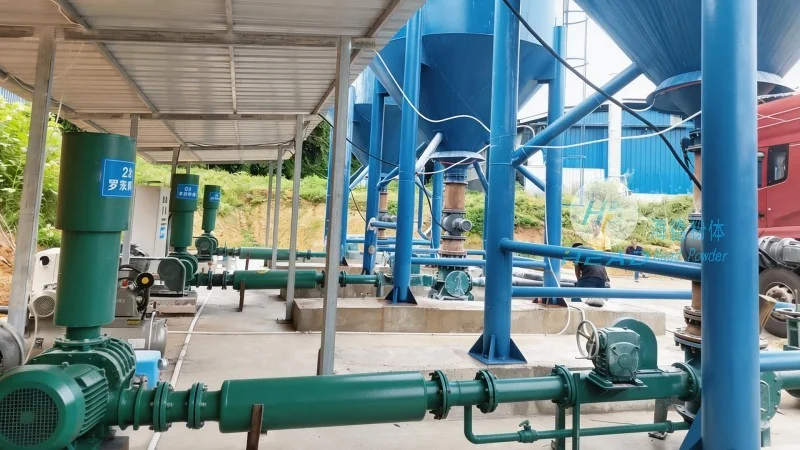
The ceramic particle pneumatic conveying system consists of several key components that work in tandem to achieve effective material transport. These components include the hopper or feeder, which holds the ceramic particles and controls the flow rate; the air supply system, which generates the necessary air pressure or vacuum to move the particles; the conveying line, which is typically made of materials resistant to abrasion and corrosion, such as stainless steel or specialized polymers; and the receiver or discharge unit, where the particles are deposited at the destination. Each component plays a critical role in maintaining the integrity of the ceramic particles and ensuring the system operates smoothly.
The design of a ceramic particle pneumatic conveying system is guided by several fundamental principles aimed at optimizing performance, minimizing particle degradation, and ensuring operational efficiency. One of the primary principles is the selection of appropriate air velocity and pressure. The air velocity must be high enough to overcome the gravitational forces acting on the particles but low enough to prevent excessive abrasion or damage to the particles. This balance is crucial for maintaining the quality of the ceramic material throughout the conveying process. Another key principle is the consideration of particle size, shape, and density. These characteristics influence the flow behavior of the particles in the conveying line and affect the system’s design parameters, such as the diameter of the conveying line and the type of air distribution. Additionally, the system’s design must account for the potential for particle segregation or agglomeration, which can impact the uniformity of the conveyed material. To mitigate these issues, engineers may incorporate features like in-line mixers or vibration systems to ensure consistent particle distribution.
Implementing a ceramic particle pneumatic conveying system offers numerous advantages for industrial operations. One of the most significant benefits is the ability to handle delicate or fragile ceramic particles without the risk of breakage or contamination. Unlike mechanical conveyors, which may cause abrasion or impact damage, pneumatic systems use air to move particles, preserving their integrity. This is particularly important for high-value ceramic materials used in applications such as electronics, aerospace, or pharmaceuticals, where even minor damage can affect product performance. Another advantage is the flexibility of the system, which allows for horizontal, vertical, or inclined transport of ceramic particles. This versatility enables the integration of the system into existing production lines or facilities with complex layouts. Furthermore, pneumatic conveying systems can be designed to operate in a closed loop, reducing dust emissions and improving workplace safety. The closed system also helps maintain a clean environment, which is essential for industries where contamination control is critical.
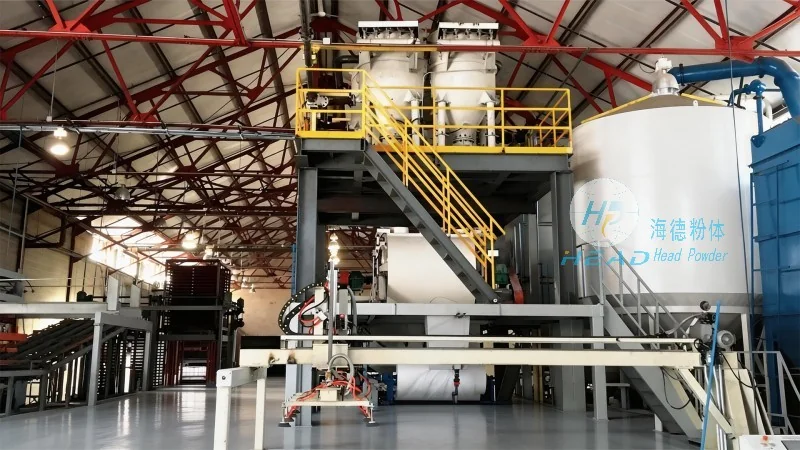
Ceramic particle pneumatic conveying systems are widely used across various industries due to their adaptability and efficiency. In the ceramics industry itself, these systems are employed for transporting raw materials like clay, feldspar, and silica to production lines. They are also used in the manufacturing of ceramic components, such as tiles, sanitaryware, and refractory materials, where consistent material handling is essential for quality control. Beyond the ceramics sector, the system finds applications in the electronics industry for conveying ceramic powders used in semiconductor manufacturing. The pharmaceutical industry also utilizes pneumatic conveying systems to transport ceramic-based excipients or fillers, ensuring a hygienic and contamination-free process. Additionally, in the aerospace and automotive sectors, ceramic particle pneumatic conveying systems are used for handling ceramic composites or coatings, which are critical for high-performance applications.
In conclusion, the ceramic particle pneumatic conveying system is a sophisticated and essential technology for industries dealing with ceramic materials. Its design principles, which focus on maintaining particle integrity, optimizing air flow, and ensuring operational efficiency, are crucial for achieving successful material transport. Companies like Shandong HeadPowder Engineering Co., Ltd. play a vital role in developing and implementing these systems, providing tailored solutions that meet the specific needs of their clients. By understanding the core components and design principles of such systems, industries can enhance their production processes, improve product quality, and ensure compliance with safety and environmental standards. The continued advancement of pneumatic conveying technology, particularly in the context of ceramic particle handling, will likely lead to even more efficient and reliable systems in the future.

 Shandong Headpowder Engineering Co., Ltd.
 156-6277-7102(Manager Zhang)
  0531-83386006
  Zhangqiu District, Jinan City, Shandong Province, China
telephone
WeChatconsult
top