With more than 10‑year industry experience, Shandong Headpowder delivers full‑service pneumatic‑conveying systems and blowers, undertaking nationwide turn‑key powder‑handling projects.
Understanding the technology of lithium hydroxide pneumatic conveying is crucial for industries dealing with this chemical. Pneumatic conveying systems are widely used for transporting bulk materials like lithium hydroxide, offering advantages such as dust-free operation, flexibility in layout, and the ability to handle hazardous materials safely. This article explores the fundamental aspects of lithium hydroxide pneumatic conveying, focusing on its design principles and practical applications.
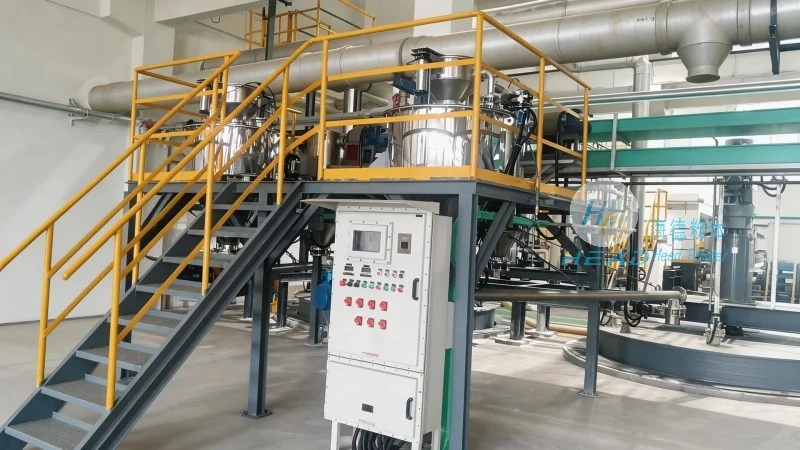
Lithium hydroxide (LiOH) is a white solid chemical compound used in various industrial applications, including battery manufacturing, chemical synthesis, and as a desiccant. When it comes to transporting LiOH, pneumatic conveying systems provide an efficient and reliable method. Unlike traditional mechanical conveying systems, pneumatic conveyors use air or other gases to move the material through a pipeline. This method eliminates the need for mechanical components like belts or buckets, reducing maintenance and operational costs. The process involves generating a flow of air or gas within the pipeline, which lifts and transports the material particles. The key to successful operation lies in the proper design of the system, which must account for the material's properties, such as particle size, density, and moisture content.
HeadPowder, or Shandong HeadPowder Engineering Co., Ltd., is a leading manufacturer and supplier of pneumatic conveying systems tailored for handling lithium hydroxide and other bulk chemicals. With a strong presence in China, particularly in Shandong province, the company specializes in designing, manufacturing, and installing customized conveying solutions that meet the specific needs of clients. HeadPowder's expertise lies in understanding the unique challenges associated with transporting lithium hydroxide, such as its reactivity and potential for dust generation. By leveraging advanced engineering and material science, the company ensures that its systems are not only efficient but also safe and compliant with industry standards.
The design of a lithium hydroxide pneumatic conveying system involves several critical principles that ensure optimal performance and safety. The first consideration is the selection of the appropriate conveying medium, typically air or a mixture of air and inert gas. The choice depends on the material's characteristics and the required conveying distance. For lithium hydroxide, which is hygroscopic and can absorb moisture from the air, using dry air or a desiccant-treated air stream is essential to prevent degradation of the material. The system design must also account for the particle size distribution of the LiOH, as larger particles may require higher air velocities to maintain suspension. This is often determined through computational fluid dynamics (CFD) simulations and empirical testing to ensure that the material remains in a fluidized state throughout the pipeline.
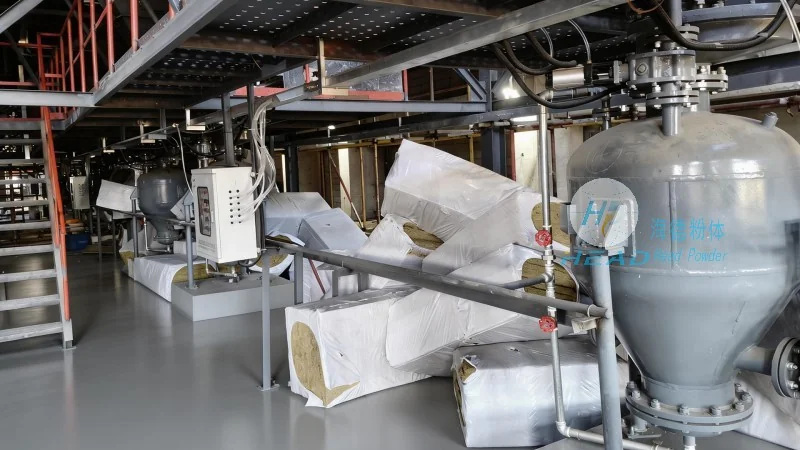
Another crucial design aspect is the pipeline layout and components. The system typically includes a hopper for material storage, a feeder to control the flow rate, a conveying line with appropriate bends and fittings, and a receiver for the discharged material. The design must minimize pressure drops and ensure that the air velocity is sufficient to prevent material settling or blockages. HeadPowder employs advanced design software to model the system, allowing for adjustments to the pipeline diameter, air velocity, and pressure to achieve the desired conveying capacity. The system also incorporates safety features, such as explosion-proof motors and dust collection systems, to handle the potential hazards associated with lithium hydroxide dust.
Each component of a lithium hydroxide pneumatic conveying system plays a vital role in the overall operation. The hopper serves as the storage vessel, holding the bulk material until it is needed. It is designed with a sloped bottom to facilitate material flow and prevent caking. The feeder, often a rotary valve or a screw feeder, regulates the material discharge rate from the hopper. This control is essential to maintain a consistent air flow and prevent surges or blockages in the pipeline. The conveying line is made of materials resistant to corrosion and chemical attack, such as stainless steel or specialized polymers, to ensure durability and safety. The line includes bends and elbows that are carefully designed to minimize pressure losses and maintain the material's suspension. The receiver, typically a storage tank or a discharge hopper, collects the conveyed material and allows for further processing or storage. It is equipped with a venting system to release any trapped air or gas, preventing pressure buildup.
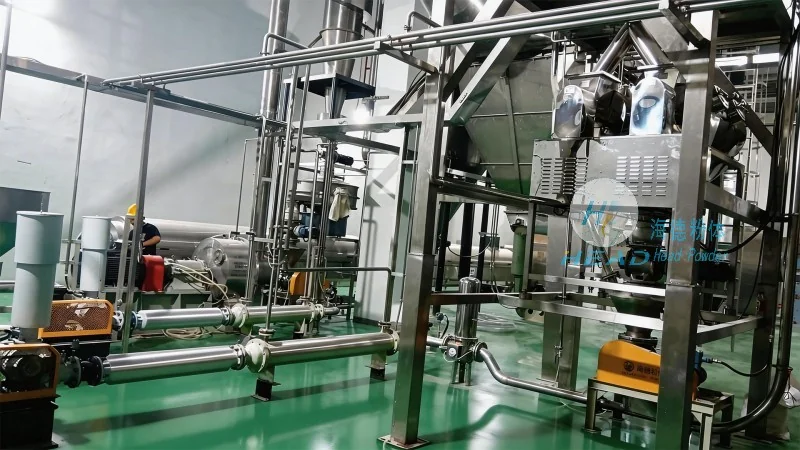
Compared to traditional conveying methods, lithium hydroxide pneumatic conveying offers several advantages that make it a preferred choice for many industries. One of the primary benefits is the elimination of dust and contamination, as the material is enclosed within the pipeline. This not only improves workplace safety but also maintains the purity of the lithium hydroxide, which is critical for applications like battery production. The system's flexibility allows for easy integration into existing facilities, with the ability to reconfigure the pipeline layout as needed. Additionally, pneumatic conveying systems can handle long distances and multiple destinations, making them suitable for large-scale operations. The reduced need for mechanical parts also leads to lower maintenance costs and longer equipment lifespan. Furthermore, the system can be easily scaled up or down to accommodate changes in production volume, providing cost-effective solutions for growing businesses.
Lithium hydroxide pneumatic conveying systems are widely used in various industries that require the handling of bulk chemicals. The most prominent application is in the battery manufacturing industry, where lithium hydroxide is used as a precursor for lithium carbonate and lithium hydroxide anodes. The system ensures that the material is transported safely and efficiently from storage to the production line, maintaining its quality and preventing any contamination. Other industries that benefit from this technology include chemical manufacturing, pharmaceuticals, and food processing, where the need for clean and dust-free handling is paramount. The versatility of pneumatic conveying makes it suitable for a wide range of materials, including powders, granules, and fine particles, making it a reliable solution for diverse industrial needs.
In conclusion, lithium hydroxide pneumatic conveying is a sophisticated and efficient method for transporting bulk materials. The success of such systems depends heavily on the proper design and implementation, which must consider the material's properties, the conveying distance, and safety requirements. Companies like Shandong HeadPowder Engineering Co., Ltd. play a vital role in providing customized solutions that meet the specific needs of clients, ensuring that the conveying process is both effective and safe. By adhering to the design principles outlined above and leveraging the expertise of experienced manufacturers, industries can achieve reliable and cost-effective transportation of lithium hydroxide, supporting their production processes and maintaining high standards of quality and safety.

 Shandong Headpowder Engineering Co., Ltd.
 156-6277-7102(Manager Zhang)
  0531-83386006
  Zhangqiu District, Jinan City, Shandong Province, China
telephone
WeChatconsult
top