With more than 10‑year industry experience, Shandong Headpowder delivers full‑service pneumatic‑conveying systems and blowers, undertaking nationwide turn‑key powder‑handling projects.
When it comes to the pneumatic conveying of wheat flour, selecting the right system is crucial for efficiency, cost-effectiveness, and product quality. Two primary methods are widely used: positive pressure and negative pressure systems. Understanding the differences and how to distinguish between them is essential for making an informed decision. This article will explore the key aspects of both systems, their applications, and the factors to consider when choosing the appropriate one for wheat flour handling.
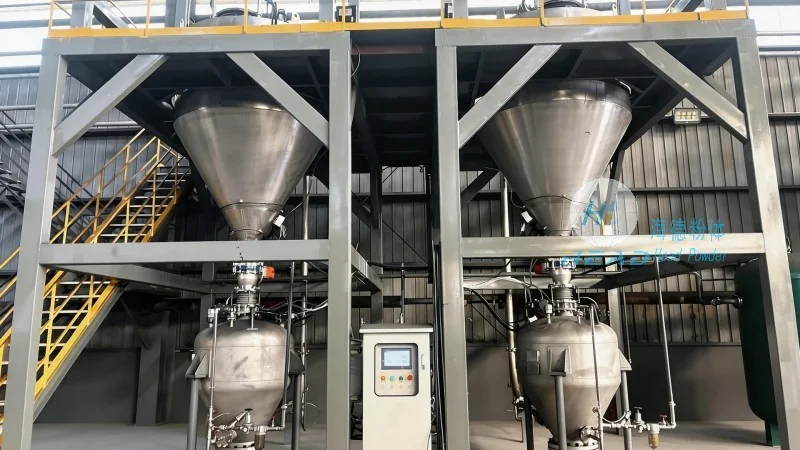
Pneumatic conveying is a method of transporting bulk materials like wheat flour using air or gas as the conveying medium. It offers advantages such as reduced dust, improved safety, and the ability to transport materials over long distances without the need for complex mechanical components. The two main types of pneumatic conveying systems are positive pressure and negative pressure, each with distinct characteristics and applications.
Positive pressure systems operate by blowing air or gas into the conveying line, creating a pressure higher than the ambient air pressure. The material is then drawn into the line and transported to the destination. This method is often used for short to medium distances and can handle a wide range of materials, including wheat flour. The primary advantage of positive pressure systems is their ability to handle abrasive or sticky materials without causing excessive wear on the equipment. They are also suitable for applications where the material needs to be conveyed to multiple destinations from a single source, as the system can be branched out to different points.
For wheat flour, positive pressure systems are commonly used in scenarios where the material needs to be transported from a silo or storage bin to a processing or packaging area. The high pressure ensures that the flour moves efficiently through the system, minimizing the risk of clogging or blockages. Additionally, positive pressure systems are generally more cost-effective for shorter conveying distances, as they require less complex equipment and maintenance compared to negative pressure systems.
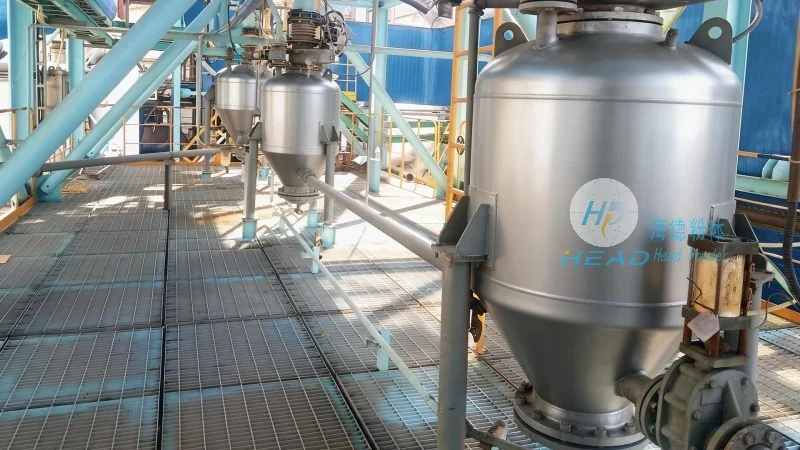
Negative pressure systems, on the other hand, operate by creating a vacuum or lower pressure inside the conveying line compared to the ambient air pressure. The material is then drawn into the line by the vacuum and transported to the destination. This method is typically used for longer distances and is ideal for applications where the material needs to be collected from multiple points and transported to a single location. The main advantage of negative pressure systems is their ability to handle large volumes of material over long distances with minimal energy consumption.
In the context of wheat flour, negative pressure systems are often used in situations where the flour needs to be transported from a processing area back to a storage silo or where multiple collection points are involved. The vacuum created in the system helps to draw the flour into the line without the need for high-pressure air, reducing energy costs. However, negative pressure systems are more susceptible to dust and contamination, as the lower pressure can allow external air to enter the system, potentially affecting the quality of the flour.
When deciding between positive and negative pressure for wheat flour pneumatic conveying, several factors need to be considered. The first is the distance of the conveying line. Positive pressure systems are generally more suitable for shorter distances, typically up to a few hundred meters, while negative pressure systems are better for longer distances, often exceeding a kilometer. The second factor is the material characteristics. Positive pressure systems are preferred for abrasive or sticky materials like wheat flour, as they can handle these materials without causing excessive wear or blockages. Negative pressure systems are more suitable for non-abrasive materials that are less likely to cause clogging.
The third factor is the number of collection points. Positive pressure systems are ideal for applications where the material needs to be conveyed to multiple destinations from a single source, as the system can be branched out to different points. Negative pressure systems are better for applications where the material needs to be collected from multiple points and transported to a single location. The fourth factor is energy consumption. Positive pressure systems typically consume more energy than negative pressure systems, as they require higher air pressure to move the material. Negative pressure systems are more energy-efficient for longer distances.
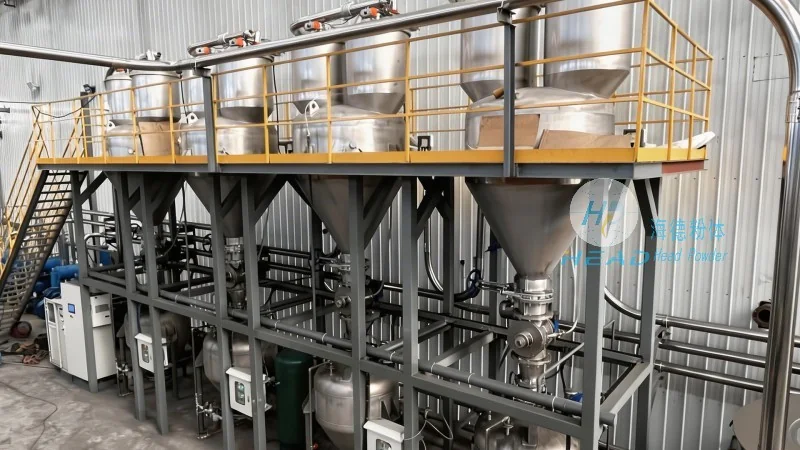
Both positive and negative pressure pneumatic conveying systems have specific applications in wheat flour handling. Positive pressure systems are commonly used in flour mills for transporting flour from storage bins to processing equipment, such as mixers or packaging machines. They are also used in bakeries for transporting flour from storage to production lines. Negative pressure systems are often used in flour mills for transporting flour from processing areas back to storage silos, as well as in applications where the flour needs to be collected from multiple points and transported to a central location.
When selecting between positive and negative pressure pneumatic conveying systems for wheat flour, several factors must be taken into account. The first is the conveying distance, as mentioned earlier. The second is the material characteristics, including its abrasiveness, stickiness, and moisture content. The third is the number of collection points and destinations. The fourth is the energy consumption and cost of operation. The fifth is the environmental considerations, such as dust control and safety. Finally, the system's reliability and maintenance requirements should also be considered.
Choosing between positive pressure and negative pressure for wheat flour pneumatic conveying depends on various factors, including the conveying distance, material characteristics, number of collection points, energy consumption, and environmental considerations. Positive pressure systems are generally more suitable for shorter distances and abrasive materials, while negative pressure systems are better for longer distances and non-abrasive materials. By carefully evaluating these factors, one can select the appropriate system to ensure efficient and cost-effective wheat flour handling. For more information on pneumatic conveying systems for wheat flour, contact Shandong HeadPowder Engineering Co., Ltd., a leading provider of bulk material handling solutions in China.

 Shandong Headpowder Engineering Co., Ltd.
 156-6277-7102(Manager Zhang)
  0531-83386006
  Zhangqiu District, Jinan City, Shandong Province, China
telephone
WeChatconsult
top