

Principle and Classification Application of Aluminum Nitride Pneumatic Conveying
HeadPowder, a leading enterprise in the field of powder handling technology, specializes in the design, manufacturing, and application of pneumatic conveying systems for materials like aluminum nitride. This article provides an in-depth look at the working principles of aluminum nitride pneumatic conveying and its various classification applications.
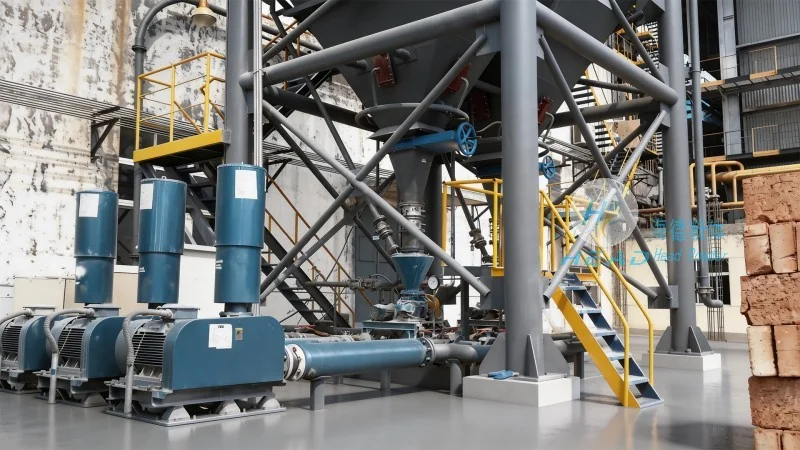
Understanding Aluminum Nitride Pneumatic Conveying: Core Principles
Pneumatic conveying is a method of transporting bulk materials, such as aluminum nitride, through a pipeline using a gas stream, typically air or other gases. The process involves creating a flow of gas that moves the material particles along the pipeline. For aluminum nitride, which is a high-purity ceramic material with excellent thermal conductivity and dielectric properties, the choice of conveying system is critical to maintain its quality and prevent degradation.
The fundamental principle of pneumatic conveying for aluminum nitride is based on the interaction between the gas and the solid particles. The gas velocity must be sufficient to overcome the gravitational force and the frictional resistance of the particles within the pipeline. This is often achieved by using a combination of pressure and velocity control, ensuring that the material is transported without excessive wear or agglomeration.
Types of Pneumatic Conveying Systems for Aluminum Nitride
There are two primary classifications of pneumatic conveying systems: dilute-phase and dense-phase. Dilute-phase systems operate at higher gas velocities, typically above 20 m/s, and are suitable for materials that are free-flowing and non-abrasive. Dense-phase systems, on the other hand, operate at lower velocities and higher pressure, which is ideal for materials like aluminum nitride that are sensitive to particle breakage or require gentle handling.
HeadPowder offers both dilute-phase and dense-phase solutions tailored to the specific requirements of aluminum nitride applications. For instance, dilute-phase systems are commonly used in the production of aluminum nitride powders where the material needs to be transported over short distances with minimal pressure drop. Dense-phase systems, however, are preferred in applications where the material is being transported over longer distances or where the risk of particle degradation is higher.
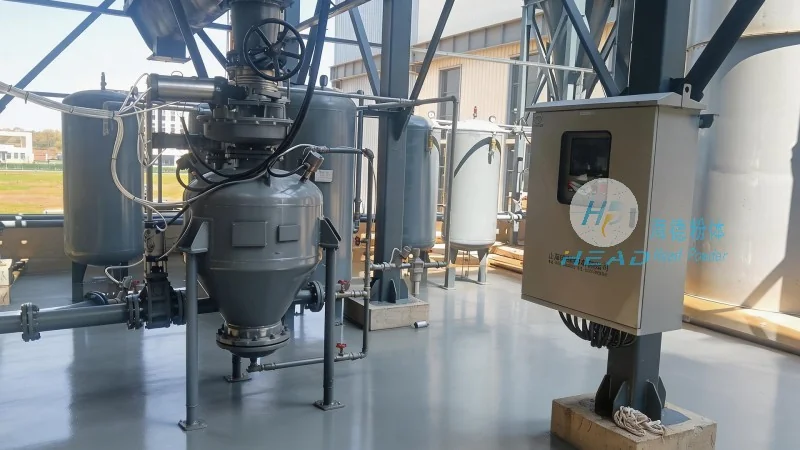
Application Scenarios in the Semiconductor and Electronics Industry
Aluminum nitride is widely used in the semiconductor and electronics industry due to its excellent thermal conductivity and dielectric properties. Pneumatic conveying systems are essential for handling aluminum nitride powders in these applications, as they ensure the material is delivered to the processing equipment without contamination or loss of quality. HeadPowder's systems are designed to meet the stringent requirements of these industries, including high-purity environments and precise control over particle size distribution.
In semiconductor manufacturing, aluminum nitride is used as a substrate material for high-power devices and as a thermal interface material. The pneumatic conveying systems provided by HeadPowder are capable of transporting these powders with high accuracy and reliability, ensuring that the final products meet the exact specifications required by the industry.
Application in the Ceramic and Advanced Materials Sector
Beyond the semiconductor industry, aluminum nitride is also used in the production of advanced ceramics and composite materials. Pneumatic conveying is crucial in these processes as it allows for the efficient and controlled addition of aluminum nitride powders to the mixing and molding stages. HeadPowder's systems are designed to handle the varying particle sizes and flow characteristics of aluminum nitride, ensuring consistent material addition and product quality.
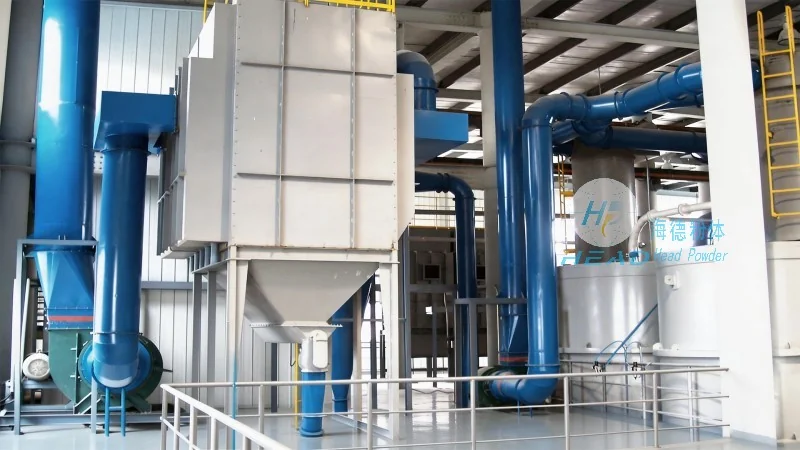
For example, in the production of aluminum nitride-based ceramics, the material is often mixed with other additives before being pressed or sintered. The pneumatic conveying systems from HeadPowder enable precise control over the proportion of aluminum nitride in the mixture, which is critical for achieving the desired mechanical and thermal properties of the final product.
Advantages of Using Pneumatic Conveying for Aluminum Nitride
Compared to traditional mechanical conveying methods, pneumatic conveying offers several advantages for aluminum nitride. These include the ability to handle materials that are difficult to transport mechanically, such as fine powders that are prone to caking or agglomeration. Additionally, pneumatic systems can be designed to operate in closed-loop environments, minimizing dust emissions and ensuring compliance with environmental regulations.
Another key advantage is the flexibility of pneumatic conveying systems. They can be easily integrated into existing production lines and can be adjusted to accommodate changes in material flow rates or pipeline configurations. This adaptability makes them suitable for a wide range of aluminum nitride applications, from small-scale laboratory use to large-scale industrial production.
Conclusion
Aluminum nitride pneumatic conveying is a critical technology for the efficient and reliable handling of this high-value material. HeadPowder, with its expertise in powder handling systems, provides comprehensive solutions that address the unique challenges of aluminum nitride transportation. By understanding the working principles and classification applications of pneumatic conveying, industries can optimize their processes and enhance the quality of their aluminum nitride-based products.