With more than 10‑year industry experience, Shandong Headpowder delivers full‑service pneumatic‑conveying systems and blowers, undertaking nationwide turn‑key powder‑handling projects.
High-pressure dense-phase pneumatic conveying equipment is a critical component in modern industrial material handling systems, offering efficient and reliable transport of bulk materials over long distances. This technology has revolutionized the way industries manage powder and granular materials, providing solutions that enhance productivity, reduce operational costs, and improve safety. The equipment operates by using high-pressure air or gas to move material through a pipeline, with the dense-phase conveying method ensuring that the material is conveyed in a solid-like state, minimizing particle separation and degradation.
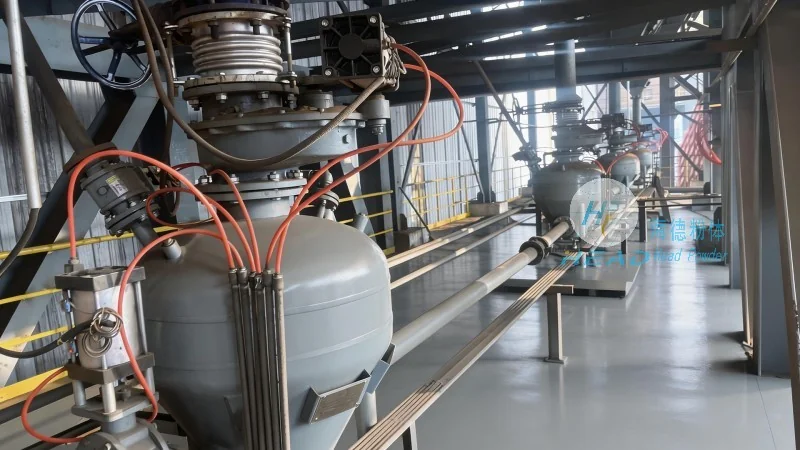
HeadPowder, or Shandong HeadPowder Engineering Co., Ltd., is a leading manufacturer and supplier of advanced pneumatic conveying solutions. With its headquarters located in Shandong, China, the company specializes in designing, manufacturing, and installing high-pressure dense-phase pneumatic conveying systems tailored to meet the diverse needs of various industries, including food processing, chemical manufacturing, pharmaceuticals, and mining. HeadPowder's commitment to innovation and quality has established it as a trusted partner for businesses seeking efficient material handling solutions.
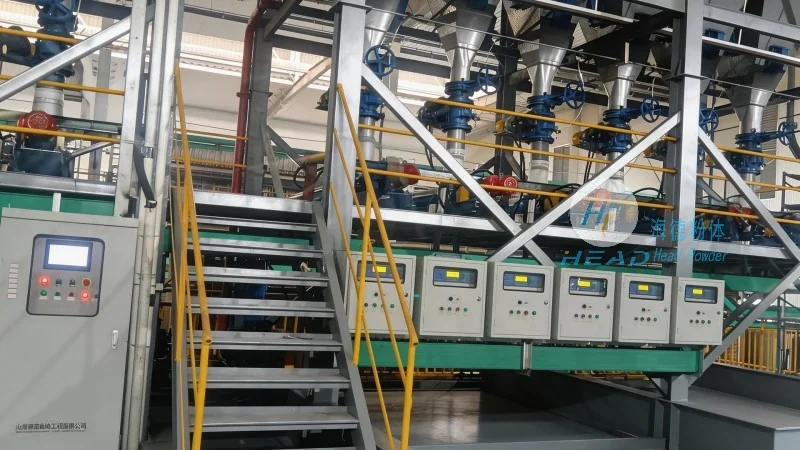
The core principle of high-pressure dense-phase pneumatic conveying involves the use of compressed air or gas to create a high-pressure environment within the conveying pipeline. This pressure is applied to the material, which is typically fed into the system via a hopper or feeder. The high-pressure air then lifts and propels the material particles through the pipeline. Unlike traditional dilute-phase conveying, where material is suspended in a low-concentration air stream, dense-phase conveying maintains a higher concentration of material in the pipeline, resulting in lower air consumption and more efficient transport. The equipment utilizes a controlled pressure system to ensure that the material moves in a continuous, stable flow, minimizing the risk of blockages and ensuring consistent performance.
The operation process of high-pressure dense-phase pneumatic conveying equipment involves several key steps, each designed to ensure optimal performance and material handling. First, the material is fed into the system from a storage hopper or silo through a feeder, which controls the flow rate and ensures a consistent supply of material. The feeder is typically equipped with a valve or gate to regulate the amount of material entering the conveying line. Next, the high-pressure air or gas is supplied to the system, usually from a compressor or air tank, and is introduced into the pipeline at a specific pressure level. The pressure is maintained at a level sufficient to move the material through the entire conveying distance, accounting for pipeline length, elevation changes, and any bends or fittings. As the material is conveyed, it travels through the pipeline, often passing through a series of sections including straight runs, elbows, and possibly a filter or separator at the discharge end. The discharge end is equipped with a receiver or hopper where the material is collected, and the system may include a vent or pressure relief valve to manage any excess pressure. Throughout the process, the equipment is monitored by a control system that adjusts the air pressure and flow rate as needed to maintain optimal conveying conditions. This control system may include sensors to detect material levels, pressure, and flow rates, ensuring that the system operates within safe and efficient parameters.
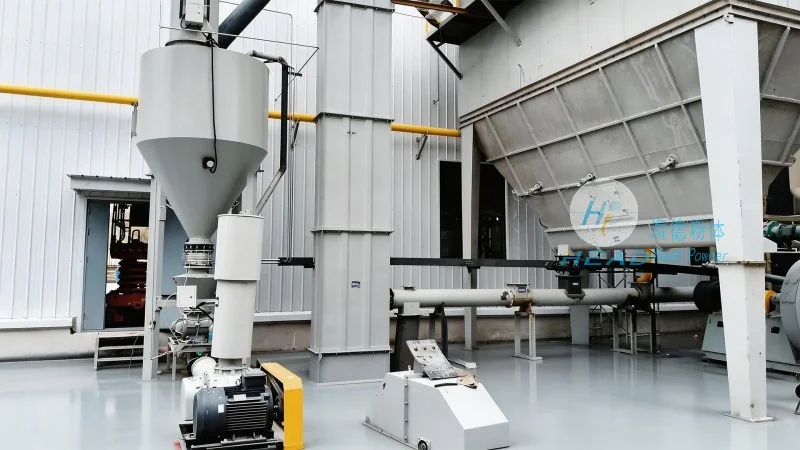
High-pressure dense-phase pneumatic conveying equipment offers several advantages over traditional material handling methods. One of the primary benefits is the ability to transport materials over long distances with minimal energy consumption. The dense-phase conveying method reduces the amount of air required compared to dilute-phase systems, resulting in lower operational costs and reduced environmental impact. Additionally, the equipment is highly efficient in handling a wide range of materials, including powders, granules, and even bulk solids that are prone to segregation or degradation. The high-pressure environment helps maintain the integrity of the material, preventing clumping or agglomeration during transport. Another key advantage is the flexibility of the system, which can be customized to suit specific application requirements, including varying material types, conveying distances, and throughput rates. The equipment also provides a closed system, which enhances safety by containing dust and preventing exposure to hazardous materials. Furthermore, the use of high-pressure dense-phase conveying reduces the risk of material spillage and contamination, making it suitable for applications where cleanliness and product quality are critical. Overall, the technology offers a reliable and efficient solution for industries seeking to improve their material handling processes and enhance operational performance.

 Shandong Headpowder Engineering Co., Ltd.
 156-6277-7102(Manager Zhang)
  0531-83386006
  Zhangqiu District, Jinan City, Shandong Province, China
telephone
WeChatconsult
top