With more than 10‑year industry experience, Shandong Headpowder delivers full‑service pneumatic‑conveying systems and blowers, undertaking nationwide turn‑key powder‑handling projects.
Soda ash, also known as sodium carbonate, is a widely used chemical in various industrial applications. The efficient and reliable transportation of soda ash from storage to processing units is crucial for maintaining production efficiency. Pneumatic conveying lines offer a solution to this challenge by utilizing air to transport the material, providing a flexible and effective method for handling soda ash in industrial settings. This article explores the fundamental principles behind soda ash pneumatic conveying systems and highlights the key characteristics of their operational scenes.
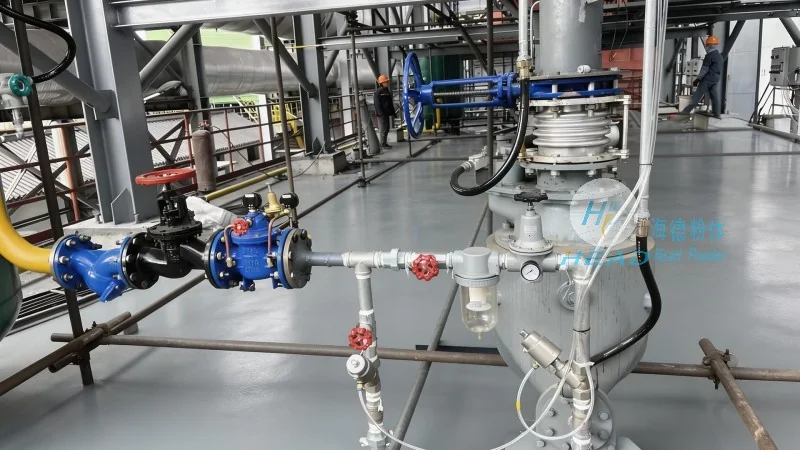
HeadPowder, a leading engineering company based in Shandong, China, specializes in the design, manufacturing, and installation of pneumatic conveying systems for chemical and industrial applications. With years of experience in the field, HeadPowder has developed advanced solutions tailored to the unique requirements of soda ash handling. The company’s expertise ensures that clients receive customized systems that optimize material flow, minimize downtime, and enhance overall operational safety.
Pneumatic conveying operates on the principle of using air to move bulk materials through a pipeline. For soda ash, which is typically a fine powder with specific physical properties, the choice of conveying method depends on factors such as particle size, density, and the required distance and flow rate. There are two primary types of pneumatic conveying systems: aspiration (or suction) systems and pressure (or blow) systems. Aspiration systems draw material from a hopper or storage silo using a vacuum created by a fan, while pressure systems force air and material through the pipeline using a blower or compressor. The selection of a system type is influenced by the need for material containment, the distance to be covered, and the desired flow rate. For soda ash, which is often handled in large quantities, pressure systems are commonly preferred due to their ability to handle higher flow rates and longer distances without significant pressure loss.
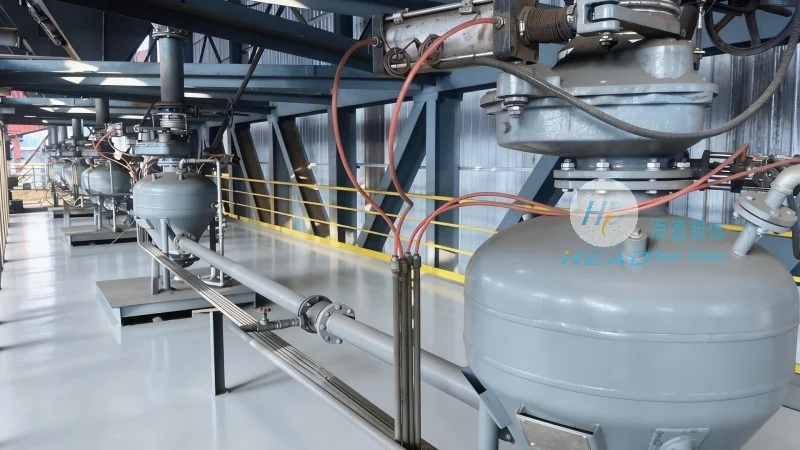
A typical soda ash pneumatic conveying system consists of several essential components that work together to ensure efficient material transport. These components include: hoppers or storage silos for material storage, conveying pipelines made of materials resistant to soda ash corrosion (such as stainless steel or special coatings), air supply units (fans or blowers) to generate the necessary airflow, control valves to regulate the flow of air and material, filters and cyclones to separate the material from the air stream and return it to the system, and discharge units for delivering the material to the processing equipment. Each component is designed to withstand the chemical and physical properties of soda ash, ensuring long-term durability and minimal maintenance.
The operational scenes of soda ash pneumatic conveying systems vary based on the specific industrial application and the scale of production. Some common working scenarios include: industrial chemical plants, where soda ash is used as a raw material in the production of glass, detergents, and other chemicals. In these settings, the conveying line is integrated into a larger production line, requiring high flow rates and reliable operation to support continuous production. Food and beverage processing facilities also utilize soda ash for pH adjustment and as a food additive. Here, the system must meet strict hygiene standards, with components made of food-grade materials and easy-to-clean designs to prevent contamination. Construction and building materials industries use soda ash in the production of cement and concrete additives. The conveying line in this sector often handles larger quantities of material over longer distances, necessitating robust and high-capacity systems. Additionally, environmental and recycling applications may involve the transport of soda ash for waste treatment or material recovery. In these cases, the system is designed to minimize dust emissions and ensure compliance with environmental regulations.
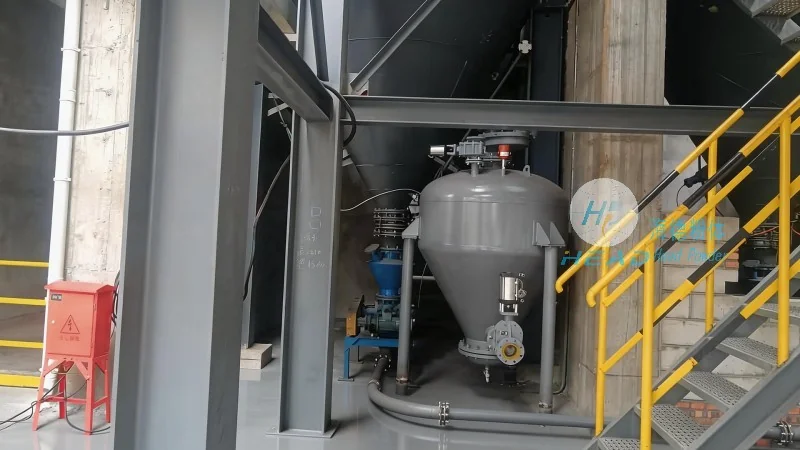
Compared to traditional methods such as belt conveyors or bucket elevators, pneumatic conveying offers several advantages for handling soda ash. These benefits include: flexibility in system layout, as pipelines can be easily reconfigured to adapt to changes in production processes. Reduced material degradation, as the enclosed system prevents exposure to air and moisture, which can affect the quality of soda ash. Improved safety, as the system eliminates the need for manual handling of bulk materials, reducing the risk of dust explosions and workplace injuries. Energy efficiency, particularly in pressure systems, where the use of air as the conveying medium is more energy-efficient than mechanical systems for certain applications. Space-saving design, as the compact nature of pneumatic conveying systems allows for installation in areas with limited space. These advantages make pneumatic conveying an ideal solution for soda ash handling in modern industrial environments.
HeadPowder recognizes that each soda ash handling operation has unique requirements. Therefore, the company offers customized pneumatic conveying solutions tailored to specific client needs. This includes selecting the appropriate system type (suction or pressure), determining the optimal pipeline diameter and length, and specifying the materials of construction to match the chemical properties of the soda ash. Regular maintenance is also crucial for the long-term performance of the system. HeadPowder provides maintenance services and spare parts to ensure that the conveying line operates at peak efficiency, minimizing downtime and maximizing the lifespan of the equipment.

 Shandong Headpowder Engineering Co., Ltd.
 156-6277-7102(Manager Zhang)
  0531-83386006
  Zhangqiu District, Jinan City, Shandong Province, China
telephone
WeChatconsult
top