With more than 10‑year industry experience, Shandong Headpowder delivers full‑service pneumatic‑conveying systems and blowers, undertaking nationwide turn‑key powder‑handling projects.
HeadPowder, a leading engineering firm based in Shandong, China, specializes in the design, manufacturing, and implementation of advanced pneumatic conveying systems for various industrial applications, including sulfur handling. This article delves into the fundamental principles behind sulfur pneumatic conveying lines and explores the key characteristics of their operational environments.
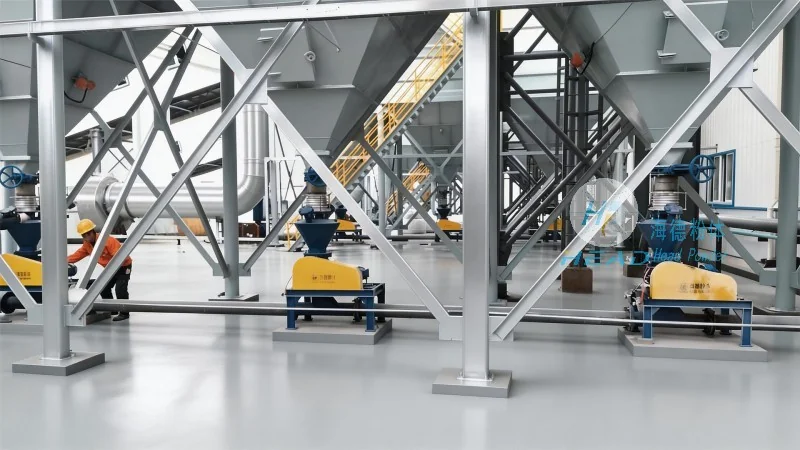
Sulfur pneumatic conveying lines operate on the principle of using compressed air or other gas to transport solid sulfur particles through a pipeline. The process involves generating a sufficient air velocity to overcome the gravitational force acting on the sulfur particles, ensuring they remain suspended and move efficiently from the source to the destination. This method eliminates the need for mechanical components like belts or buckets, reducing maintenance requirements and enhancing safety in handling potentially hazardous materials like sulfur.
The system typically consists of a hopper or storage vessel where sulfur is stored, a feeder mechanism to control the flow rate, a pipeline network, and a receiver or discharge point. The compressed air is introduced at the inlet of the pipeline, creating a high-velocity stream that entrains the sulfur particles. As the particles travel through the pipeline, they are continuously suspended by the air flow, allowing for smooth and continuous transport. The velocity of the air is critical; it must be high enough to keep the particles airborne but not excessive, which could lead to excessive energy consumption or particle degradation.
The operational characteristics of sulfur pneumatic conveying lines are tailored to the specific demands of industrial sulfur handling environments. These systems are commonly used in scenarios where bulk sulfur needs to be transported over short to medium distances, such as within a chemical plant or between storage facilities and processing units. The flexibility of pneumatic conveying allows for integration into existing infrastructure, minimizing the need for major structural modifications.
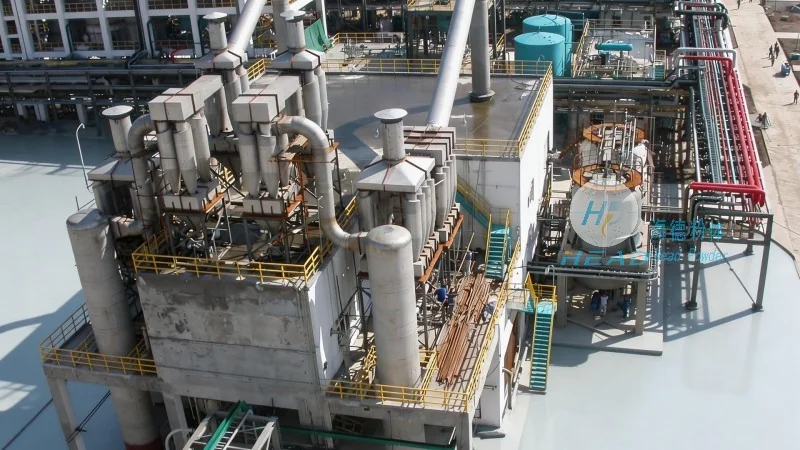
One of the primary advantages in such working scenes is the ability to handle sulfur in its solid form, which is often more stable and less prone to oxidation compared to liquid or gaseous states. This is particularly important in applications where sulfur is used as a raw material in the production of sulfuric acid, fertilizers, or other chemical products. The system's ability to maintain a consistent flow rate and particle size distribution ensures reliable performance, which is crucial for maintaining production efficiency and product quality.
Another key characteristic is the system's adaptability to different sulfur forms, including powdered, granular, or even molten sulfur under certain conditions. This versatility allows HeadPowder to design customized solutions that meet the specific requirements of each client's operation. For example, in facilities handling powdered sulfur, the system may use a more aggressive air velocity to ensure complete suspension, while granular sulfur might require a slightly lower velocity to prevent particle attrition.
The working environment also plays a significant role in the design of sulfur pneumatic conveying lines. In industrial settings, factors such as temperature, humidity, and the presence of other chemicals can affect the performance of the system. HeadPowder's engineering expertise ensures that the materials used in the construction of the pipeline, hoppers, and other components are resistant to corrosion and wear, ensuring long-term durability and reliability. Additionally, the system is designed to minimize dust emissions and noise, contributing to a safer and more environmentally friendly working environment.
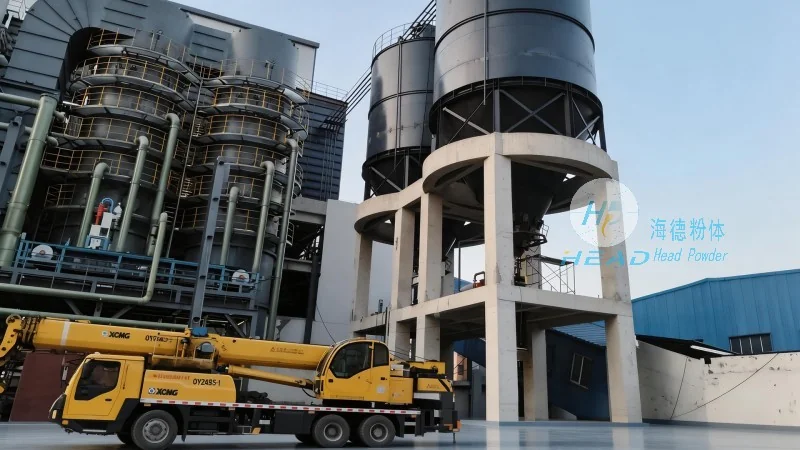
Sulfur pneumatic conveying lines are widely employed in various industrial sectors, including chemical manufacturing, fertilizer production, and petrochemical processing. In chemical plants, these systems are used to transport sulfur from storage silos to reactors or processing units, where it is converted into sulfuric acid or other derivatives. The efficiency of pneumatic conveying in these applications is evident in the reduced downtime and increased throughput compared to traditional mechanical conveying methods.
In fertilizer production, sulfur is a critical component in the formulation of sulfur-based fertilizers. Pneumatic conveying systems enable the precise and continuous delivery of sulfur to mixing and packaging units, ensuring consistent product quality and reducing the risk of material loss or contamination. The ability to handle large volumes of sulfur in a controlled manner is particularly valuable in large-scale fertilizer plants, where operational efficiency directly impacts profitability.
Furthermore, the use of pneumatic conveying in sulfur handling offers several operational benefits beyond just efficiency. The system's compact design allows for installation in confined spaces, which is often a challenge in existing industrial facilities. This flexibility enables HeadPowder to provide solutions that fit within the existing footprint of a plant, minimizing the need for costly expansions or relocations. Additionally, the system's low maintenance requirements contribute to lower operational costs over its lifespan, making it a cost-effective choice for long-term sulfur handling needs.

 Shandong Headpowder Engineering Co., Ltd.
 156-6277-7102(Manager Zhang)
  0531-83386006
  Zhangqiu District, Jinan City, Shandong Province, China
telephone
WeChatconsult
top