With more than 10‑year industry experience, Shandong Headpowder delivers full‑service pneumatic‑conveying systems and blowers, undertaking nationwide turn‑key powder‑handling projects.
Phosphate calcium is a vital raw material utilized across multiple industries, including chemical manufacturing, food processing, and pharmaceutical production. The efficient and safe transportation of this material is critical for maintaining production efficiency and ensuring product quality. Pneumatic conveying equipment specifically engineered for phosphate calcium offers a solution that addresses the unique handling challenges associated with this fine powder. This article delves into the working principle and key features of such equipment, illustrating how it enhances material handling processes.
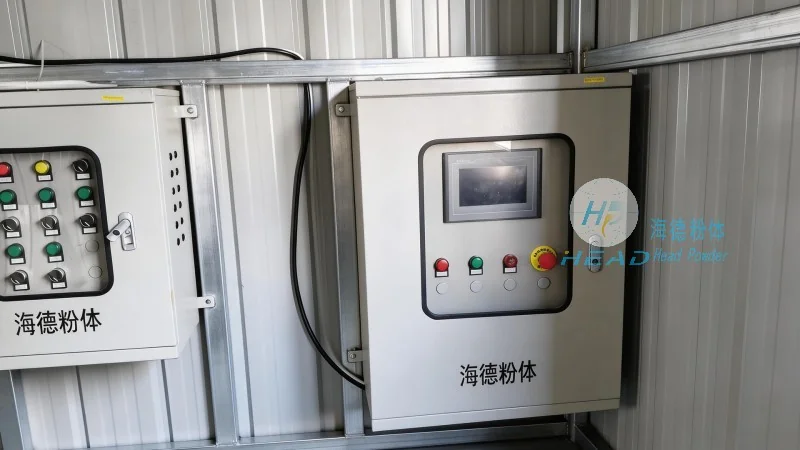
Phosphate calcium, also known as calcium phosphate, is a white crystalline powder with a Mohs hardness of approximately 3.5. It serves as a nutrient supplement in animal feed, a food additive, and a component in various pharmaceutical formulations. Due to its fine particle size and potential for dust generation, conventional bulk handling methods like belt conveyors or bucket elevators may not be suitable. Pneumatic conveying systems provide a dust-free, enclosed solution that minimizes material loss and contamination, making them ideal for phosphate calcium transport.
The fundamental operation of a phosphate calcium pneumatic conveying system relies on transporting material using air or gas as the conveying medium. Two primary system types exist: positive pressure and negative pressure. Positive pressure systems employ a blower or compressor to generate air pressure, pushing material through a pipeline. Negative pressure systems utilize a vacuum to draw material into the system. For phosphate calcium, positive pressure systems are often preferred as they offer better control over material flow and can handle higher material loads.
In a typical positive pressure system, the process initiates with material fed into a hopper or feeder. The feeder then discharges the material into a conveying line, where it is mixed with air from a blower. The air and material mixture is propelled through the pipeline to the discharge point. At the receiving end, a separator or cyclone separates the material from the air, allowing collection in a storage bin or processing unit. The air is then filtered and either returned to the system or released.
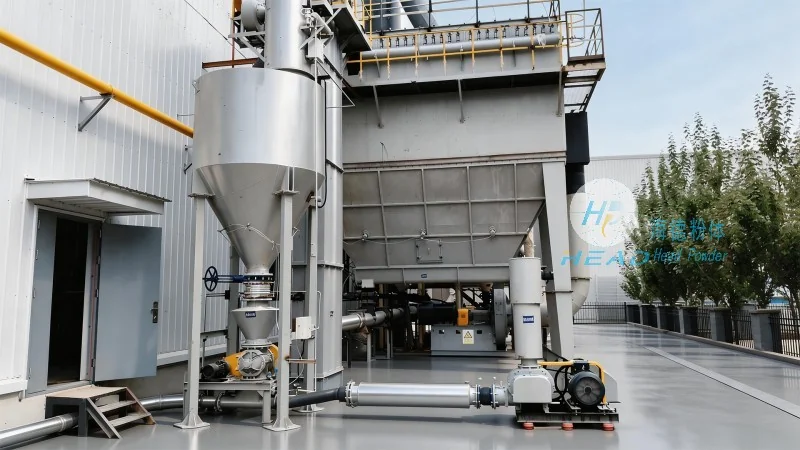
HeadPowder, a leading manufacturer based in Shandong, China, specializes in designing and manufacturing pneumatic conveying systems tailored for phosphate calcium applications. The equipment developed by HeadPowder exhibits several notable features that enhance performance and reliability:
1. High Efficiency and Low Energy Consumption The advanced blower technology used in HeadPowder's systems ensures optimal air flow, reducing energy consumption while maintaining high material throughput. This efficiency is crucial for industries operating on tight budgets and seeking to minimize operational costs.
2. Dust-Free and Environmentally Friendly Operation Unlike traditional bulk handling methods, pneumatic conveying systems are fully enclosed, preventing dust emissions and protecting the environment. This feature is particularly important for phosphate calcium, which can be a respiratory irritant if not handled properly. The enclosed design also reduces material loss, improving overall material yield.
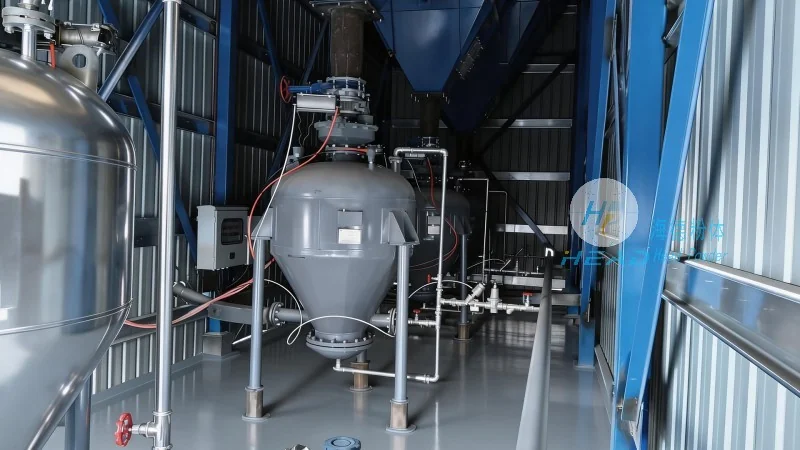
3. Adaptability to Varying Material Characteristics Phosphate calcium can have different particle sizes and moisture contents depending on the production process. HeadPowder's equipment is designed with adjustable parameters, such as air velocity and pressure, allowing it to handle a wide range of material properties. This adaptability ensures consistent performance even with varying feed rates or material quality.
4. Easy Maintenance and Durability The components of the pneumatic conveying system, including the hopper, feeder, and pipeline, are constructed from materials resistant to corrosion and wear, such as stainless steel. This durability reduces maintenance requirements and extends the service life of the equipment. Additionally, the modular design of the system allows for easy replacement of parts, minimizing downtime during maintenance.
Pneumatic conveying equipment for phosphate calcium offers significant advantages over traditional material handling methods, including efficiency, environmental friendliness, and adaptability. HeadPowder, with its expertise and commitment to quality, provides reliable solutions that meet the specific needs of industries handling phosphate calcium. By understanding the working principle and key features of these systems, businesses can make informed decisions to enhance their material handling processes and improve overall operational performance.

 Shandong Headpowder Engineering Co., Ltd.
 156-6277-7102(Manager Zhang)
  0531-83386006
  Zhangqiu District, Jinan City, Shandong Province, China
telephone
WeChatconsult
top