With more than 10‑year industry experience, Shandong Headpowder delivers full‑service pneumatic‑conveying systems and blowers, undertaking nationwide turn‑key powder‑handling projects.
HeadPowder, a leading provider of industrial material handling solutions, specializes in the design and implementation of pneumatic conveying systems tailored for the cement industry. With a focus on efficiency and reliability, the company's expertise lies in facilitating the transport of cement additives, which are crucial components in modern cement production. This article explores the critical role of pneumatic conveying in ensuring seamless and effective handling of these additives, highlighting the technical advantages and practical applications of such systems.
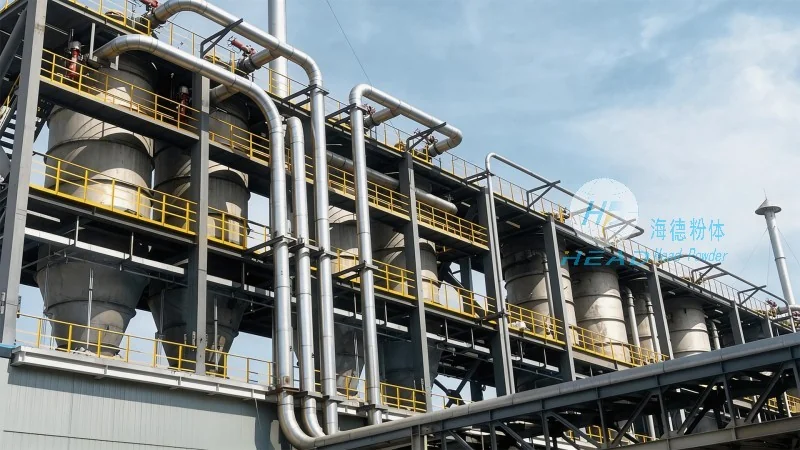
Pneumatic conveying systems utilize air or gas to transport bulk materials, including cement additives, through a network of pipes. The fundamental components of these systems typically include a material feed hopper, a conveyor line, a separation unit, and a dust collection system. The operation involves feeding the additive into the hopper, where it is then drawn into the conveyor line by a vacuum or pressure source. As the material travels through the pipes, it is suspended and moved by the airflow, reaching the destination point—such as a storage silo or a processing unit—where it is discharged. This method eliminates the need for mechanical components like belts or buckets, reducing maintenance requirements and minimizing the risk of material contamination.
For cement additives, such as fly ash, slag, or limestone powder, pneumatic conveying offers several key advantages that enhance operational performance. Firstly, it provides a dust-free and hygienic transport environment, which is essential for maintaining product quality and compliance with industry standards. Unlike mechanical systems that may generate dust and cause contamination, pneumatic conveying ensures that the additives remain clean and free from external particles. Secondly, the system allows for precise control over material flow rates, enabling manufacturers to adjust the quantity of additives added to the cement mix according to specific production requirements. This flexibility is vital in optimizing the final properties of the cement, such as strength and durability. Thirdly, pneumatic conveying systems are highly adaptable, capable of handling a wide range of particle sizes and densities. Whether dealing with fine powders or coarser additives, the system can be configured to meet the unique characteristics of each material, ensuring consistent and reliable transport. Additionally, these systems are energy-efficient compared to traditional methods, reducing operational costs and environmental impact. The use of compressed air or vacuum sources minimizes energy consumption while maintaining high transport efficiency.
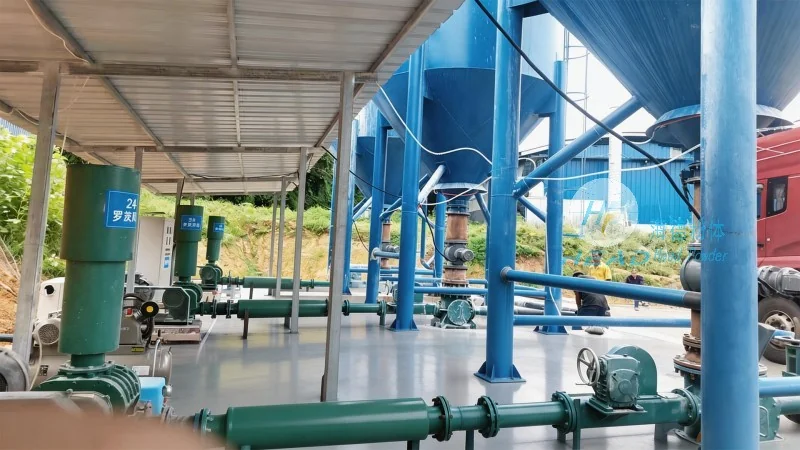
In the cement industry, cement additives are commonly used to improve the performance of the final product. Pneumatic conveying systems are widely employed in various stages of cement production, from raw material handling to finished product storage. For instance, in raw material processing, additives like fly ash are often sourced from external suppliers and transported to the plant via pneumatic systems. The system ensures that these additives are delivered to the raw mill or storage silos without any delays or disruptions. During the clinker production stage, additives are blended with the clinker to adjust the chemical composition and improve the setting properties of the cement. Pneumatic conveying allows for a seamless integration of these additives into the production line, ensuring consistent mixing ratios. In the final grinding stage, additives are added to the cement slurry to enhance its fineness and workability. The system’s ability to handle fine powders with precision makes it ideal for this application. Furthermore, pneumatic conveying is used in the storage and distribution of cement additives, ensuring that they are kept in a controlled environment, preventing moisture absorption and maintaining their quality until they are used in the production process.
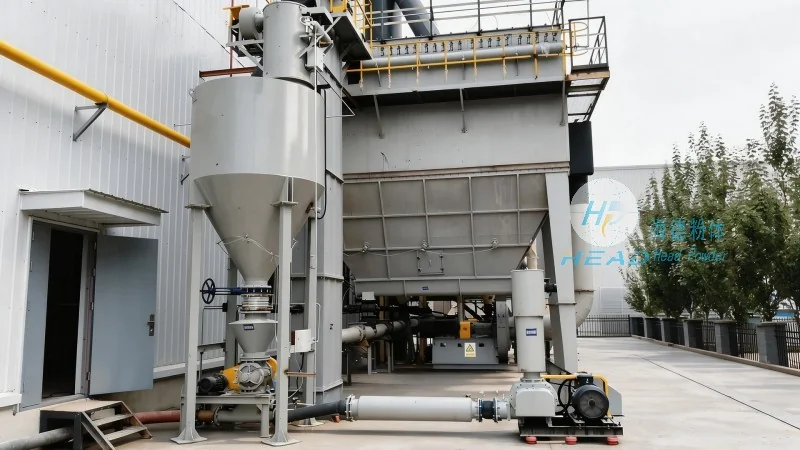
When designing a pneumatic conveying system for cement additives, several technical considerations must be taken into account to ensure optimal performance. The first consideration is the material characteristics of the additives, including particle size distribution, density, and moisture content. These factors determine the type of conveying system—whether vacuum or pressure-based—and the required air velocity to maintain material suspension. For fine powders with low density, a vacuum system is often preferred, as it can effectively lift the material through the pipes without excessive energy consumption. Conversely, for coarser or denser additives, a pressure system may be more suitable, as it provides higher air pressure to overcome resistance and ensure efficient transport. The system design also involves selecting appropriate pipe diameters and lengths, as well as the placement of separation and cleaning units. Proper pipe sizing is crucial to avoid pressure drops and maintain consistent airflow. Separation units, such as cyclones or filters, are essential for removing any residual material from the air stream, preventing clogging and ensuring the system operates smoothly. Additionally, the system must be equipped with safety features, including pressure relief valves and air filtration systems, to protect against overpressure and maintain air quality.
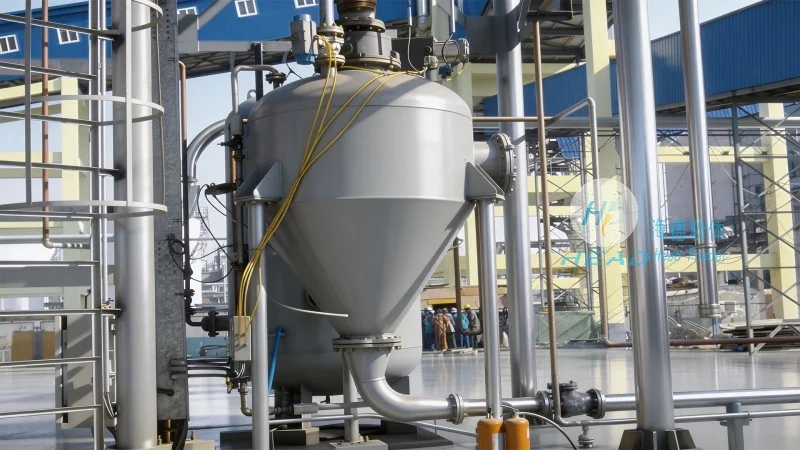
Shandong HeadPowder Engineering Co., Ltd., based in China, has successfully implemented pneumatic conveying systems for cement additives in several projects. One notable case involved a large cement plant that required the transport of fly ash from a nearby power plant to its raw material storage silos. The company designed a vacuum pneumatic conveying system with a capacity of 50 tons per hour, which was able to handle the fine fly ash particles efficiently. The system was installed with a hopper, a 500-meter long conveyor line, and a cyclone separator. The results showed a significant reduction in material handling time and labor costs, as well as improved product quality due to the dust-free transport. Another project involved a cement additive blending facility where the company installed a pressure pneumatic system to transport limestone powder from a quarry to the blending unit. The system was configured with a pressure of 0.6 MPa and an air velocity of 20 m/s, ensuring that the limestone powder was transported at a consistent rate. The client reported that the system’s reliability and efficiency led to a 15% increase in production output and a reduction in maintenance costs by 20% compared to previous mechanical systems. These case studies demonstrate the effectiveness of pneumatic conveying systems in enhancing the operational performance of cement plants.
Pneumatic conveying systems play a vital role in the efficient and reliable transport of cement additives, contributing to the overall productivity and quality of cement production. As the cement industry continues to evolve, the demand for advanced material handling solutions will increase, and pneumatic conveying is poised to remain a key technology. HeadPowder, with its expertise in designing and implementing such systems, continues to provide tailored solutions that meet the specific needs of cement manufacturers. By leveraging the advantages of pneumatic conveying, such as dust-free transport, precise control, and adaptability, cement plants can optimize their operations, reduce costs, and enhance the quality of their final products. The future of cement additive transport lies in the continued development and application of efficient pneumatic conveying systems, ensuring sustainable and high-performance production in the industry.

 Shandong Headpowder Engineering Co., Ltd.
 156-6277-7102(Manager Zhang)
  0531-83386006
  Zhangqiu District, Jinan City, Shandong Province, China
telephone
WeChatconsult
top