With more than 10‑year industry experience, Shandong Headpowder delivers full‑service pneumatic‑conveying systems and blowers, undertaking nationwide turn‑key powder‑handling projects.
Ammonium sulfate is a widely used chemical fertilizer, and its efficient transportation is crucial for industrial operations. Pneumatic conveying systems are commonly employed for handling such bulk materials, with two primary methods: positive pressure and negative pressure. This article provides a detailed comparison of these two approaches, focusing on their mechanisms, advantages, disadvantages, and practical applications in the context of ammonium sulfate handling.
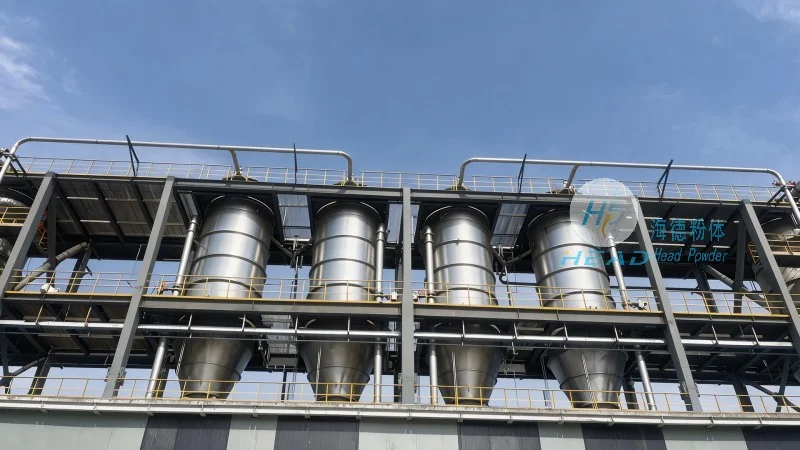
Pneumatic conveying uses compressed air or vacuum to transport solid materials through a pipeline. The two main types are positive pressure and negative pressure systems. In positive pressure systems, air is blown into the material to create a flow, while negative pressure systems use suction to draw material into the pipeline.
Positive pressure conveying involves forcing air into the material to create a stream that carries the ammonium sulfate particles. This method is often used for long-distance or high-capacity transport. The system typically includes a blower, a hopper, and a pipeline. The advantages of positive pressure include high transport capacity, ability to handle abrasive materials, and suitability for long distances. However, it may require more energy and can be less efficient for short distances. The equipment used by Shandong HeadPowder Engineering Co., Ltd. for positive pressure conveying is designed to optimize these benefits, ensuring reliable and efficient transport of ammonium sulfate.
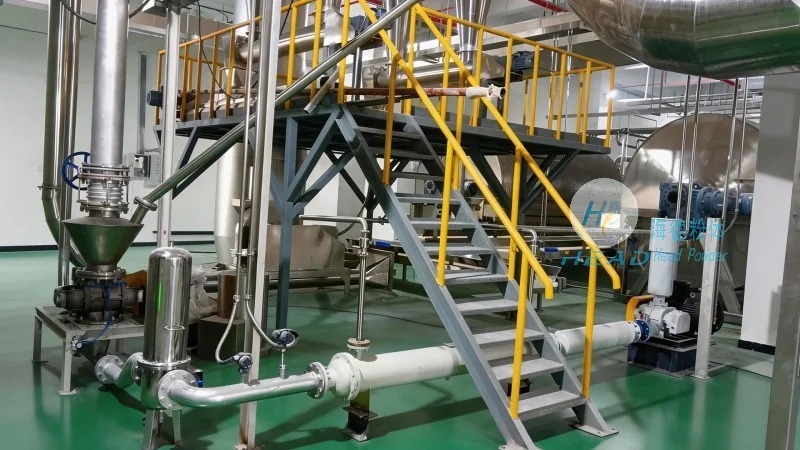
Negative pressure conveying, also known as vacuum conveying, uses a vacuum to draw material from the source into the pipeline. This method is generally more energy-efficient for short distances and is suitable for handling fine powders. The system includes a vacuum pump, a hopper, and a pipeline. The main advantages are lower energy consumption and better control over material flow. However, it may have limitations in handling large particles or abrasive materials, and the system can be more complex to maintain. Shandong HeadPowder Engineering Co., Ltd. offers negative pressure conveying solutions that balance efficiency and operational simplicity for ammonium sulfate applications.
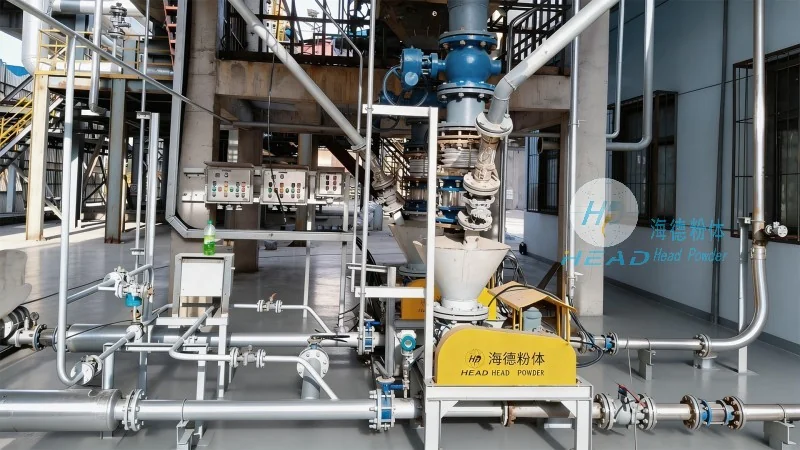
When comparing positive and negative pressure conveying for ammonium sulfate, several factors must be considered. Distance and capacity are primary determinants. Positive pressure is preferred for long distances and high volumes, while negative pressure is more suitable for short distances and lower capacities. Energy consumption is another critical factor; negative pressure systems are generally more energy-efficient for short runs. Material characteristics, such as particle size and abrasiveness, also influence the choice. Positive pressure can handle coarser or more abrasive materials better, whereas negative pressure is better for fine powders. Cost and maintenance are additional considerations. Positive pressure systems may have higher initial costs due to the blower, but lower maintenance for the vacuum pump in negative pressure systems. Shandong HeadPowder Engineering Co., Ltd. provides tailored solutions that address these factors, ensuring optimal performance based on the specific requirements of the ammonium sulfate handling operation.
The choice between positive and negative pressure conveying impacts the overall efficiency and cost-effectiveness of ammonium sulfate handling. In industrial settings, positive pressure is often used in large-scale fertilizer plants where long-distance transport is required, such as from storage silos to processing units. Negative pressure is more common in smaller facilities or for handling fine ammonium sulfate powders, where precision and energy savings are prioritized. Shandong HeadPowder Engineering Co., Ltd., with its headquarters in Shandong, China, has extensive experience in designing and implementing both systems, providing customized solutions that meet the unique needs of each client. Their expertise ensures that the selected pneumatic conveying method maximizes productivity while minimizing operational costs.

 Shandong Headpowder Engineering Co., Ltd.
 156-6277-7102(Manager Zhang)
  0531-83386006
  Zhangqiu District, Jinan City, Shandong Province, China
telephone
WeChatconsult
top