With more than 10‑year industry experience, Shandong Headpowder delivers full‑service pneumatic‑conveying systems and blowers, undertaking nationwide turn‑key powder‑handling projects.
Resin pellet conveying is a critical process in various industrial applications, particularly in the manufacturing of plastic products. The efficient and reliable transport of resin pellets from storage to processing equipment is essential for maintaining production efficiency and product quality. This article explores the primary methods used for resin pellet conveying, highlighting the key considerations and applications of each approach.
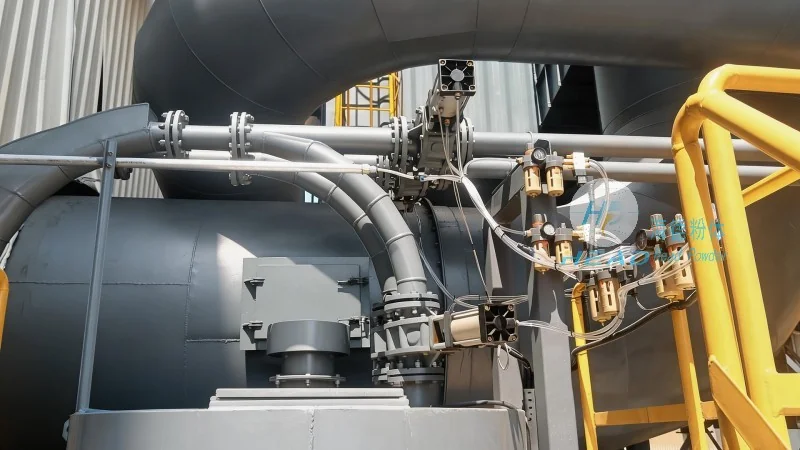
Resin pellets, also known as plastic resin or polymer granules, are the raw material used in the production of a wide range of plastic items. These small, uniform particles require specialized conveying systems to move them from storage silos or hoppers to extruders, injection molding machines, or other processing equipment. The choice of conveying method depends on factors such as pellet size, material characteristics, production volume, and the layout of the manufacturing facility. Effective resin pellet conveying ensures consistent material flow, reduces downtime, and minimizes the risk of material degradation or contamination.
Several methods are commonly employed for resin pellet conveying, each with its own advantages and suitability for different applications. The primary methods include gravity flow, mechanical conveyors, pneumatic conveying, and combination systems. Each method is designed to address specific challenges and operational requirements in resin processing.
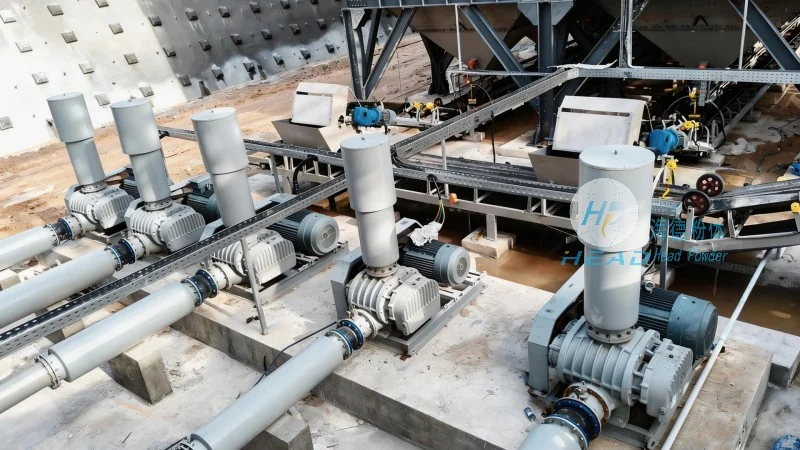
Gravity flow, or static conveying, is a simple and cost-effective method for transporting resin pellets over short distances and gentle slopes. This approach relies on the natural force of gravity to move the pellets from a higher elevation to a lower one. The system typically consists of a hopper or storage bin at a higher level, connected by a trough or chute to the processing equipment at a lower level. The trough is designed with a slight incline to facilitate the smooth flow of pellets without excessive friction or blockage. Gravity flow is ideal for applications where the distance between the storage and processing areas is short, and the production volume is relatively low. It is commonly used in small-scale operations or for transporting pellets from a silo to a hopper for immediate processing.
Mechanical conveyors are widely used in resin pellet conveying due to their versatility and ability to handle a wide range of material types and production volumes. These systems use mechanical components such as belts, screws, or buckets to move pellets through a system. The most common types include belt conveyors, screw conveyors, and bucket elevators. Belt conveyors are suitable for transporting pellets over moderate distances and at relatively high speeds. They consist of a continuous belt supported by rollers, with the pellets placed on the belt and moved by the rotation of the rollers. Screw conveyors, also known as augers, are effective for vertical or inclined transport of pellets. They use a rotating screw to push the pellets through a tube, making them ideal for applications requiring vertical lifting or precise control of material flow. Bucket elevators are used for vertical transport over longer distances, with buckets attached to a chain or belt that lifts the pellets from a lower to a higher level. Mechanical conveyors are preferred in applications where consistent flow rates, precise control, and the ability to handle abrasive or heavy pellets are required.
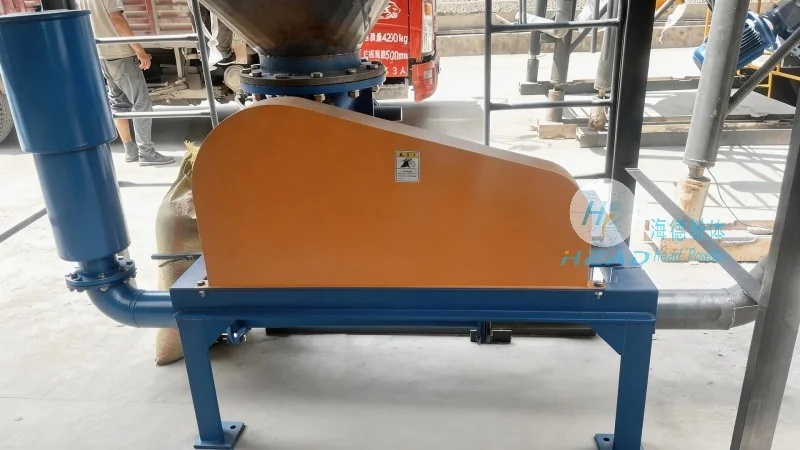
Pneumatic conveying, or air conveying, is a method that uses compressed air to transport resin pellets through a pipeline. This approach is particularly useful for applications where the pellets need to be moved over long distances or through complex layouts, such as from a storage facility to multiple processing lines. Pneumatic systems can be classified into two main types: dilute-phase and dense-phase. Dilute-phase systems use a high volume of air to transport pellets in a relatively low concentration, making them suitable for short to medium distances and low to medium production rates. Dense-phase systems, on the other hand, use a lower volume of air and higher pressure to transport pellets in a more concentrated form, making them ideal for long-distance transport and high production rates. Pneumatic conveying offers advantages such as the ability to transport pellets through vertical and horizontal sections, minimal material degradation, and the option to integrate with other processing equipment. However, it requires careful design to prevent material buildup or blockage in the pipeline and to maintain consistent air pressure.
In many industrial settings, a single conveying method may not be sufficient to meet all the operational requirements. Combination systems, which integrate multiple conveying technologies, are often used to achieve optimal performance. For example, a system might use gravity flow for the initial transport from a storage silo to a hopper, followed by a mechanical conveyor to move the pellets to the processing equipment. Alternatively, a pneumatic system might be used in conjunction with a mechanical conveyor to handle both long-distance and vertical transport. Combination systems allow for greater flexibility and efficiency, as they can be tailored to the specific needs of the manufacturing process. They are particularly useful in large-scale operations where multiple processing lines are involved and the resin pellets need to be distributed to various locations.
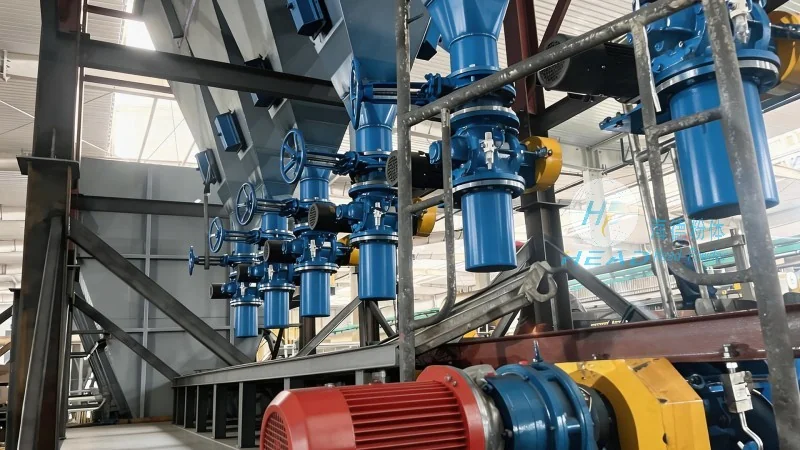
When selecting a resin pellet conveying method, several factors must be considered to ensure optimal performance and cost-effectiveness. The first consideration is the material characteristics of the resin pellets, including their size, shape, density, and abrasiveness. These factors influence the choice of conveyor type and the design of the system to prevent material degradation or equipment wear. The second consideration is the production volume and flow rate requirements. High production rates may necessitate the use of more robust and high-capacity conveying systems, such as mechanical or pneumatic systems. The third consideration is the layout of the manufacturing facility, including the distance between storage and processing areas, the presence of obstacles, and the need for vertical or horizontal transport. The fourth consideration is the cost of the system, including initial investment, maintenance, and operational costs. Gravity flow systems are generally the most cost-effective for short distances and low production rates, while mechanical and pneumatic systems are more suitable for larger operations and longer distances.
Resin pellet conveying is a critical aspect of resin processing, and the choice of conveying method plays a significant role in the efficiency and quality of the production process. Gravity flow, mechanical conveyors, pneumatic systems, and combination systems each offer unique advantages and are suitable for different applications. By carefully evaluating the material characteristics, production requirements, and facility layout, manufacturers can select the most appropriate conveying method to ensure smooth and reliable resin transport. As the demand for resin-based products continues to grow, the development of efficient and reliable conveying systems remains essential for maintaining competitive advantage and product quality.

 Shandong Headpowder Engineering Co., Ltd.
 156-6277-7102(Manager Zhang)
  0531-83386006
  Zhangqiu District, Jinan City, Shandong Province, China
telephone
WeChatconsult
top