With more than 10‑year industry experience, Shandong Headpowder delivers full‑service pneumatic‑conveying systems and blowers, undertaking nationwide turn‑key powder‑handling projects.
When it comes to handling rice husk, an efficient and reliable pneumatic conveying system is crucial for optimizing processing operations. The design of such a system requires careful consideration of various factors to ensure it meets the specific needs of rice husk processing facilities. This article provides a comprehensive guide to designing a reasonable rice husk pneumatic conveying system, covering key considerations, components, and practical steps to achieve optimal performance.
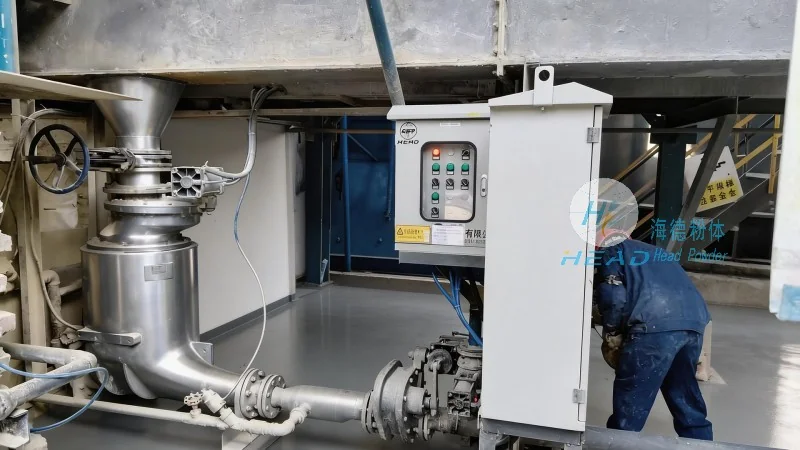
Pneumatic conveying systems are widely used in the agricultural and food processing industries for transporting bulk materials like rice husk. These systems utilize air pressure to move materials through a network of pipes, offering advantages such as low maintenance, minimal product contamination, and the ability to handle abrasive or dusty materials. For rice husk, which is often used as a fuel source or in the production of biochar and other value-added products, a well-designed pneumatic conveying system can significantly improve operational efficiency and reduce labor costs.
The first step in designing a rice husk pneumatic conveying system is to analyze the characteristics of the rice husk itself. Key factors include particle size distribution, moisture content, bulk density, and abrasiveness. These properties directly impact the choice of system type (positive pressure, negative pressure, or a combination) and the required air flow rate and pressure. For example, larger or more abrasive particles may necessitate a positive pressure system with robust components to withstand wear and tear. Additionally, the distance and layout of the conveying route must be carefully planned to ensure the system operates within its optimal performance range. The system design must also account for any potential environmental or safety regulations that may apply to the handling of rice husk, such as dust control measures and explosion-proof requirements.

A standard rice husk pneumatic conveying system consists of several essential components, each playing a critical role in the overall operation. The primary components include a material feeder, which ensures a consistent and controlled flow of rice husk into the system. The feeder may be a rotary valve, screw feeder, or a hopper with a gate mechanism, depending on the material characteristics and system requirements. The conveying line, typically made of stainless steel or other corrosion-resistant materials, transports the rice husk through the system. A separation or filtration system is often included to remove any fine particles or dust from the air stream, preventing contamination and ensuring compliance with environmental standards. The system also features a fan or blower that generates the necessary air pressure to move the material. In some cases, a cyclone separator or a bag filter may be used to further clean the air and recover any lost material. Finally, a discharge hopper or silo is used to collect the conveyed rice husk at the destination point.
Accurately calculating the system requirements is essential for the successful operation of a rice husk pneumatic conveying system. The primary calculations involve determining the required air volume, pressure, and power. The air volume is typically calculated based on the material flow rate and the specific gravity of the rice husk. For example, a higher flow rate or larger particle size may require a larger air volume to maintain efficient conveying. The pressure required is determined by the length and diameter of the conveying line, as well as the elevation changes and any bends or fittings in the system. The power consumption of the fan or blower is calculated based on the air volume and pressure, and must be sufficient to overcome the resistance in the system and maintain the desired conveying rate. Proper calculation of these parameters ensures that the system operates efficiently and avoids overloading or underperformance.
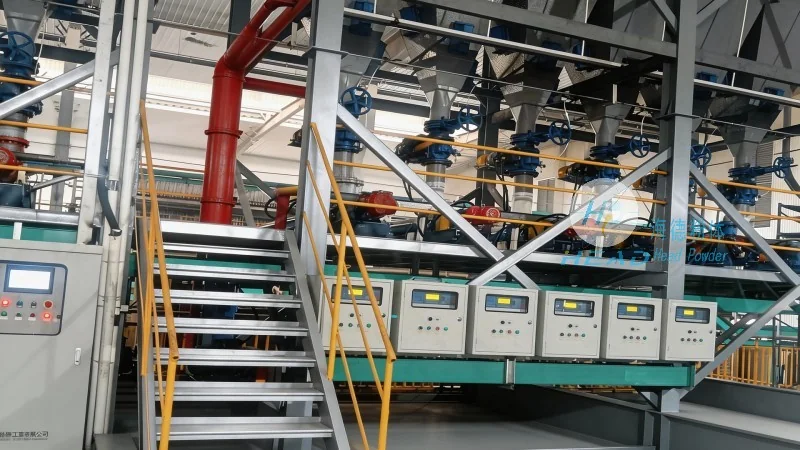
Designing a reliable rice husk pneumatic conveying system involves a systematic approach that starts with a thorough analysis of the process requirements and ends with proper installation and maintenance. The first step is to conduct a site survey and assess the available space and layout of the processing facility. This helps in determining the optimal location for the feeder, fan, and discharge hopper. Next, the material characteristics are analyzed to select the appropriate system type and components. For instance, if the rice husk is highly abrasive, components such as the feeder and separation system may need to be made of wear-resistant materials like stainless steel or ceramic. The system layout is then designed, considering the shortest possible path for the conveying line and minimizing the number of bends and fittings to reduce pressure loss. The components are selected based on the calculated requirements, ensuring that they are rated for the expected flow rate and pressure. Finally, the system is installed and commissioned, with thorough testing to verify its performance. Regular maintenance, including cleaning of filters and checking for wear in components, is essential to ensure the long-term reliability and efficiency of the system.
Shandong HeadPowder Engineering Co., Ltd., a leading provider of engineering solutions for bulk material handling, has successfully implemented a rice husk pneumatic conveying system for a client in China. The system was designed to transport rice husk from a storage silo to a processing facility over a distance of 50 meters. The system utilized a positive pressure design with a rotary valve feeder and a stainless steel conveying line. The fan was selected to provide a pressure of 1500 Pa and an air volume of 5000 m³/h, ensuring efficient conveying of the rice husk. The separation system included a cyclone separator and a bag filter, which effectively removed dust and recovered any lost material. The system was installed and commissioned by HeadPowder engineers, who provided on-site training and support to the client's staff. The client reported significant improvements in operational efficiency, with a reduction in labor costs and an increase in throughput. The system has been in operation for over two years, with minimal maintenance required, demonstrating the reliability and effectiveness of the design.

 Shandong Headpowder Engineering Co., Ltd.
 156-6277-7102(Manager Zhang)
  0531-83386006
  Zhangqiu District, Jinan City, Shandong Province, China
telephone
WeChatconsult
top