With more than 10‑year industry experience, Shandong Headpowder delivers full‑service pneumatic‑conveying systems and blowers, undertaking nationwide turn‑key powder‑handling projects.
For foundry manufacturers, efficient and reliable material handling is crucial to maintaining production efficiency and ensuring product quality. The air-driven sand material conveying line, a key equipment in the casting process, plays a vital role in transporting sand materials with precision and stability. This article will delve into the operation process and working principle of such a system, highlighting its technical features and practical applications.
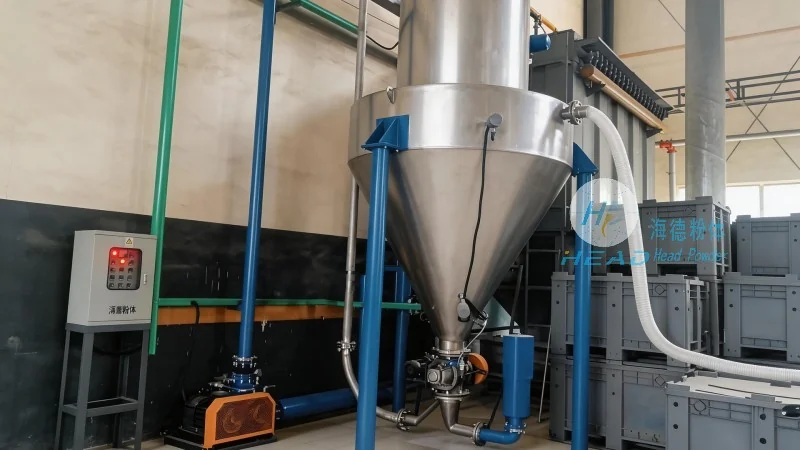
HeadPowder, a leading engineering company based in Shandong, China, specializes in the design, manufacturing, and installation of advanced material handling systems. The air-driven sand material conveying line is a core product that integrates pneumatic technology with mechanical components to achieve seamless material transport. This system is widely used in foundries to handle various types of sand, including green sand, dry sand, and mixed sand, ensuring consistent material flow from the storage area to the molding or casting stations.
The air-driven sand material conveying line consists of several essential components, each playing a critical role in the overall operation. The main components include the material hopper, air compressor, conveying pipes, control valves, and dust collection system. The working principle is based on the use of compressed air to create a negative pressure or positive pressure environment within the conveying pipes, which then pulls or pushes the sand particles through the system.
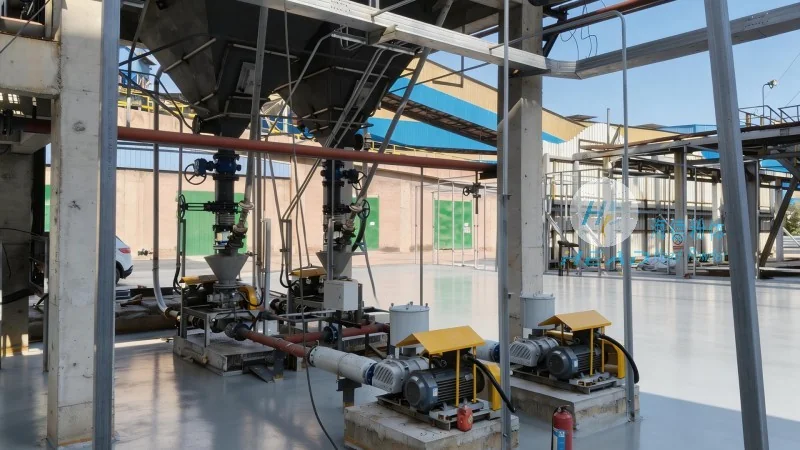
The operation of the air-driven sand material conveying line follows a systematic process to ensure smooth material transport. The following steps outline the typical workflow:
The air-driven sand material conveying line offers several technical advantages that make it an ideal choice for foundry applications. Firstly, it provides a dust-free and clean material transport process, which helps to maintain the quality of the sand and reduce the risk of contamination. Secondly, the system is highly flexible and can be easily customized to suit different production requirements, including varying material types, flow rates, and distances. Thirdly, the pneumatic conveying method is energy-efficient compared to traditional mechanical conveying systems, as it uses less power while achieving high transport efficiency.
Practically, this system is widely used in various foundry processes, such as sand mixing, molding, and casting. It can handle different sand compositions, including green sand, which is used for traditional molding processes, and dry sand, which is used for modern, high-precision casting applications. The system's ability to transport sand materials over long distances without the need for multiple transfer points makes it suitable for large-scale foundry operations.
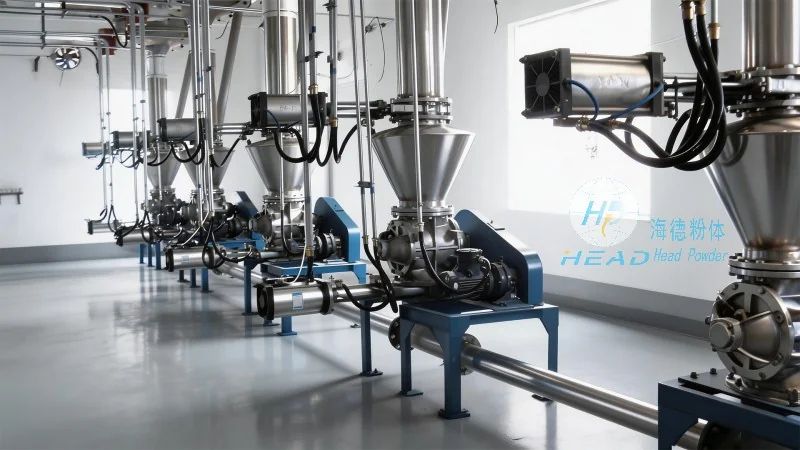
To ensure the long-term reliability and efficiency of the air-driven sand material conveying line, proper maintenance and operational considerations are essential. Regular maintenance tasks include checking the air compressor for proper operation, inspecting the conveying pipes for any signs of wear or blockage, and cleaning the dust collection system to prevent clogging. Additionally, the system should be operated within the recommended pressure and flow rate ranges to avoid excessive wear on components and to maintain optimal performance.
Operational considerations also include monitoring the material flow rate and pressure levels during operation. Any changes in these parameters may indicate a problem with the system, such as a blockage in the pipe or a malfunctioning valve. Prompt troubleshooting and maintenance can help to prevent downtime and ensure continuous production.

 Shandong Headpowder Engineering Co., Ltd.
 156-6277-7102(Manager Zhang)
  0531-83386006
  Zhangqiu District, Jinan City, Shandong Province, China
telephone
WeChatconsult
top