

Operation Process and Working Principle of a Manganese Carbonate Material Pneumatic Conveying Line
Efficient material handling is a critical aspect of industrial operations, especially when dealing with bulk materials like manganese carbonate. The pneumatic conveying line is a sophisticated system designed to transport such materials with precision and reliability. This article delves into the operation process and working principle of a manganese carbonate material pneumatic conveying line, highlighting its key components, operational steps, and the technology behind its functionality.
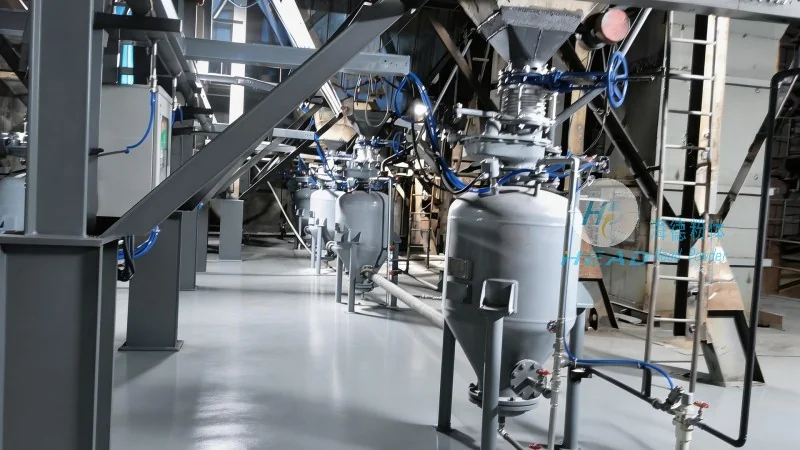
Overview of Manganese Carbonate Pneumatic Conveying Systems
Manganese carbonate, a vital industrial mineral, is widely used in battery production, steelmaking, and chemical manufacturing. Traditional methods of transporting this material, such as belt conveyors or bucket elevators, often face challenges like material degradation, dust generation, and operational inefficiencies. The pneumatic conveying line offers a solution by utilizing air as the conveying medium, enabling a closed-loop system that minimizes contamination and maximizes throughput. Headpowder, a leading engineering company based in Shandong, China, specializes in designing and manufacturing such systems tailored to the unique requirements of manganese carbonate handling.
Key Components of the Pneumatic Conveying Line
The pneumatic conveying line for manganese carbonate typically consists of several essential components that work in tandem to ensure smooth material transport. These include the material feed hopper, which holds the bulk material and regulates its flow; the air compressor or blower, which generates the necessary air pressure to move the material; the conveying pipeline, which transports the material and air mixture; the separation unit, which separates the material from the air; and the material discharge hopper, which collects the conveyed material. Each component plays a crucial role in maintaining the system's efficiency and safety.
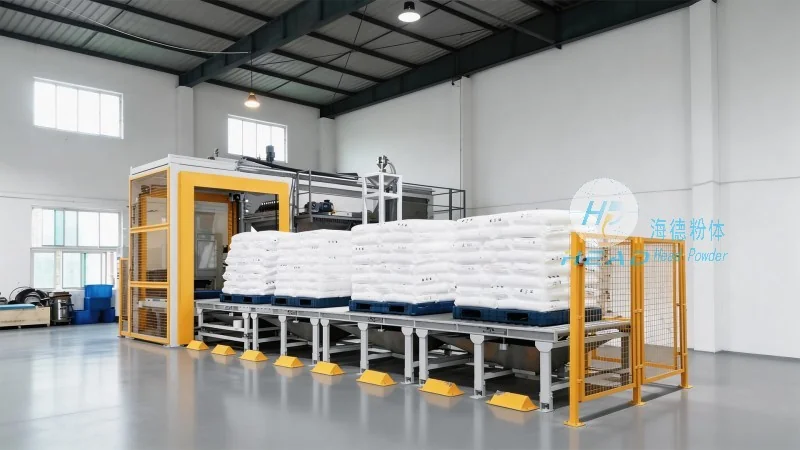
Operation Process of the Manganese Carbonate Pneumatic Conveying Line
The operation of the manganese carbonate pneumatic conveying line follows a systematic process that ensures consistent and reliable material transport. The process begins with the material being fed into the feed hopper from a storage silo or bulk container. The feed hopper is equipped with a feeder, such as a rotary valve or screw feeder, which controls the material flow rate. Simultaneously, the air compressor starts operating, generating a steady stream of compressed air. The compressed air is then introduced into the conveying pipeline at the feed hopper end, creating a pressure differential that propels the material particles forward.
As the material particles enter the pipeline, they are carried by the air stream, forming a dense phase or dilute phase flow depending on the system design. The separation unit, often a cyclone or filter, is positioned at the discharge end of the pipeline. Here, the air and material mixture is separated, with the air being discharged to the atmosphere or recirculated, and the material collected in the discharge hopper. The discharge hopper then transfers the material to the next processing stage, such as a storage tank or a processing unit. The entire process is automated, with sensors and control systems monitoring parameters like pressure, flow rate, and material level to ensure optimal performance.
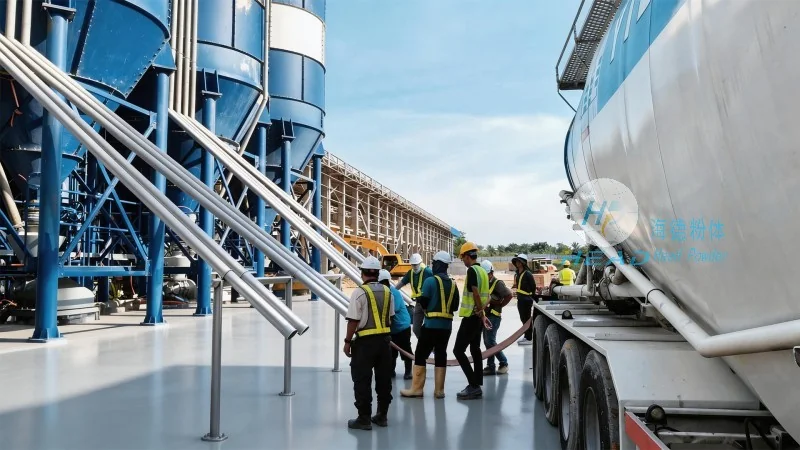
Working Principle of the Pneumatic Conveying System
The working principle of the pneumatic conveying line is based on the fundamental physics of fluid dynamics and particle motion. The system operates by creating a pressure difference between the feed and discharge points, which drives the material particles through the pipeline. In a dense phase conveying system, the material is carried in a slurry-like state, where the particles are closely packed and move together with the air. This method is suitable for transporting fine powders like manganese carbonate, as it minimizes particle degradation and reduces the risk of blockages. The air velocity in the pipeline is carefully controlled to maintain a stable flow, preventing the material from settling or clogging the pipeline.
In a dilute phase conveying system, the material is transported as individual particles suspended in the air stream. This method is more suitable for transporting larger particles or bulk materials, but it may require higher air velocities and more energy. The choice between dense phase and dilute phase depends on the material characteristics, particle size distribution, and the required conveying distance. Headpowder's engineers design the system based on these factors, ensuring the most efficient and cost-effective solution for each application.
Advantages of Using a Pneumatic Conveying Line for Manganese Carbonate
Implementing a pneumatic conveying line for manganese carbonate offers several advantages over traditional material handling methods. Firstly, it provides a closed-loop system that eliminates dust and contamination, which is crucial for maintaining product quality and safety standards. Secondly, it reduces labor costs and operational downtime by automating the material transport process. Thirdly, it offers flexibility in system design, allowing for easy integration with existing production lines and expansion as needed. Additionally, the system is compact and can be installed in various industrial settings, making it a versatile solution for different production scales.
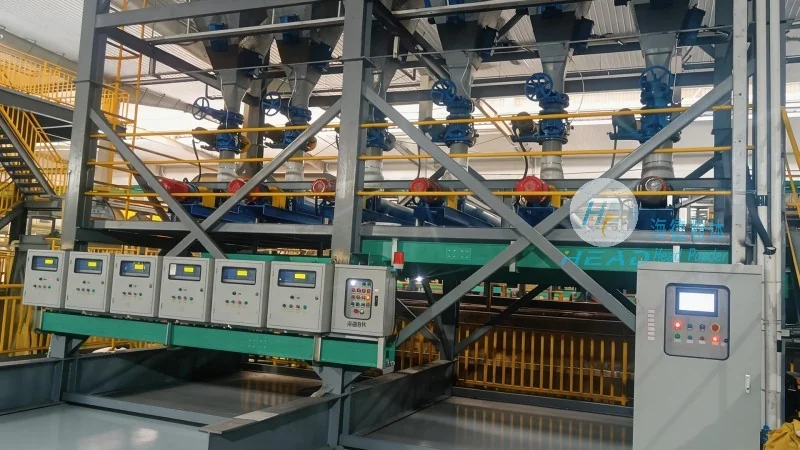
Application Examples and Case Studies
Headpowder has successfully implemented pneumatic conveying lines for manganese carbonate in various industrial applications. For instance, a battery manufacturing plant in China used a dense phase conveying system to transport manganese carbonate from storage silos to the mixing and processing units. The system was designed to handle high volumes of fine powder, with a conveying capacity of 10 tons per hour. The plant reported a significant reduction in material handling time and improved product consistency after the installation. Another case involved a steelmaking facility that used a dilute phase conveying system to transport bulk manganese carbonate from a mine to the production site. The system was able to cover a long distance of 500 meters with minimal energy consumption, demonstrating the efficiency of the technology.
Conclusion and Future Developments
The pneumatic conveying line is an essential technology for efficient and reliable handling of manganese carbonate materials. By understanding the operation process and working principle of such systems, industries can optimize their material transport processes, reduce costs, and improve product quality. Headpowder, with its expertise in engineering and manufacturing, continues to develop advanced pneumatic conveying solutions tailored to the evolving needs of the industrial sector. As technology advances, future developments may include the integration of smart sensors and automation systems to further enhance the performance and efficiency of pneumatic conveying lines.