With more than 10‑year industry experience, Shandong Headpowder delivers full‑service pneumatic‑conveying systems and blowers, undertaking nationwide turn‑key powder‑handling projects.
HeadPowder, a leading manufacturer of industrial conveying solutions, specializes in providing advanced pneumatic conveying equipment tailored for the handling of titanium dioxide (TiO₂) materials. This article delves into the operational process and underlying principles of such systems, offering insights into their efficiency and reliability in material transport.
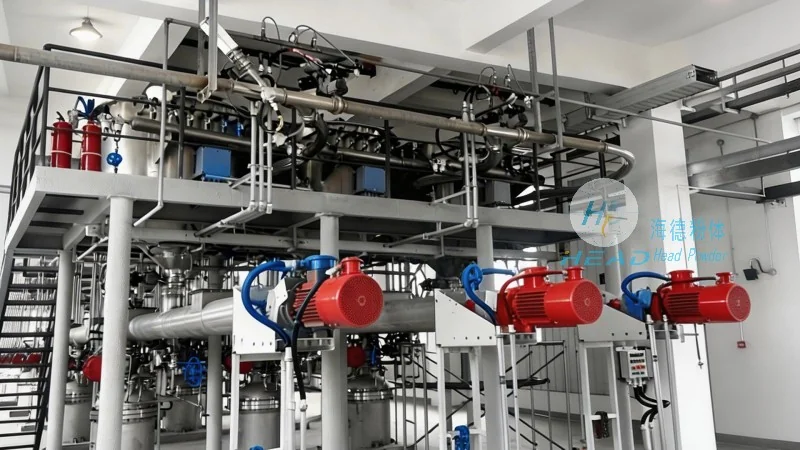
Pneumatic conveying systems utilize air or gas as the medium to transport bulk materials like titanium dioxide from one location to another. These systems are widely adopted in the chemical and pigment industries due to their ability to handle fine powders without the need for mechanical components that might cause contamination or material degradation. The core components of a typical pneumatic conveying system include a material hopper, a conveyor line, a pressure or vacuum source, and a receiver for the discharged material.
The performance of a pneumatic conveying system for titanium dioxide is determined by several critical components. The material hopper serves as the storage and feeding unit, ensuring a consistent supply of the powder to the conveyor line. The conveyor line, often made of stainless steel or other corrosion-resistant materials, is designed to withstand the abrasive nature of titanium dioxide particles. The pressure or vacuum source, such as a blower or compressor, generates the necessary airflow to move the material through the system. Finally, the receiver collects the conveyed material, completing the transport cycle.
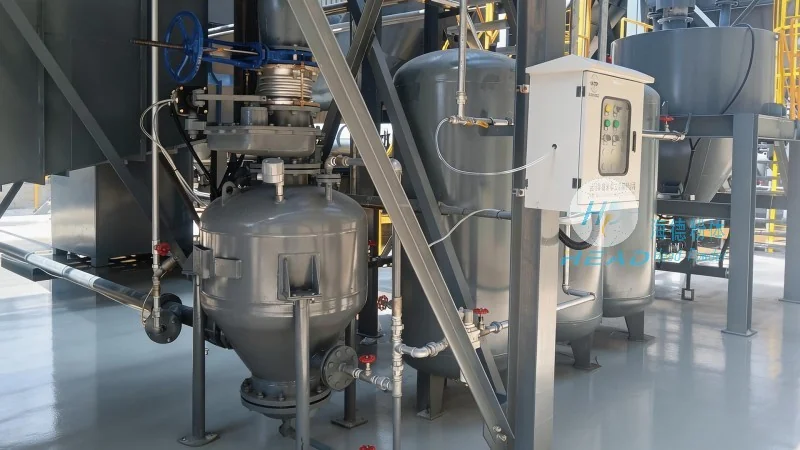
The operation of a pneumatic conveying system for titanium dioxide typically follows a sequential process. Initially, the titanium dioxide powder is fed from the hopper into the conveyor line under controlled conditions. The pressure source then activates, creating a flow of air that draws the powder particles into the system. As the air and powder mixture travels through the conveyor line, the material is transported to the receiver. The receiver may include a filter or separator to prevent any fine particles from escaping, ensuring a clean and efficient discharge. The entire process is monitored for flow rates, pressure differentials, and material consistency to maintain optimal performance.
The working principle of a pneumatic conveying system relies on the fundamental physics of fluid dynamics and particle motion. In a pressure system, compressed air is introduced into the hopper, creating a pressure differential that forces the titanium dioxide particles to move along the conveyor line. The air velocity is carefully controlled to ensure that the particles remain suspended in the air stream without settling or clogging the system. In a vacuum system, the opposite occurs: a vacuum is created at the receiver end, pulling the air and powder mixture through the conveyor line. The balance between air velocity and particle size is crucial to prevent issues like material deposition or air leakage.
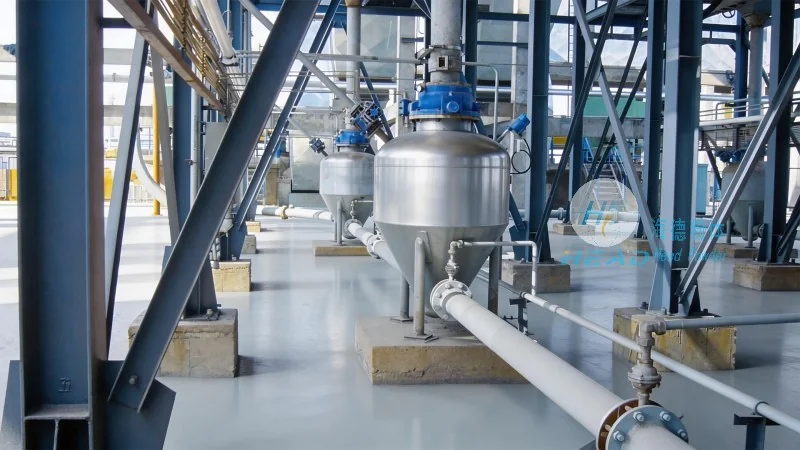
Pneumatic conveying equipment offers several advantages when handling titanium dioxide. These include minimal material degradation, as the system avoids direct contact with mechanical parts, and reduced contamination risk, as the entire process can be enclosed and filtered. Additionally, the systems are highly flexible, allowing for changes in material flow rates and destinations without significant modifications. In the titanium dioxide industry, such systems are used for transporting raw materials from storage silos to processing units, as well as for moving finished products to packaging or shipping areas. The efficiency and reliability of these systems contribute to improved production throughput and lower operational costs.
HeadPowder's pneumatic conveying equipment for titanium dioxide exemplifies advanced engineering and practical application. By understanding the operation process and working principles, users can optimize their material handling operations, ensuring consistent performance and product quality. With a focus on durability and efficiency, these systems are essential for modern titanium dioxide processing facilities, supporting the industry's demands for high-quality pigment production.

 Shandong Headpowder Engineering Co., Ltd.
 156-6277-7102(Manager Zhang)
  0531-83386006
  Zhangqiu District, Jinan City, Shandong Province, China
telephone
WeChatconsult
top