With more than 10‑year industry experience, Shandong Headpowder delivers full‑service pneumatic‑conveying systems and blowers, undertaking nationwide turn‑key powder‑handling projects.
Calcium nitrite powder is a critical chemical material widely used in various industrial applications, including water treatment, food preservation, and construction. The efficient handling and transportation of this powder are essential for maintaining production efficiency and product quality. Pneumatic conveying, a method that uses air to transport bulk materials, offers a reliable solution for moving calcium nitrite powder from storage to processing units. This article explores the operation process and working principle of calcium nitrite powder pneumatic conveying, highlighting key aspects such as system design, material flow, and operational considerations.
As a leading manufacturer in the powder handling industry, Shandong HeadPowder Engineering Co., Ltd. specializes in providing advanced solutions for material transport and processing. With a strong focus on innovation and customer satisfaction, the company has established itself as a trusted partner for businesses requiring efficient and reliable pneumatic conveying systems. HeadPowder's expertise in designing and implementing customized solutions ensures that clients receive tailored systems that meet their specific operational needs. The company's commitment to quality and performance has made it a preferred choice for industries dealing with sensitive or high-value powders like calcium nitrite.
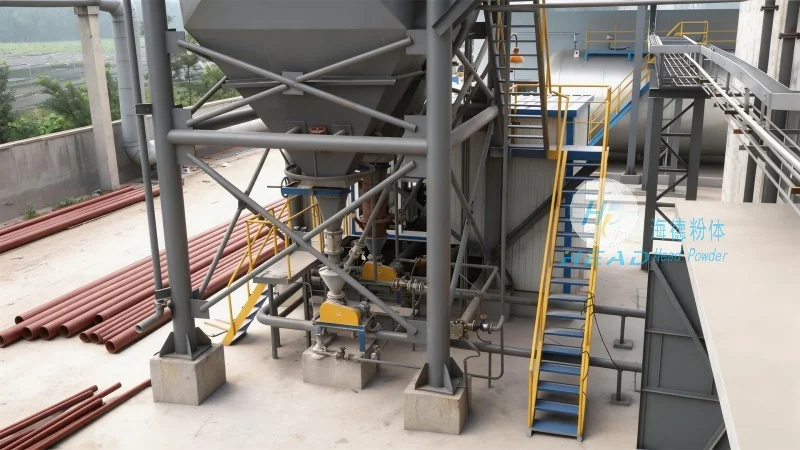
The pneumatic conveying system for calcium nitrite powder typically consists of several key components that work together to ensure smooth material transport. These components include a hopper or storage silo for powder storage, a feeder to control the flow rate of the powder, a conveyor line (either positive or negative pressure) to move the powder through the system, and a receiver or discharge unit where the powder is deposited. The system may also include additional equipment such as filters, cyclones, and dust collectors to maintain air quality and prevent material loss. Each component plays a crucial role in the overall efficiency and effectiveness of the conveying process, and proper selection and maintenance are essential for optimal performance.
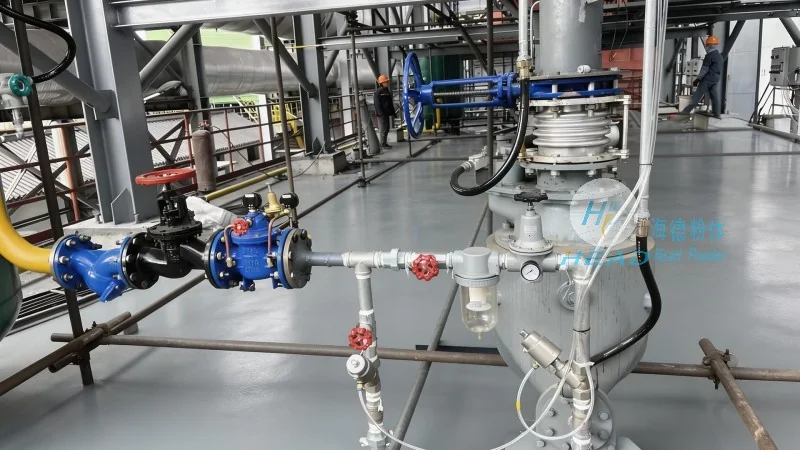
The operation process of calcium nitrite powder pneumatic conveying involves several steps that ensure the material is transported safely and efficiently. The process begins with the powder being loaded into the storage hopper. From there, the feeder regulates the flow of powder into the conveyor line. The conveyor line, which can operate under either positive or negative pressure, uses compressed air to move the powder through the system. The air velocity and pressure are carefully controlled to maintain the powder in a suspended state, preventing blockages and ensuring consistent flow. As the powder travels through the conveyor line, it passes through any necessary processing equipment, such as filters or cyclones, to remove any contaminants or moisture. Finally, the powder is discharged into the receiver or processing unit, completing the conveying cycle. The entire process is typically automated, with sensors and controls monitoring the system to ensure it operates within safe and efficient parameters.
The working principle of pneumatic conveying for calcium nitrite powder is based on the use of air to create a flow that transports the powder particles. In positive pressure systems, compressed air is introduced into the conveyor line, creating a pressure higher than the ambient air pressure. This pressure forces the powder particles to move along the conveyor line, suspended in the air stream. The air velocity is maintained at a level that keeps the powder particles in suspension, preventing them from settling or clogging the system. In negative pressure systems, the conveyor line is kept under a vacuum, drawing the powder from the hopper into the line using the pressure difference. Both systems rely on the principle of fluidization, where the powder particles are kept in a fluid-like state by the air flow, allowing for smooth and continuous transport. The choice between positive and negative pressure systems depends on factors such as the distance to be covered, the material properties, and the desired system design. For calcium nitrite powder, which is a fine and potentially abrasive material, the system design must be optimized to prevent material degradation and equipment wear.
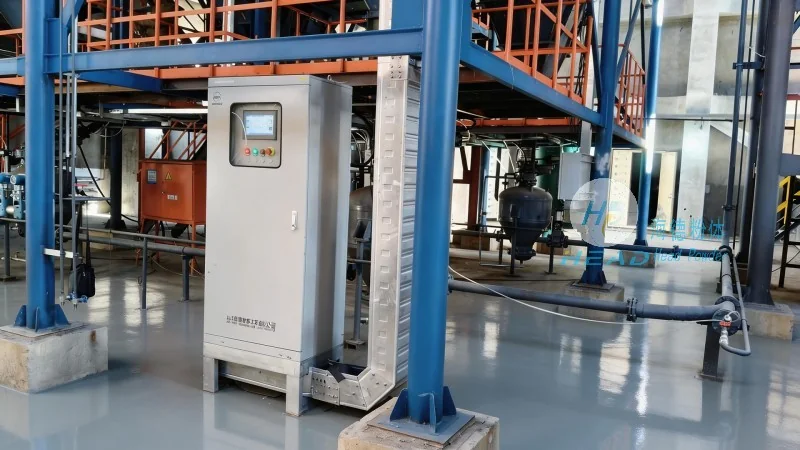
Implementing a pneumatic conveying system for calcium nitrite powder offers several benefits that enhance operational efficiency and product quality. One of the primary advantages is the ability to transport the powder in a closed system, which minimizes exposure to contaminants and reduces dust emissions. This is particularly important for calcium nitrite, which is used in applications where purity and safety are critical. The closed system also helps to maintain the powder's properties, such as moisture content and particle size distribution, ensuring consistent performance in downstream processes. Additionally, pneumatic conveying systems are generally more flexible and adaptable than other material handling methods, allowing for easy integration with existing production lines or expansion as production needs grow. The automated nature of the system reduces the need for manual handling, improving safety and reducing labor costs. Finally, the energy efficiency of pneumatic conveying systems, especially when properly designed and maintained, can lead to cost savings over time by reducing energy consumption and minimizing material losses.
Designing and implementing a pneumatic conveying system for calcium nitrite powder requires careful consideration of several factors to ensure optimal performance and longevity. The first consideration is the material properties of calcium nitrite, including its particle size, density, and flowability. These properties affect the air velocity and pressure required for effective conveying, and must be taken into account when selecting the system type and components. The distance and layout of the conveying line are also critical, as they determine the system's capacity and energy requirements. For longer distances, positive pressure systems may be more suitable due to their higher pressure capabilities, while negative pressure systems are often preferred for shorter distances or when the powder needs to be transported from a higher elevation. The system's capacity must be matched to the production rate of the calcium nitrite powder, ensuring that the conveyor line can handle the required flow rate without overloading or causing blockages. Additionally, the system must be designed to handle any potential hazards associated with calcium nitrite, such as dust explosions or chemical reactions, by incorporating appropriate safety features such as explosion-proof components and dust collection systems. Proper maintenance and regular inspections are also essential to ensure the system operates efficiently and safely over its lifespan.

 Shandong Headpowder Engineering Co., Ltd.
 156-6277-7102(Manager Zhang)
  0531-83386006
  Zhangqiu District, Jinan City, Shandong Province, China
telephone
WeChatconsult
top