With more than 10‑year industry experience, Shandong Headpowder delivers full‑service pneumatic‑conveying systems and blowers, undertaking nationwide turn‑key powder‑handling projects.
Urea, a critical nitrogen fertilizer, is widely used in agricultural and industrial applications. Efficient and reliable transportation of urea from production facilities to storage or distribution points is essential for maintaining supply chain integrity. Pneumatic conveying systems, particularly those designed for urea, offer a robust solution to this challenge. This article delves into the operation process and working principle of urea pneumatic conveying lines, highlighting the technical aspects and operational efficiency of such systems.
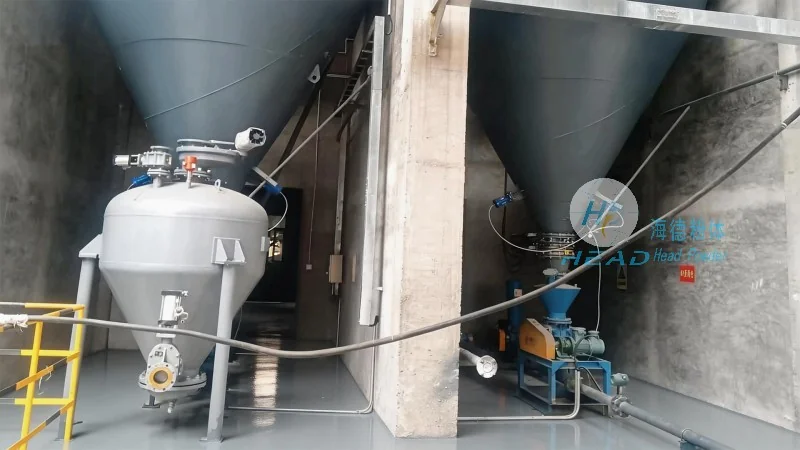
HeadPowder, a leading engineering company based in Shandong, China, specializes in the design, manufacturing, and installation of advanced material handling solutions. With a strong focus on innovation and customer-centric approaches, HeadPowder has established itself as a trusted partner in the fertilizer and bulk material processing industries. The company's expertise in pneumatic conveying technology ensures that clients receive tailored solutions that meet their specific operational requirements.
The core principle of urea pneumatic conveying involves the use of air or gas to transport urea particles through a pipeline system. This method, known as pneumatic conveying, relies on the creation of a pressure differential or the use of vacuum to move the material. In the case of urea, which is typically granular or prilled, the system uses a combination of positive pressure (pressure conveying) or negative pressure (vacuum conveying) to ensure smooth and continuous transport. The key components of the system include a hopper for material storage, a feeder to control the flow rate, a conveyor line with appropriate ductwork, and a receiver for the discharged material.
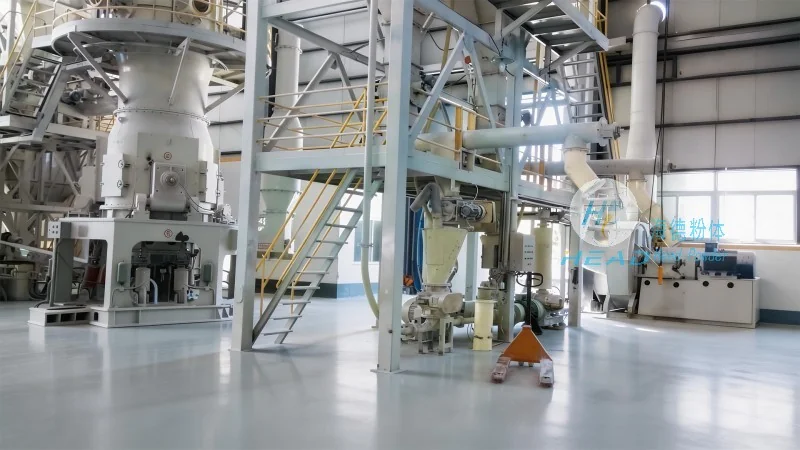
The operation of a urea pneumatic conveying line involves several sequential steps, each critical to the overall efficiency and safety of the process. The process begins with the loading of urea into the storage hopper. The hopper is equipped with a level sensor to monitor the material volume, ensuring that the feeder receives a consistent supply. The feeder, often a rotary valve or a screw feeder, regulates the flow of urea into the conveyor line. As the urea enters the pipeline, the conveying air is introduced, creating a flow that carries the particles forward. The air velocity is carefully controlled to prevent particle segregation or blockages, which can occur if the velocity is too low or too high. The conveying line may include bends, expansions, or filters to manage the flow and ensure that the urea reaches the receiver without degradation or loss.
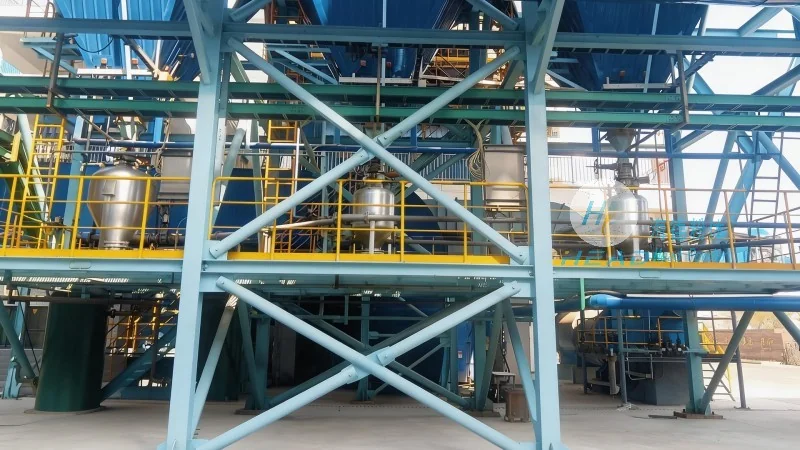
Urea pneumatic conveying systems offer several advantages over traditional methods such as belt conveyors or trucks. These include:
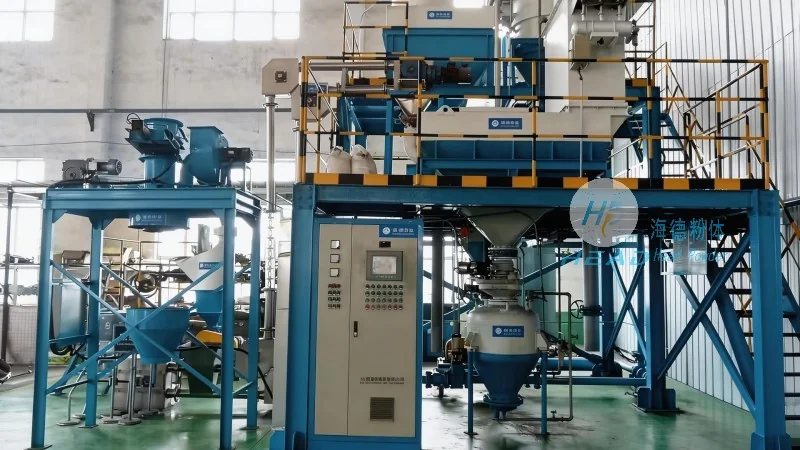
Urea pneumatic conveying lines are widely used in the fertilizer industry, particularly in large-scale production and distribution centers. They are also applicable in other bulk material handling sectors, such as chemical processing and food processing, where the transport of granular or powdered materials is required. The system's adaptability to different urea particle sizes and flow rates makes it suitable for various production capacities, from small-scale operations to large industrial plants.
In summary, urea pneumatic conveying lines represent a sophisticated and efficient solution for the transportation of urea. By understanding the working principle and operation process, stakeholders can make informed decisions about implementing such systems, ensuring optimal performance and cost-effectiveness in their material handling operations.

 Shandong Headpowder Engineering Co., Ltd.
 156-6277-7102(Manager Zhang)
  0531-83386006
  Zhangqiu District, Jinan City, Shandong Province, China
telephone
WeChatconsult
top