With more than 10‑year industry experience, Shandong Headpowder delivers full‑service pneumatic‑conveying systems and blowers, undertaking nationwide turn‑key powder‑handling projects.
Abrasives pneumatic conveying systems are critical components in industrial processing, particularly for handling abrasive materials like aluminum oxide (corundum) with precision and efficiency. These systems utilize air or gas to transport abrasive powders or granules from one location to another, offering a non-contact method that minimizes material degradation and equipment wear. As a leading manufacturer in the field, Shandong HeadPowder Engineering Co., Ltd. specializes in designing and implementing such systems tailored to the unique demands of abrasive material handling.
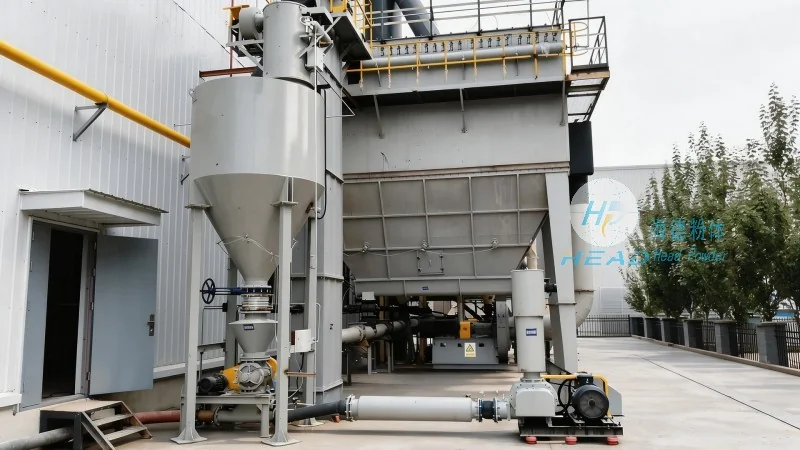
The operation process of an abrasives pneumatic conveying system typically involves several key stages. First, the abrasive material is loaded into a hopper or storage silo. From there, the material is fed into a conveying line through a rotary valve or feeder, which controls the flow rate. The conveying medium, usually compressed air or a combination of air and gas, is introduced into the system, creating a flow that propels the abrasive particles through the pipeline. The system may include various components such as cyclones, filters, and receivers to separate the conveyed material from the air stream and collect it at the destination. The entire process is designed to maintain consistent material flow, minimize pressure drops, and ensure efficient transport while protecting both the material and the equipment from damage.
The working principle of abrasives pneumatic conveying relies on the fundamental concept of fluidization and drag force. When air is introduced into the conveying line at a sufficient velocity, it creates a turbulent flow that lifts and transports the abrasive particles. The drag force exerted by the air on the particles overcomes gravity and other resistive forces, allowing the material to move through the system. The system may operate under either positive pressure (pressure conveying) or negative pressure (vacuum conveying), depending on the application requirements. Positive pressure systems are often used for long-distance or high-volume transport, as they can maintain consistent pressure and flow rates. Negative pressure systems, on the other hand, are suitable for applications where dust control and material containment are critical, as they draw material into the system while preventing dust from escaping.
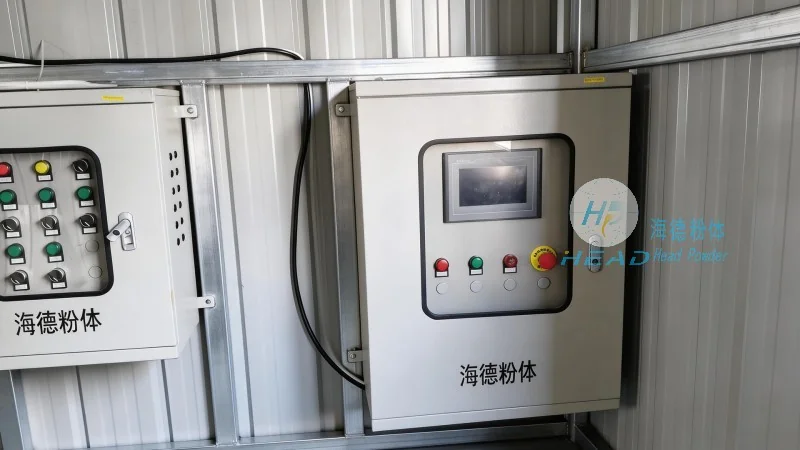
Systems designed for abrasives pneumatic conveying by Shandong HeadPowder Engineering Co., Ltd. offer several distinct advantages. One of the primary benefits is the ability to handle abrasive materials without direct contact with equipment, which reduces wear and extends the lifespan of components like pipelines, valves, and pumps. Additionally, pneumatic conveying systems provide excellent dust control, as the material is contained within the air stream, minimizing environmental contamination and improving workplace safety. The technology also enables precise control over material flow rates, ensuring consistent delivery to downstream processes such as mixing, coating, or packaging. Furthermore, these systems are versatile and can be adapted to various operational conditions, including different particle sizes, moisture levels, and abrasive levels, making them suitable for a wide range of industrial applications.
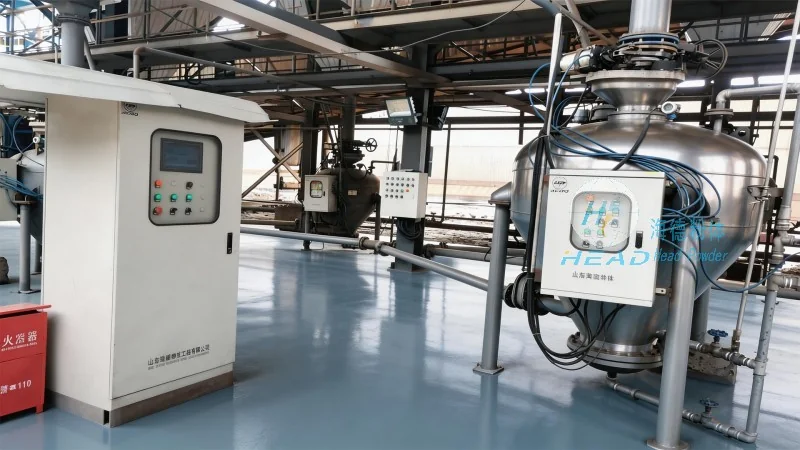
Abrasives pneumatic conveying systems are widely used in industries that require the handling of abrasive powders and granules. Common applications include the manufacturing of abrasive tools, such as grinding wheels and sandpaper, where consistent material quality is essential. The systems are also utilized in the production of refractory materials, where aluminum oxide and other abrasives are mixed with binders to create high-temperature-resistant products. In the automotive and aerospace industries, these systems help transport abrasive coatings and finishing materials used in surface treatment processes. Additionally, they are employed in the chemical and pharmaceutical sectors for handling abrasive additives and fillers in production lines. The adaptability of pneumatic conveying systems makes them a preferred choice for any application where efficient, low-wear material transport is required.
Shandong HeadPowder Engineering Co., Ltd., operating under the brand name headpowder, is a leading provider of industrial pneumatic conveying solutions, particularly for abrasive materials. The company is headquartered in Shandong, China, and has established itself as a trusted partner for businesses seeking reliable and efficient material handling systems. With years of experience in the industry, HeadPowder specializes in designing, manufacturing, and installing customized pneumatic conveying systems that meet the specific needs of clients. The company's commitment to quality and innovation has enabled it to deliver solutions that enhance productivity, reduce operational costs, and improve safety in material handling processes. HeadPowder's team of experts works closely with clients to understand their unique challenges and develop tailored solutions that optimize material transport while minimizing downtime and maintenance.

 Shandong Headpowder Engineering Co., Ltd.
 156-6277-7102(Manager Zhang)
  0531-83386006
  Zhangqiu District, Jinan City, Shandong Province, China
telephone
WeChatconsult
top