With more than 10‑year industry experience, Shandong Headpowder delivers full‑service pneumatic‑conveying systems and blowers, undertaking nationwide turn‑key powder‑handling projects.
HeadPowder, a leading provider in the field of material handling solutions, specializes in the design and implementation of pneumatic conveying systems tailored for wheat flour and other fine powders. This article delves into the fundamental principles behind pneumatic conveying technology and explores the diverse work scenarios where such systems are applied, highlighting the efficiency and reliability they offer in industrial settings.
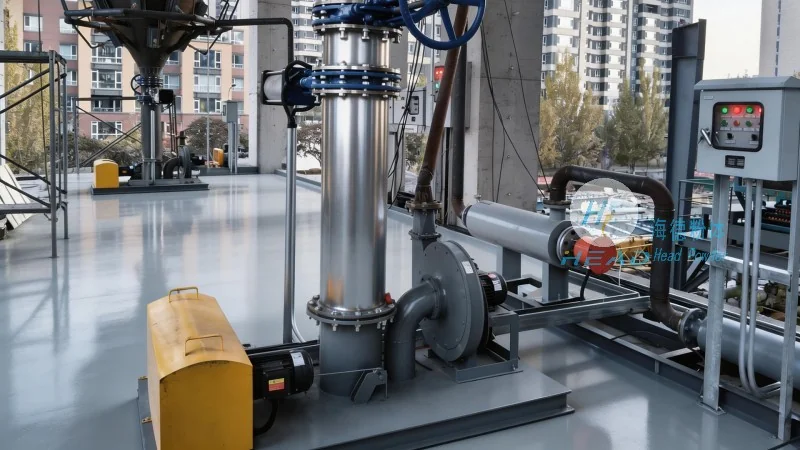
At the core of pneumatic conveying for wheat flour is the use of air as the conveying medium to transport dry, free-flowing materials like flour through a pipeline system. The process typically involves a combination of positive pressure (pressure conveying) or negative pressure (vacuum conveying) to move the material from the source to the destination. Positive pressure systems utilize a blower or compressor to generate air pressure that pushes the material through the pipeline, while negative pressure systems use a vacuum pump to create a suction effect that draws the material in. Both methods are engineered to handle the unique characteristics of wheat flour, such as its fine particle size, low bulk density, and potential for dust generation, ensuring safe and efficient transport.
The working principle of pneumatic conveying for wheat flour involves several key components that work in concert to achieve seamless material transfer. A typical system includes a hopper or feeder to store and meter the flour, a conveying line (often made of stainless steel to prevent contamination and corrosion), a dust collector to capture any airborne particles, and a receiver or discharge point where the flour is deposited. The air flow is controlled by valves and regulators to maintain optimal pressure and flow rates, preventing clogging or material degradation. This integrated approach ensures that the conveying process is both effective and environmentally friendly, minimizing the risk of product contamination and waste.
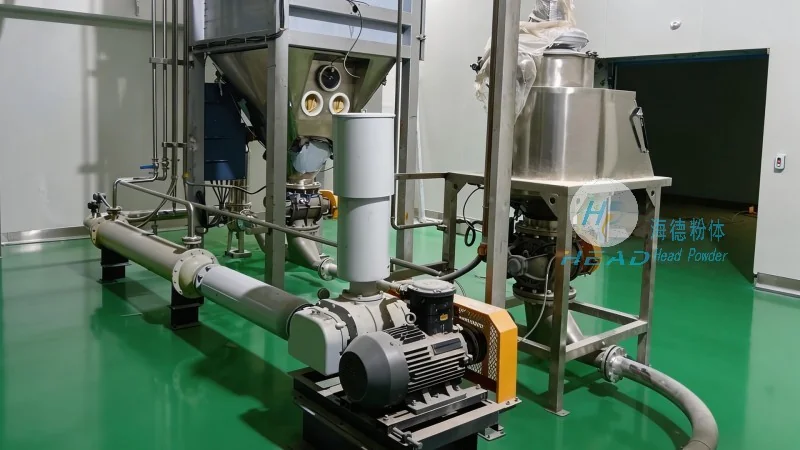
One of the primary advantages of pneumatic conveying for wheat flour is its ability to handle fine powders without the need for mechanical components like screws or belts, which can cause wear and tear or introduce contaminants. The air-based system allows for gentle handling of the material, preserving its quality and preventing agglomeration or segregation. Additionally, pneumatic conveying systems can be designed to operate in a closed loop, reducing dust emissions and improving workplace safety. This makes them ideal for applications where hygiene and environmental compliance are critical, such as in food processing facilities.
Work scenarios where pneumatic conveying for wheat flour is commonly employed include flour mills, where large volumes of flour are transported between storage silos, processing equipment, and packaging lines. In these settings, the system can handle continuous or intermittent flow, adapting to varying production demands. Another common application is in the bakery and confectionery industries, where flour is conveyed from storage to mixing and baking equipment. The flexibility of pneumatic conveying allows for integration with existing production lines, reducing downtime and increasing overall operational efficiency.
In the pharmaceutical and chemical industries, where wheat flour or similar fine powders are used as raw materials, pneumatic conveying systems are also utilized. These industries require strict control over material purity and contamination, making the closed-loop design of pneumatic conveying a preferred choice. The system's ability to maintain consistent flow rates and pressure ensures that the material is delivered accurately to the next stage of processing, minimizing waste and improving product quality.
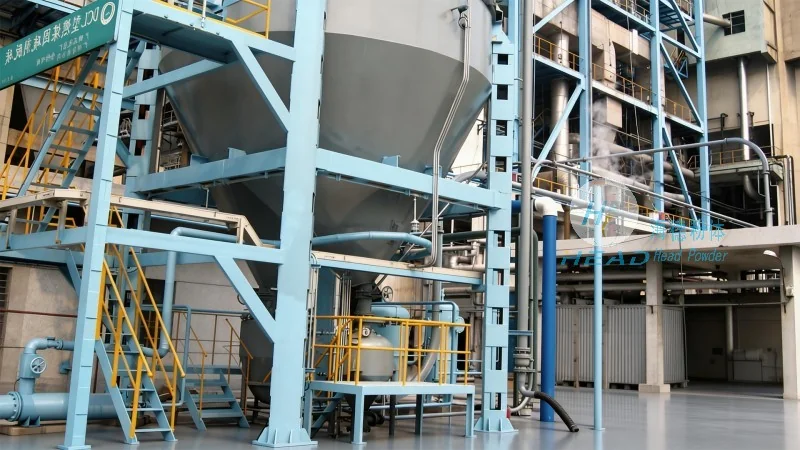
HeadPowder Engineering Co., Ltd., based in Shandong, China, is a trusted partner in providing customized pneumatic conveying solutions for wheat flour applications. With years of experience in the industry, the company understands the unique challenges of handling fine powders and designs systems that meet the specific needs of each client. From initial consultation and system design to installation and maintenance, HeadPowder offers comprehensive support to ensure that clients achieve optimal performance and reliability. The company's expertise in material handling technology, combined with a commitment to quality and customer satisfaction, makes it a leading choice for businesses seeking efficient and effective pneumatic conveying solutions for wheat flour and other similar materials.
By leveraging the principles of pneumatic conveying and adapting them to the specific requirements of wheat flour, HeadPowder's systems offer significant benefits in terms of efficiency, safety, and cost-effectiveness. The technology's ability to handle fine powders gently, maintain a closed environment, and integrate seamlessly with existing production lines makes it an ideal solution for modern industrial applications. As businesses continue to seek innovative ways to improve their material handling processes, pneumatic conveying for wheat flour remains a reliable and efficient choice, supported by companies like HeadPowder who specialize in delivering tailored solutions to meet diverse industry needs.

 Shandong Headpowder Engineering Co., Ltd.
 156-6277-7102(Manager Zhang)
  0531-83386006
  Zhangqiu District, Jinan City, Shandong Province, China
telephone
WeChatconsult
top