With more than 10‑year industry experience, Shandong Headpowder delivers full‑service pneumatic‑conveying systems and blowers, undertaking nationwide turn‑key powder‑handling projects.
When it comes to the efficient and reliable transportation of foaming powders, selecting the right conveying method is crucial for maintaining product quality and operational efficiency. As a leading provider in the industry, Shandong HeadPowder Engineering Co., Ltd. specializes in delivering tailored solutions for various foam powder conveying applications. This article explores the primary methods used for foaming powder transport, highlighting their advantages and practical applications.

Efficient foaming powder conveying is essential in industries such as fire suppression, agriculture, and construction, where the consistency and integrity of the powder are critical. Poor conveying methods can lead to product degradation, clogging, or uneven distribution, which may impact the effectiveness of the final product. Therefore, understanding the different conveying techniques and choosing the most suitable one for specific operational needs is a key consideration for businesses in these sectors.
Several methods are commonly employed for foaming powder transport, each with its own set of advantages and limitations. The choice of method often depends on factors like the powder's properties, the required conveying distance, and the scale of the operation. Here are some of the most widely used approaches:
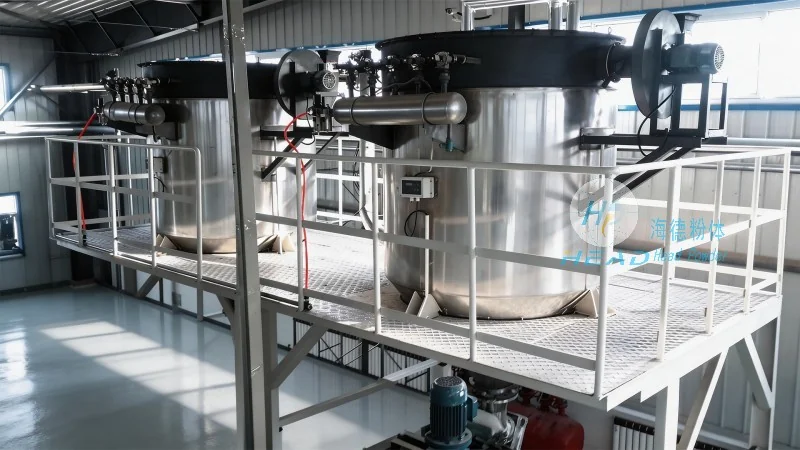
Mechanical conveying systems utilize mechanical components like screws, belts, or buckets to move foaming powders. These systems are particularly effective for short to medium distances and for powders that are prone to clogging or require gentle handling. For instance, screw conveyors are widely used in the fire suppression industry to transport foaming powders to storage tanks or application equipment. The slow and controlled movement of the screw ensures that the powder remains intact and prevents segregation or degradation. Additionally, mechanical conveyors can be designed with special materials to resist corrosion or abrasion, making them suitable for handling chemically active foaming powders.
Air-driven pneumatic conveying is another popular method for foaming powder transport, especially for longer distances or when the powder needs to be moved through complex systems. This technique involves using compressed air to create a flow that transports the powder particles through a pipeline. Pneumatic systems can be categorized into pressure and vacuum types. Pressure systems use high-pressure air to push the powder forward, while vacuum systems use a vacuum to pull the powder into the line. For foaming powders, pressure systems are often preferred as they can handle a wider range of particle sizes and provide more consistent flow rates. The key advantage of pneumatic conveying is its ability to handle powders with high moisture content or those that are prone to clumping, as the air flow helps to break up agglomerates and maintain a uniform distribution.
In some cases, a combination of mechanical and pneumatic conveying is used to achieve optimal results. Hybrid systems may start with a mechanical conveyor to move the powder from a storage bin to a feeding point, and then use a pneumatic system to transport it to the final destination. This approach leverages the strengths of both methods, ensuring efficient and reliable transport while minimizing the risk of clogging or degradation. For example, a hybrid system might use a screw conveyor to feed a pneumatic line, which then transports the foaming powder to a fire suppression system. This configuration allows for precise control over the powder flow and ensures that the powder reaches the application point without any loss of quality.
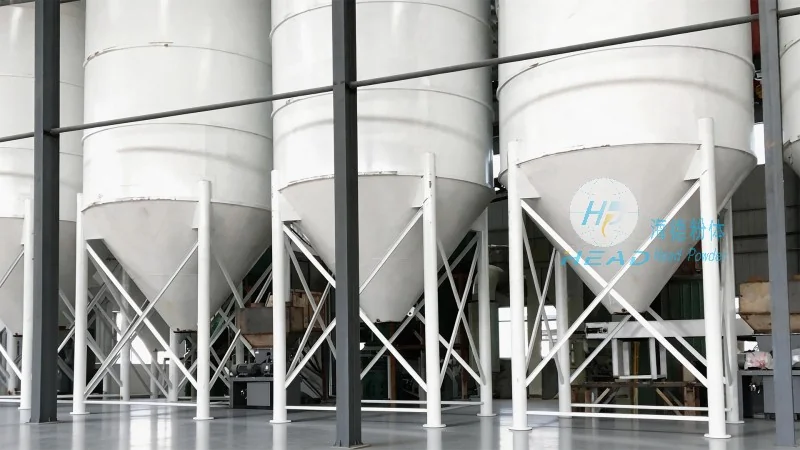
When selecting a conveying method for foaming powders, several factors must be taken into account to ensure the best performance and longevity of the system. These factors include the powder's physical properties, such as particle size, density, and moisture content, as well as the operational requirements like conveying distance, flow rate, and environmental conditions. The material of construction is also critical, as foaming powders can be corrosive or abrasive, requiring materials like stainless steel or special alloys to prevent wear and contamination. Additionally, the system's maintenance requirements and cost-effectiveness should be evaluated to ensure it aligns with the overall budget and operational goals of the business.
Efficient foaming powder conveying is a critical aspect of many industrial processes, and the choice of conveying method plays a significant role in maintaining product quality and operational efficiency. By understanding the different options available and considering the specific needs of the application, businesses can select the most suitable conveying system. Shandong HeadPowder Engineering Co., Ltd. offers comprehensive solutions tailored to various foaming powder conveying requirements, ensuring that clients receive reliable and effective systems that meet their operational demands. Whether through mechanical, pneumatic, or hybrid systems, the goal is to deliver foaming powders in a manner that preserves their integrity and ensures optimal performance in the final application.

 Shandong Headpowder Engineering Co., Ltd.
 156-6277-7102(Manager Zhang)
  0531-83386006
  Zhangqiu District, Jinan City, Shandong Province, China
telephone
WeChatconsult
top