With more than 10‑year industry experience, Shandong Headpowder delivers full‑service pneumatic‑conveying systems and blowers, undertaking nationwide turn‑key powder‑handling projects.
HeadPowder, a leading manufacturer based in Shandong, China, specializes in the design and implementation of advanced pneumatic conveying systems for handling inorganic salt crystals. This article explores the fundamental principles behind these systems and highlights key application scenarios where they offer significant advantages in material handling operations.
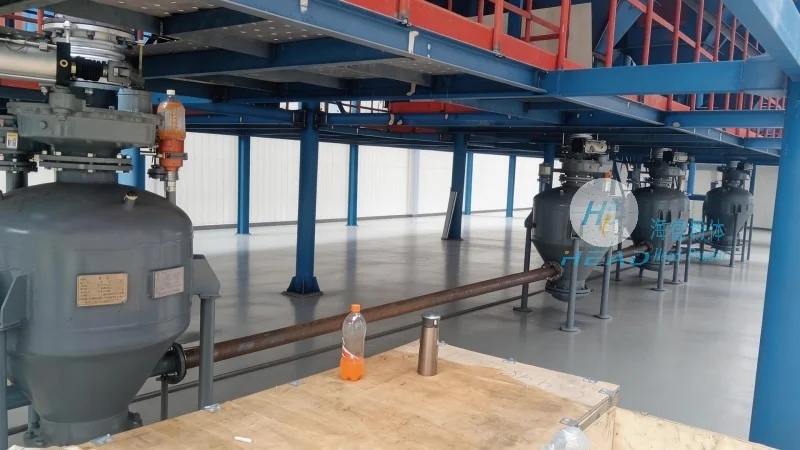
The core principle of pneumatic conveying involves the use of air or other gases to transport solid materials like inorganic salt crystals through a pipeline. Unlike traditional mechanical conveying methods, which rely on belts, buckets, or screw conveyors, pneumatic systems utilize air pressure to move the material. This method is particularly effective for inorganic salt crystals due to their relatively fine particle size and the need for gentle handling to prevent degradation or agglomeration. The system typically consists of a hopper, a feeder, a conveying line, and a receiver. The feeder controls the flow of salt crystals into the pipeline, while the air compressor generates the necessary pressure to propel the material. The conveying line is designed with appropriate bends and fittings to ensure smooth flow, minimizing friction and pressure losses. The receiver collects the material at the end of the line, often equipped with a dust collection system to maintain air quality and comply with environmental regulations.
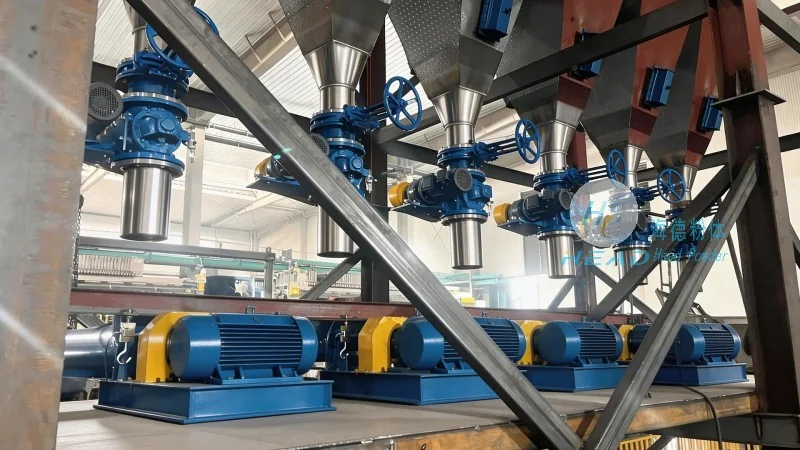
HeadPowder's pneumatic conveying lines are widely applied in various industrial settings where the efficient and safe transport of inorganic salt crystals is critical. One common scenario is in chemical and fertilizer plants, where large quantities of salt crystals need to be moved between storage silos, processing units, and packaging facilities. The pneumatic system allows for continuous, dust-free transfer, reducing labor costs and improving operational efficiency. Another application is in food processing industries, where the handling of salt crystals must adhere to strict hygiene standards. The enclosed system prevents contamination and ensures product purity, making it suitable for food-grade applications. Additionally, in mining and mineral processing operations, these systems are used to transport raw salt crystals from extraction sites to processing plants, enabling remote and automated material handling. The benefits of using pneumatic conveying for inorganic salt crystals include reduced maintenance compared to mechanical systems, lower energy consumption due to optimized air flow, and the ability to handle materials with varying particle sizes and moisture content. The system's flexibility also allows for easy integration with existing production lines, minimizing downtime during installation and operation.
When designing a pneumatic conveying system for inorganic salt crystals, several technical factors must be considered to ensure optimal performance and longevity. Particle size and density are critical parameters, as they affect the air velocity required for effective transport. Larger or denser particles may require higher air pressure or different pipeline diameters. The system's layout, including the number of bends and the length of the conveying line, impacts pressure drop and energy consumption. HeadPowder engineers carefully calculate these parameters using computational fluid dynamics (CFD) and empirical formulas to design a system that meets the specific needs of the client. Material selection for the pipeline and components is also important, as inorganic salt crystals can be corrosive or abrasive. Stainless steel or special alloys are often used to prevent wear and corrosion. The feeder design, such as a rotary valve or a star feeder, must be chosen to handle the specific characteristics of the salt crystals, ensuring consistent flow and preventing blockages. The receiver and dust collection system are designed to capture any fine particles that may escape, maintaining air quality and complying with local environmental regulations. Regular maintenance, including cleaning of the pipeline and replacement of worn parts, is essential to keep the system operating efficiently and prevent downtime.
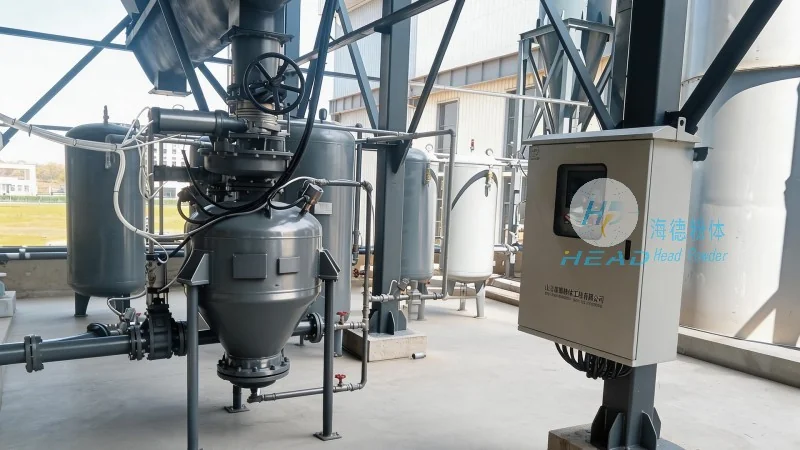
HeadPowder Engineering Co., Ltd., with its headquarters in Shandong, China, provides comprehensive solutions for pneumatic conveying systems tailored to the unique requirements of inorganic salt crystal handling. By leveraging advanced engineering principles and years of industry experience, the company designs systems that offer high efficiency, reliability, and safety. The principles of pneumatic conveying, combined with tailored system design, enable the seamless transport of inorganic salt crystals in various industrial applications. Whether for chemical processing, food production, or mining operations, HeadPowder's pneumatic conveying lines provide a cost-effective and environmentally friendly solution for material handling. The company's commitment to quality and customer satisfaction ensures that clients receive systems that meet their specific needs and contribute to improved operational performance.

 Shandong Headpowder Engineering Co., Ltd.
 156-6277-7102(Manager Zhang)
  0531-83386006
  Zhangqiu District, Jinan City, Shandong Province, China
telephone
WeChatconsult
top