With more than 10‑year industry experience, Shandong Headpowder delivers full‑service pneumatic‑conveying systems and blowers, undertaking nationwide turn‑key powder‑handling projects.
Understanding the pneumatic conveying of Polyvinyl Butyral (PVB) powder is crucial for industries that rely on efficient material handling. PVB, a versatile polymer widely used in applications such as safety glass and coatings, often requires specialized transport methods to maintain its quality and integrity. This article delves into the working principle and key characteristics of PVB powder pneumatic conveying, providing insights into how this technology ensures reliable and effective material transport.
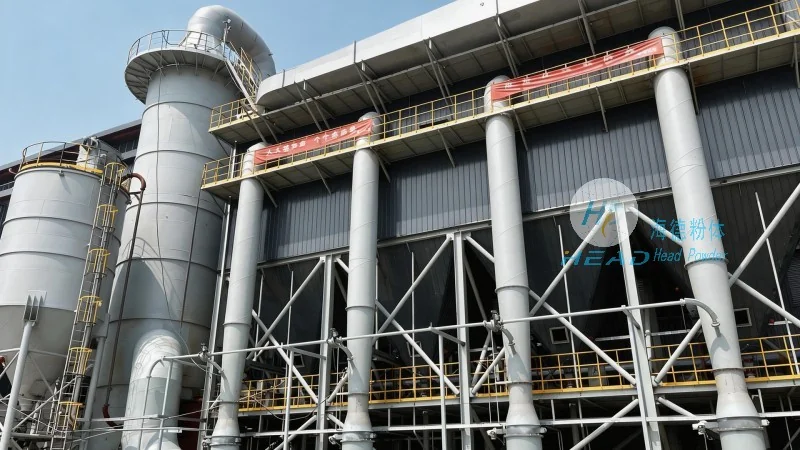
The core mechanism of PVB powder pneumatic conveying involves the use of air or gas to transport solid particles through a pipeline system. This process typically operates under either positive or negative pressure, depending on the specific requirements of the application. In positive pressure systems, compressed air is introduced into the conveying line, creating a pressure differential that propels the PVB powder forward. Conversely, negative pressure systems, also known as suction or vacuum systems, create a lower pressure environment that draws the powder from the source into the conveying line. The choice between these systems depends on factors such as the distance of transport, the volume of material, and the need to maintain product purity.
During the conveying process, the PVB powder is suspended in the air stream, which allows it to travel through the pipeline without direct contact with the pipe walls. This suspension is achieved by maintaining a sufficient air velocity, which is critical to prevent particle deposition or clogging. The air velocity must be high enough to overcome the gravitational forces acting on the particles but low enough to avoid excessive wear on the equipment and to minimize energy consumption. The system also includes components such as feeders, cyclones, and filters to ensure smooth material flow and to separate the PVB powder from the air stream at the destination. These components are essential for maintaining the quality of the PVB powder and preventing contamination from the conveying air.
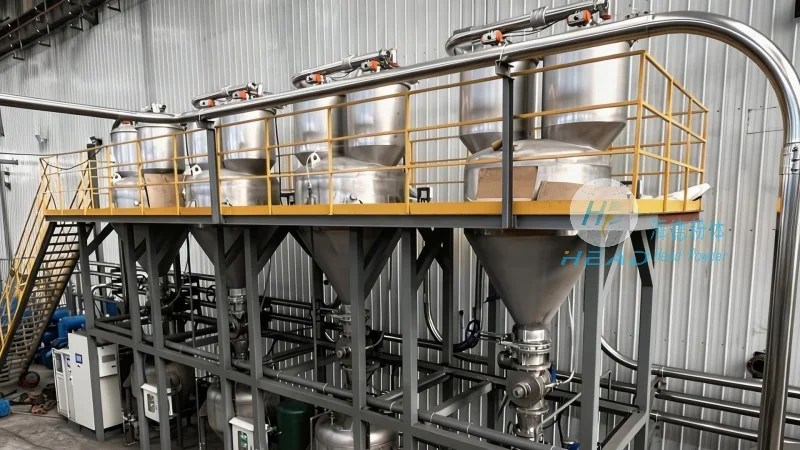
Several distinct characteristics define the effectiveness of PVB powder pneumatic conveying. One of the primary advantages is its ability to handle fine or cohesive powders, which are often challenging to transport using traditional methods like bulk bags or trucks. The pneumatic system ensures that the PVB powder remains in a suspended state, reducing the risk of agglomeration and maintaining its particle size distribution. This is particularly important for PVB, as its properties can be affected by handling conditions, and maintaining uniformity is critical for downstream applications.
Another significant characteristic is the system's flexibility in terms of layout and distance. PVB powder can be conveyed over long distances, including vertical and horizontal segments, with minimal loss of material. The ability to integrate multiple conveying lines and to connect to existing infrastructure makes this technology adaptable to various industrial settings. Additionally, the system offers a high degree of control over the conveying rate, allowing operators to adjust the flow of PVB powder based on production needs or process requirements.
Energy efficiency is also a notable characteristic of modern PVB powder pneumatic conveying systems. Advanced designs incorporate features such as variable frequency drives (VFDs) and optimized air flow management to reduce energy consumption while maintaining performance. This not only lowers operational costs but also aligns with sustainability goals in industrial operations. Furthermore, the system's ability to handle PVB powder in a closed environment minimizes dust emissions and improves workplace safety, which is a critical consideration in many manufacturing facilities.
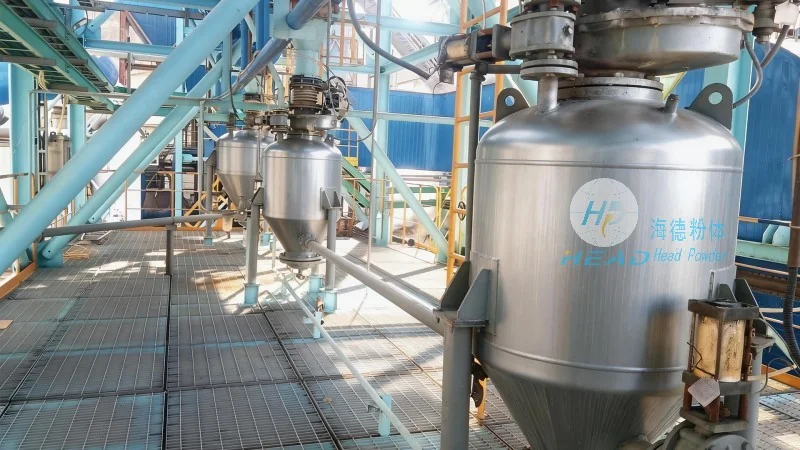
Shandong HeadPowder Engineering Co., Ltd., operating under the brand name headpowder, is a leading provider of specialized material handling solutions for industries dealing with powders and granules. With a focus on innovation and customer-centric approaches, the company has established itself as a trusted partner in the field of pneumatic conveying technology. HeadPowder's expertise lies in designing and manufacturing systems tailored to the unique requirements of PVB powder and other challenging materials, ensuring optimal performance and reliability.
HeadPowder's commitment to quality is reflected in its adherence to industry standards and rigorous testing protocols. The company's facilities are equipped with state-of-the-art equipment and skilled professionals who work closely with clients to understand their specific needs and develop customized solutions. Whether it's a new installation or an upgrade to an existing system, HeadPowder provides comprehensive support, including design, installation, and after-sales service. The company's headquarters is located in Shandong, China, where it leverages local resources and expertise to deliver high-quality products and services to a global clientele.

 Shandong Headpowder Engineering Co., Ltd.
 156-6277-7102(Manager Zhang)
  0531-83386006
  Zhangqiu District, Jinan City, Shandong Province, China
telephone
WeChatconsult
top