With more than 10‑year industry experience, Shandong Headpowder delivers full‑service pneumatic‑conveying systems and blowers, undertaking nationwide turn‑key powder‑handling projects.
Pneumatic conveying is a critical technology in the food industry, especially for handling food additive powders. This method involves transporting dry powder materials through a pipeline using compressed air or other gases. The process is widely adopted due to its ability to handle fine powders efficiently while maintaining hygiene and product integrity. For food additive applications, the system must adhere to strict standards to ensure that the additives remain pure, dry, and free from contamination.
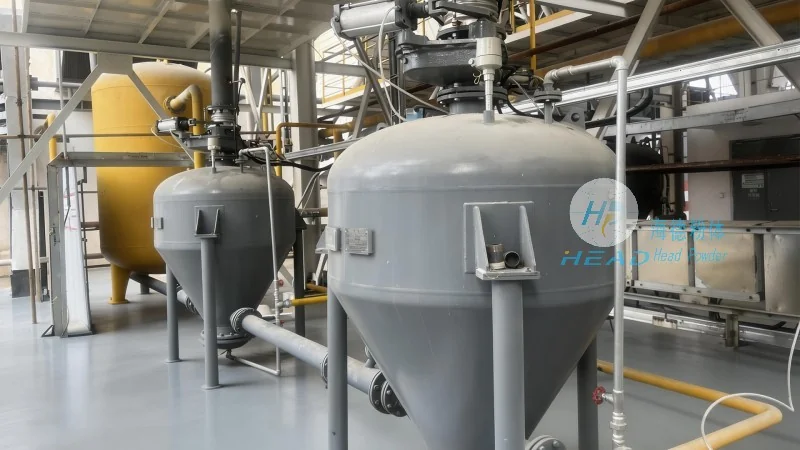
The core principle of pneumatic conveying for food additives is the use of air flow to move powder particles. The system typically consists of several key components: a hopper or feeder to supply the powder, a blower or compressor to generate the air flow, a pipeline network to transport the mixture, and a separator or receiver to collect the powder at the destination. The process begins when the powder is introduced into the hopper, where it is then drawn into the pipeline by the moving air. As the air flows through the pipe, it carries the powder particles along, creating a suspension that travels to the target location. At the end of the pipeline, a separator (such as a cyclone or filter) separates the powder from the air, allowing the powder to be collected in a container while the air is either vented or recirculated. This continuous process ensures a steady and controlled flow of food additive powders, minimizing the risk of clogging or product degradation.
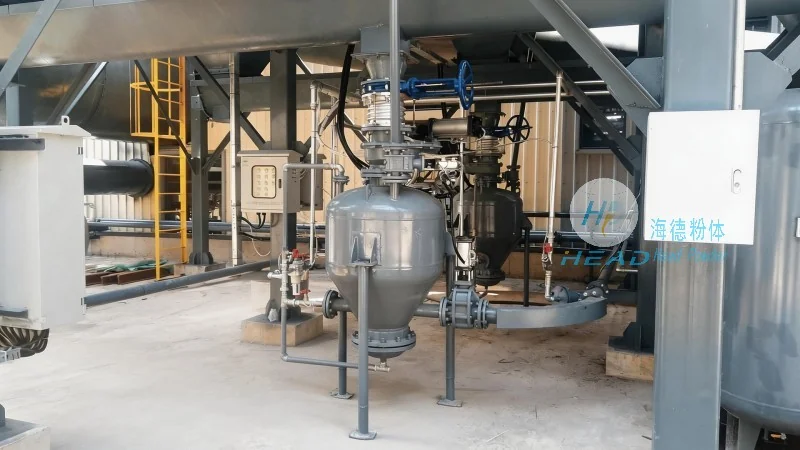
When applied to food additive powders, pneumatic conveying systems exhibit several distinct advantages. First, they offer a hygienic and dust-free operation, which is essential for maintaining the purity of food-grade materials. Unlike mechanical conveying methods, such as screw conveyors or belt conveyors, pneumatic systems do not involve direct contact between the powder and metal surfaces, reducing the risk of cross-contamination or material degradation. Second, the technology provides high efficiency and flexibility. The pipeline layout can be easily adjusted to accommodate changes in production needs or facility layouts, allowing for multiple delivery points from a single source. Third, pneumatic conveying is capable of handling fine and cohesive powders without the need for excessive mechanical force, which helps preserve the particle size and structure of the food additives. Additionally, the system can be designed to operate under low-oxygen conditions, which is particularly important for preventing oxidation of sensitive additives like vitamins or antioxidants.
Shandong HeadPowder Engineering Co., Ltd., a leading manufacturer specializing in powder handling solutions, has developed advanced pneumatic conveying systems tailored for food additive applications. These systems are designed to meet the stringent requirements of the food industry, including compliance with FDA and EU regulations for food contact materials. For instance, in a typical food additive production line, the system might be used to transport colorants, flavor enhancers, or preservatives from storage silos to mixing tanks or packaging lines. The flexibility of the system allows for seamless integration with existing production equipment, ensuring smooth and continuous operation. The company’s expertise in material handling ensures that the conveying process is optimized for each specific additive, considering factors such as particle size distribution, moisture content, and flow properties.
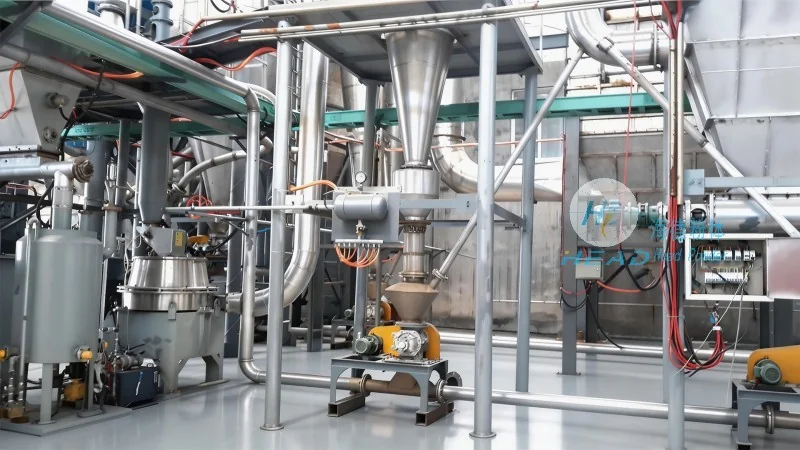
Implementing pneumatic conveying systems for food additive powders brings numerous benefits to manufacturers. By reducing manual handling and exposure to dust, the risk of occupational health issues is minimized. The automated process also improves production efficiency, as the system can operate continuously without the need for frequent maintenance or downtime. Furthermore, the hygienic design of the equipment helps maintain product quality and safety, which is crucial for meeting regulatory standards and consumer expectations. For companies like Shandong HeadPowder Engineering Co., Ltd., the focus is on delivering reliable, efficient, and cost-effective solutions that enhance the overall performance of food additive processing operations.

 Shandong Headpowder Engineering Co., Ltd.
 156-6277-7102(Manager Zhang)
  0531-83386006
  Zhangqiu District, Jinan City, Shandong Province, China
telephone
WeChatconsult
top