With more than 10‑year industry experience, Shandong Headpowder delivers full‑service pneumatic‑conveying systems and blowers, undertaking nationwide turn‑key powder‑handling projects.
For industrial applications involving the transport of lantan powder, understanding the working principle and key features of a dedicated conveying line is crucial for optimizing material handling efficiency and ensuring operational reliability. This article provides an in-depth exploration of the mechanisms behind lantan powder conveying systems, highlighting the technical aspects and functional attributes that define their performance.
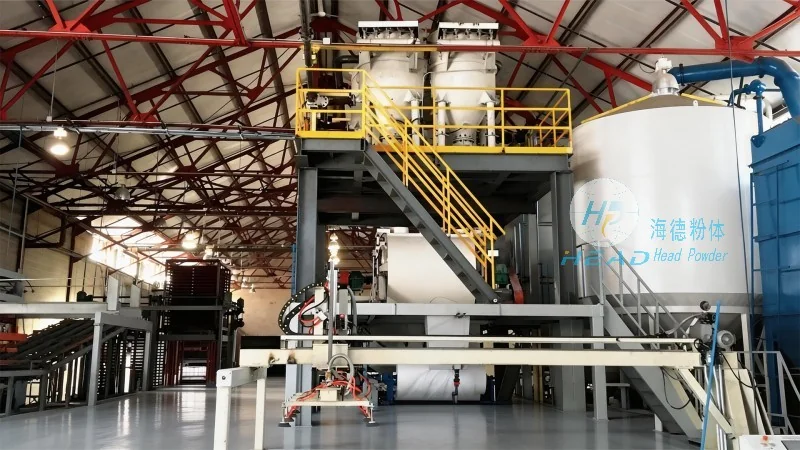
Lantan powder conveying lines are specialized systems designed to transport fine lantan powder from storage or processing units to various destinations within a production facility. These systems typically consist of several interconnected components, including hoppers, feeders, conveyors, and control units, all working in tandem to ensure smooth and continuous material movement. The design of such lines is tailored to address the unique challenges posed by lantan powder, such as its fine particle size, potential for dust generation, and the need for precise control over flow rates.
The working principle of a lantan powder conveying line revolves around the sequential operation of its core components. The process begins with the material being stored in a hopper, where it is held under controlled conditions to prevent agglomeration or degradation. A feeder, often a rotary valve or a screw feeder, then regulates the flow of powder from the hopper into the conveyor system. The conveyor, which may be a pneumatic or mechanical type depending on the application, transports the powder through a pipeline or a series of connected sections to the destination point. Pneumatic conveying systems, for instance, use compressed air to create a flow of powder, while mechanical conveyors rely on belts, buckets, or screw mechanisms to move the material. Throughout the process, sensors and control systems monitor parameters like pressure, flow rate, and temperature to maintain optimal performance and prevent issues like blockages or overloading.
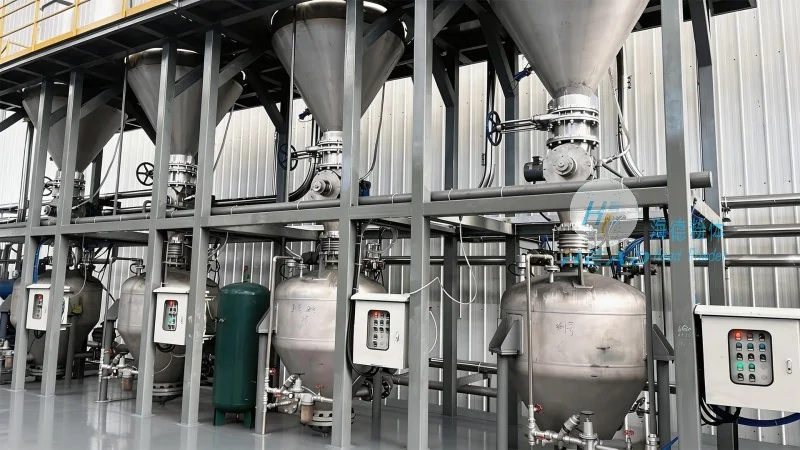
Several key features distinguish lantan powder conveying lines from general-purpose material handling systems. First, the systems are equipped with dust suppression and filtration components to minimize airborne dust and comply with environmental regulations. This includes features like cyclone separators, bag filters, and sealed conveyor sections to contain particulate matter. Second, the design incorporates materials that are resistant to corrosion and wear, as lantan powder can be abrasive and may contain chemicals that could degrade standard components. Stainless steel, special alloys, and wear-resistant coatings are commonly used in critical parts of the system. Third, the conveying lines are designed for flexibility and adaptability, allowing for changes in flow rates or destination points without major modifications. This is achieved through modular components and adjustable control settings. Fourth, the systems often include advanced monitoring and diagnostic tools, enabling real-time tracking of performance and early detection of potential issues. These features collectively contribute to the reliability, efficiency, and safety of lantan powder handling operations.
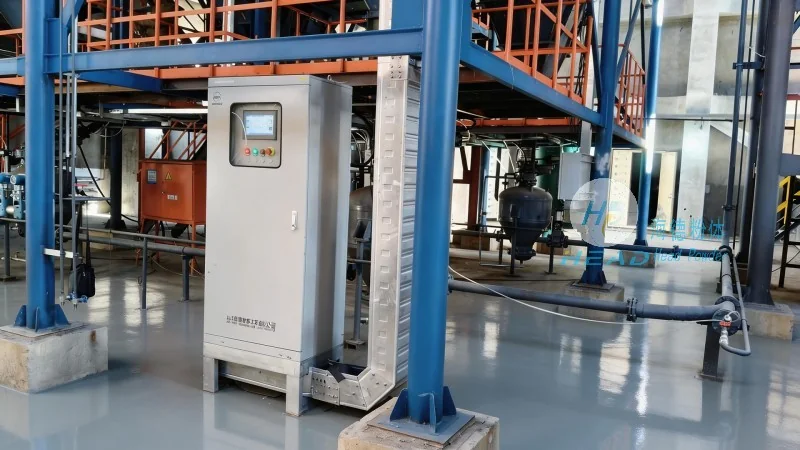
Lantan powder conveying lines find applications in various industries, including chemical manufacturing, pharmaceuticals, and food processing. In these sectors, the ability to transport fine powders efficiently and safely is essential for maintaining product quality and operational continuity. The benefits of using specialized conveying lines include reduced material loss, improved process control, and enhanced worker safety due to minimized exposure to dust. Additionally, the systems contribute to overall cost savings by optimizing material handling and reducing downtime caused by equipment failures or blockages.
In summary, lantan powder conveying lines are sophisticated systems that combine mechanical and pneumatic technologies to transport fine lantan powder with precision and reliability. Their working principle, centered on controlled feeding and efficient transport, is complemented by key features such as dust suppression, corrosion resistance, and adaptability. These attributes make them indispensable for industries requiring efficient and safe handling of lantan powder. As a leading provider in this field, Shandong HeadPowder Engineering Co., Ltd. specializes in designing and manufacturing customized conveying solutions tailored to the specific needs of clients, ensuring optimal performance and long-term operational success.

 Shandong Headpowder Engineering Co., Ltd.
 156-6277-7102(Manager Zhang)
  0531-83386006
  Zhangqiu District, Jinan City, Shandong Province, China
telephone
WeChatconsult
top