

What is a Straw Powder Material Pneumatic Conveying System? And What Are Its Design Principles?
Straw powder, as a biomass material derived from agricultural residues, presents unique challenges in material handling due to its fine particle size, hygroscopic nature, and tendency to agglomerate. Traditional mechanical conveying methods often struggle with these characteristics, leading to blockages, increased wear on equipment, and inefficient material transport. To address these issues, pneumatic conveying systems have emerged as a highly effective solution for transporting straw powder from production sites to processing facilities or storage areas. This article explores the fundamental concepts of straw powder material pneumatic conveying systems and delves into the core design principles that ensure their reliable and efficient operation.
Understanding Straw Powder Material Pneumatic Conveying Systems
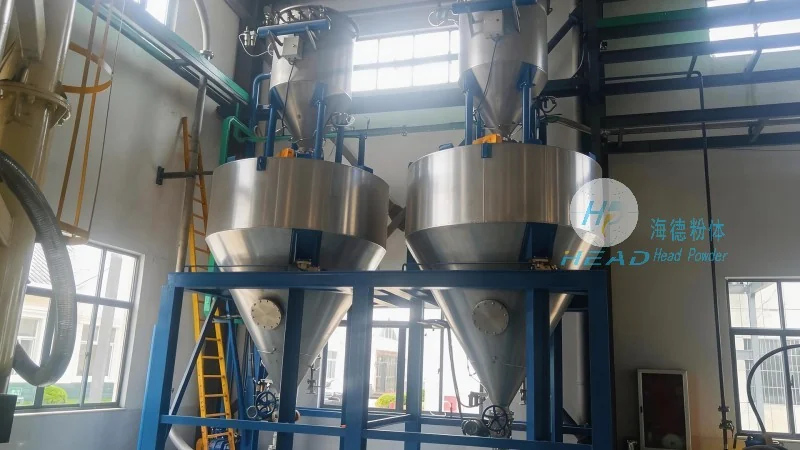
A pneumatic conveying system for straw powder utilizes the force of compressed air or a vacuum to move the material through a network of pipes. Unlike mechanical conveyors that rely on physical contact and friction, pneumatic systems enable the material to be transported in a suspended state, minimizing direct contact with equipment surfaces and reducing the risk of clogging. The system typically consists of several key components: a blower or vacuum pump to generate the necessary air flow, a hopper or feeder to introduce the straw powder into the system, a pipeline network to transport the material, and a separator or cyclone to separate the material from the air stream at the destination point. The choice between different types of pneumatic conveying—such as dilute-phase or dense-phase systems—depends on the specific characteristics of the straw powder and the required transport distance and capacity.
Key Design Principles for Straw Powder Pneumatic Conveying
The design of a straw powder pneumatic conveying system involves a comprehensive evaluation of several critical factors to ensure optimal performance and longevity. The first principle is the selection of the appropriate conveying mode, which directly impacts the system's efficiency and energy consumption. Dilute-phase systems, where the material is suspended in a high-velocity air stream, are commonly used for short to medium distances and low to medium material loads. Dense-phase systems, on the other hand, involve a lower air velocity and higher material concentration, making them suitable for longer distances and higher material loads, though they require more energy. For straw powder, which is often fine and prone to dust, the design must consider the risk of dust dispersion and the need for effective filtration to comply with environmental regulations.
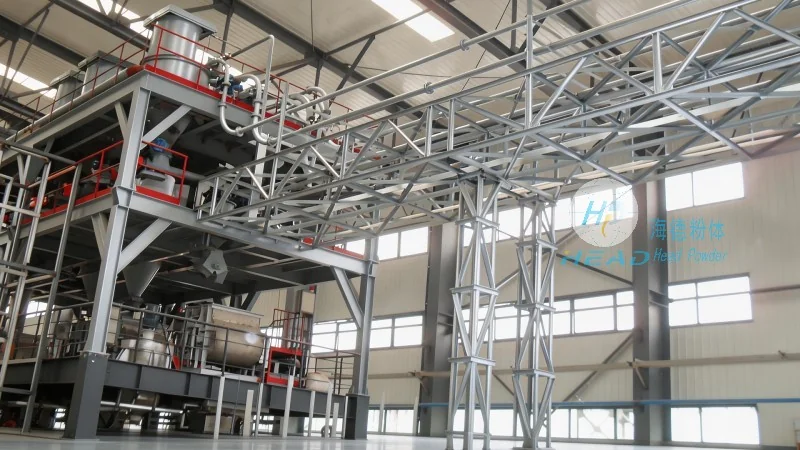
Another crucial design principle is the determination of the required air volume and pressure. The air flow rate must be sufficient to maintain the material in a suspended state throughout the pipeline, preventing settlement and blockages. This is typically calculated based on the material's bulk density, particle size distribution, and the pipeline length and diameter. The pressure required by the system is determined by the total pressure drop across the pipeline, which includes losses due to friction, bends, and fittings. Proper sizing of the blower or vacuum pump is essential to ensure that the system operates within its optimal performance range, avoiding overloading or underperformance.
Pipeline Layout and Material Handling Considerations
The layout of the pipeline network is a critical aspect of system design, as it directly affects the system's efficiency and the risk of material degradation. The pipeline should be designed to minimize the number of bends and changes in direction, as these can cause turbulence and increase the risk of blockages. For straw powder, which is prone to agglomeration, the use of inclined pipelines or the incorporation of vibration or agitation devices in the hopper can help maintain material flow. The selection of pipe material is also important, as straw powder can be abrasive and corrosive, requiring materials such as stainless steel or special coatings to prevent wear and corrosion over time.
Separation and Collection Systems
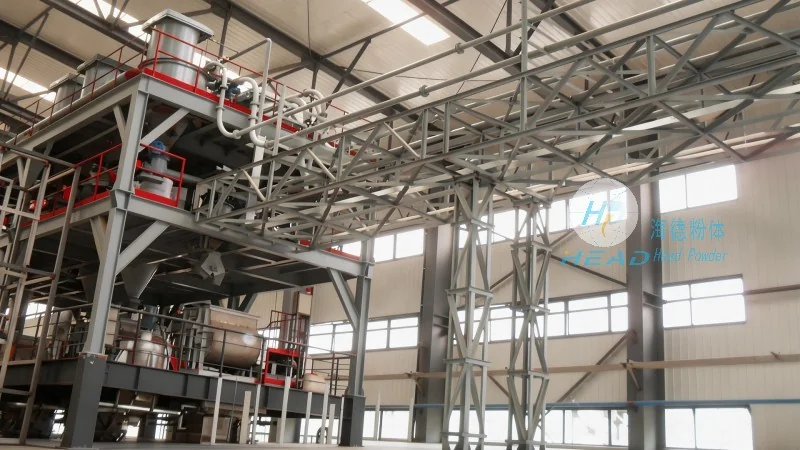
At the receiving end of the pneumatic conveying system, a separator or cyclone is used to separate the straw powder from the air stream. The design of this component is critical to ensure that the material is collected efficiently and without loss. The separator typically consists of a cylindrical housing with a conical bottom, where the air and material mixture enters tangentially, causing the material to be separated from the air by centrifugal force. The separated material is then discharged from the bottom of the separator, while the air is discharged from the top and may be filtered to remove any residual dust before being released to the atmosphere. The design of the separator must consider the material's particle size and density to ensure effective separation and minimize the risk of re-entrainment of material in the air stream.
HeadPowder Engineering: Expertise in Straw Powder Pneumatic Conveying
Shandong HeadPowder Engineering Co., Ltd., a leading provider of material handling solutions, specializes in the design and implementation of pneumatic conveying systems tailored to the unique needs of straw powder and other fine biomass materials. With years of experience in the industry, HeadPowder has developed a deep understanding of the challenges associated with straw powder handling and has developed innovative solutions to address these issues. The company's engineers work closely with clients to assess their specific material handling requirements, including production capacity, transport distance, and environmental regulations, and design customized systems that meet their needs while ensuring optimal performance and reliability. HeadPowder's commitment to quality and customer satisfaction has made it a trusted partner for businesses in the agricultural and biomass processing sectors, helping them to improve their operational efficiency and reduce material handling costs.