With more than 10‑year industry experience, Shandong Headpowder delivers full‑service pneumatic‑conveying systems and blowers, undertaking nationwide turn‑key powder‑handling projects.
Ammonium bicarbonate, a widely used chemical in industrial applications, requires efficient and reliable handling systems to ensure safe and effective transport. The pneumatic conveying system for ammonium bicarbonate represents a sophisticated solution that addresses the unique challenges associated with this material. This article provides an in-depth exploration of the fundamental principles underlying such systems, highlighting the technical aspects and operational considerations that contribute to their effectiveness.
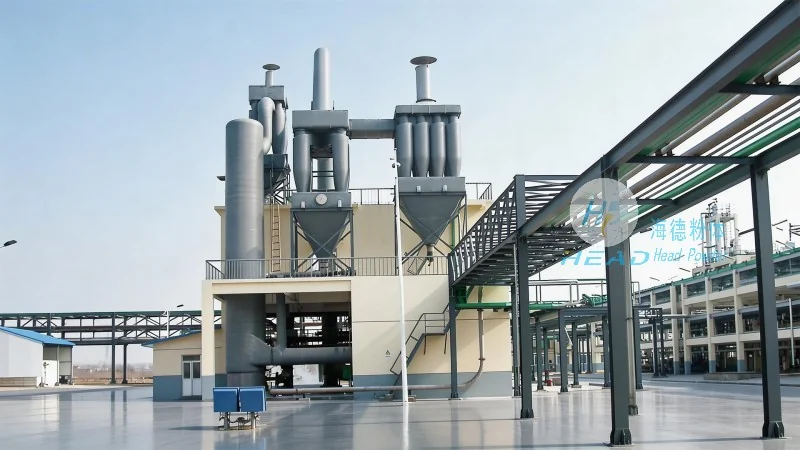
Pneumatic conveying systems utilize air or other gases to transport bulk materials like ammonium bicarbonate through a network of pipes. Unlike traditional mechanical conveying methods, this approach minimizes physical contact with the material, reducing the risk of contamination and degradation. The system typically consists of a hopper, a conveyor line, and a receiver, all connected by a sealed pipeline. The process involves feeding the ammonium bicarbonate into the hopper, where it is then drawn into the conveyor line by a vacuum or pressure differential created by a fan or blower. The material is then transported to the receiver, where it is discharged under controlled conditions.
The effectiveness of an ammonium bicarbonate pneumatic conveying system depends on several critical components, each playing a specific role in the overall operation. The hopper serves as the storage and feeding unit, ensuring a consistent flow of material into the system. It is designed to prevent clogging and maintain uniform material distribution. The conveyor line, usually made of stainless steel or other corrosion-resistant materials, is the primary pathway for the material and air mixture. The choice of material for the pipeline is crucial, as ammonium bicarbonate can be corrosive and may degrade certain metals over time. The receiver, or discharge hopper, collects the conveyed material and regulates its release to downstream processes. A dust collection system is often integrated to capture any airborne particles, ensuring environmental compliance and operational safety.
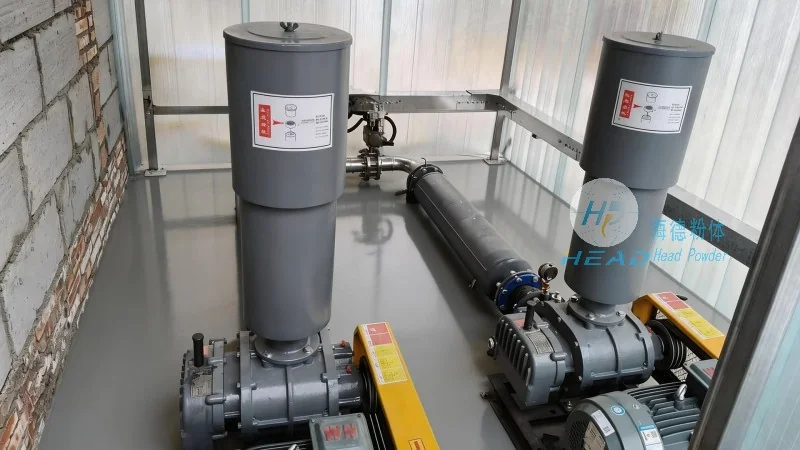
The core of the pneumatic conveying system lies in the generation of airflow and the control of pressure differentials. In a vacuum system, a fan creates a negative pressure within the pipeline, pulling the ammonium bicarbonate from the hopper and through the line to the receiver. The air velocity must be sufficient to prevent material settling or clogging but not so high as to cause excessive wear on the system components. In a pressure system, the opposite occurs: a blower introduces air into the pipeline, pushing the material from the hopper to the receiver. Both systems rely on the principle of fluidization, where the air flow suspends the material particles, allowing them to be transported as a slurry. The design of the system, including the size of the pipeline and the speed of the air, is tailored to the specific characteristics of ammonium bicarbonate, such as its particle size, density, and flowability.
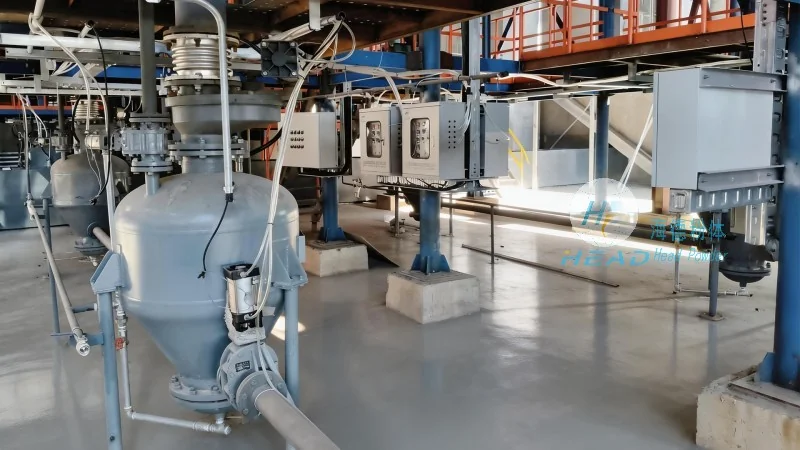
Ammonium bicarbonate pneumatic conveying systems offer several advantages over traditional methods. They provide a dust-free and hygienic environment, which is essential for food and pharmaceutical industries where ammonium bicarbonate is used as a leavening agent or in chemical synthesis. The system also reduces labor costs by automating the material handling process and minimizes the risk of accidents associated with manual handling. Additionally, the sealed pipeline prevents exposure to moisture and air, preserving the quality of the material. These systems are widely used in fertilizer production, food processing, and chemical manufacturing, where the efficient and safe transport of ammonium bicarbonate is critical to operational efficiency.
Shandong HeadPowder Engineering Co., Ltd., operating under the brand name headpowder, is a leading provider of specialized engineering solutions for the chemical and material handling industries. With a focus on innovation and quality, the company has developed expertise in designing and manufacturing pneumatic conveying systems tailored to the unique needs of clients. Headpowder's commitment to customer satisfaction and technical excellence has established it as a trusted partner in the industry. The company's headquarters are located in Shandong, China, where it leverages local resources and expertise to deliver high-performance solutions to global markets.

 Shandong Headpowder Engineering Co., Ltd.
 156-6277-7102(Manager Zhang)
  0531-83386006
  Zhangqiu District, Jinan City, Shandong Province, China
telephone
WeChatconsult
top