With more than 10‑year industry experience, Shandong Headpowder delivers full‑service pneumatic‑conveying systems and blowers, undertaking nationwide turn‑key powder‑handling projects.
When it comes to transporting limestone powder particles efficiently and reliably, pneumatic conveying systems have emerged as a preferred solution in various industrial applications. These systems utilize air or gas to move bulk materials like limestone powder through a pipeline network, offering advantages such as reduced maintenance, improved safety, and enhanced process control. The selection of the right pneumatic conveying system depends on several factors including the particle size, flow rate requirements, and the distance over which the material needs to be transported. Understanding the different types of pneumatic conveying systems available is crucial for optimizing material handling processes in limestone powder processing facilities.
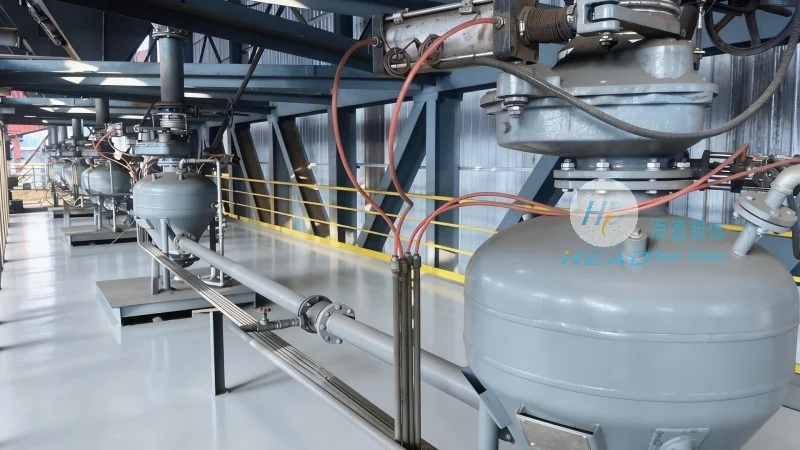
There are primarily two main categories of pneumatic conveying systems used for limestone powder transport: dilute-phase and dense-phase systems. Each type has distinct characteristics and is suitable for different operational conditions.
Dilute-phase pneumatic conveying systems operate by suspending the limestone powder particles in a high-velocity air stream. This method is typically used for short to medium transport distances and when the material is relatively free-flowing. The system relies on the momentum of the air to move the particles through the pipeline. Common configurations include the venturi system, where a venturi tube creates a pressure drop to draw the powder into the air stream, and the pressure system, which uses compressed air to push the material through the line.
Dense-phase pneumatic conveying systems, on the other hand, transport the limestone powder in a more concentrated form, often with a higher particle-to-air ratio. This approach is ideal for longer distances and when the material is more cohesive or has larger particle sizes. The system uses lower air velocities and higher pressure to move the material in a plug flow, reducing the risk of particle degradation and ensuring more consistent flow rates. Dense-phase systems are commonly employed in applications where product quality and minimal degradation are critical, such as in the transportation of limestone powder for cement production or other industrial uses.
Shandong HeadPowder Engineering Co., Ltd. specializes in providing customized pneumatic conveying solutions tailored to the specific needs of limestone powder handling operations. The company, known as HeadPowder, has extensive experience in designing and implementing both dilute-phase and dense-phase systems for various industrial sectors.
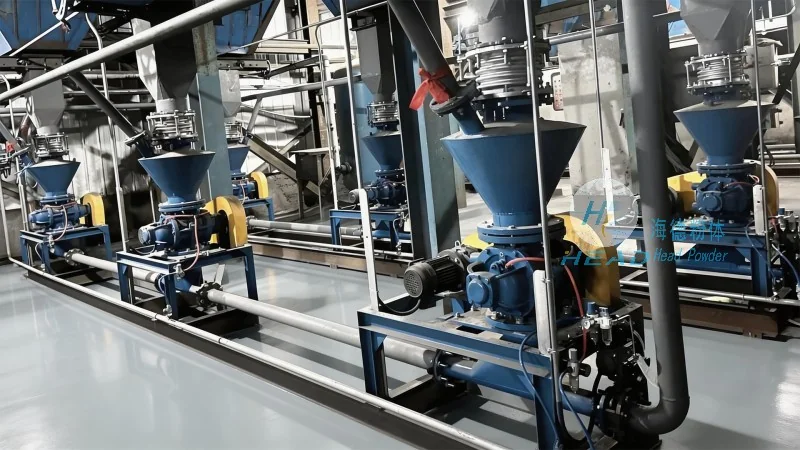
In the cement industry, for instance, pneumatic conveying systems are essential for transporting limestone powder from storage silos to the grinding mills. The systems help maintain consistent material flow rates, which is crucial for achieving the desired fineness of the cement clinker. HeadPowder's solutions often include advanced control systems that monitor and adjust the air pressure and flow rates in real-time, ensuring optimal performance and minimizing downtime.
Another common application is in the chemical and pharmaceutical industries, where limestone powder is used as a raw material or filler. Here, the need for clean and dust-free transport is paramount. Dense-phase pneumatic conveying systems are particularly suitable as they minimize product contamination and prevent particle segregation. HeadPowder's systems are designed with features such as closed-loop pipelines and filtration systems to maintain high standards of cleanliness and product integrity.
Additionally, in mining and quarry operations, pneumatic conveying systems are used to transport limestone powder from crushing and grinding units to storage or processing areas. The systems help improve operational efficiency by reducing the need for manual handling and minimizing the risk of dust exposure for workers. HeadPowder's solutions are built to withstand the harsh conditions of mining environments, with robust materials and durable components that ensure long-term reliability.
When selecting a pneumatic conveying system for limestone powder transport, several factors must be carefully evaluated to ensure the system meets the operational requirements and provides long-term benefits.
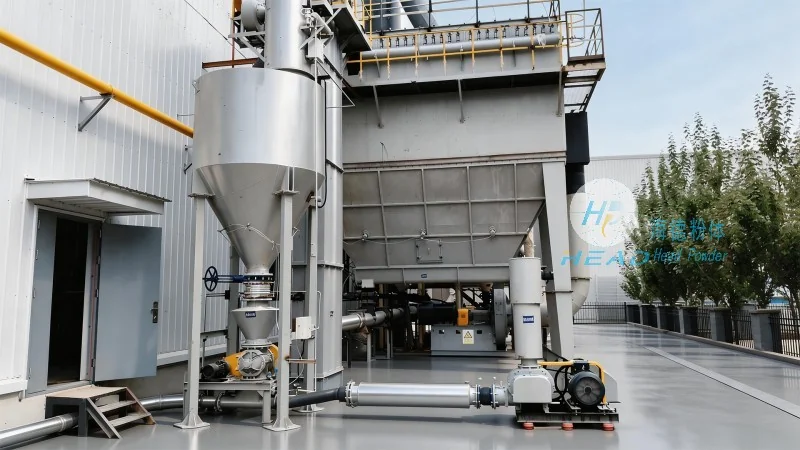
First, the particle size and density of the limestone powder are critical. Larger or more dense particles may require a dense-phase system with higher air pressure to maintain flow. Conversely, smaller and lighter particles may be suitable for dilute-phase systems with lower air velocities. The system's design must also account for the material's flow characteristics, such as its angle of repose and cohesive properties, to prevent blockages and ensure smooth transport.
Second, the distance and layout of the transport route play a significant role. For short distances, dilute-phase systems may be sufficient, while longer distances typically necessitate dense-phase systems or a combination of both. The pipeline design, including the number of bends, vertical lifts, and horizontal runs, affects the system's performance and energy consumption. Properly sized and positioned components, such as airlocks, cyclones, and filters, are essential to maintain the system's efficiency and prevent material buildup.
Third, the operational environment and safety requirements must be considered. Pneumatic conveying systems can be designed to operate in enclosed spaces, reducing dust emissions and improving workplace safety. The system's control system should include features such as pressure monitoring, flow rate sensors, and emergency shut-off valves to prevent accidents and ensure safe operation. HeadPowder's expertise in system design and integration helps clients select the most appropriate components and configurations to meet their specific safety and operational standards.
Pneumatic conveying systems offer a versatile and efficient solution for transporting limestone powder particles in various industrial applications. By understanding the different types of systems available and considering the specific requirements of the operation, companies can select the most suitable solution to enhance their material handling processes. Shandong HeadPowder Engineering Co., Ltd., with its expertise in pneumatic conveying technology, provides customized solutions that optimize performance, reduce costs, and ensure product quality. Whether for short or long-distance transport, dilute-phase or dense-phase systems, HeadPowder's systems are designed to meet the diverse needs of limestone powder handling operations, contributing to improved operational efficiency and sustainability in the industry.

 Shandong Headpowder Engineering Co., Ltd.
 156-6277-7102(Manager Zhang)
  0531-83386006
  Zhangqiu District, Jinan City, Shandong Province, China
telephone
WeChatconsult
top