With more than 10‑year industry experience, Shandong Headpowder delivers full‑service pneumatic‑conveying systems and blowers, undertaking nationwide turn‑key powder‑handling projects.
White carbon black, also known as silica, is a critical additive in sectors like rubber, plastics, and coatings. Its efficient transport is vital for maintaining production efficiency and product quality. Pneumatic conveying systems have become a preferred solution for handling white carbon black due to their ability to move powders over long distances with minimal dust and contamination. This article explores the types of pneumatic conveying systems used in white carbon black transport and their practical applications.
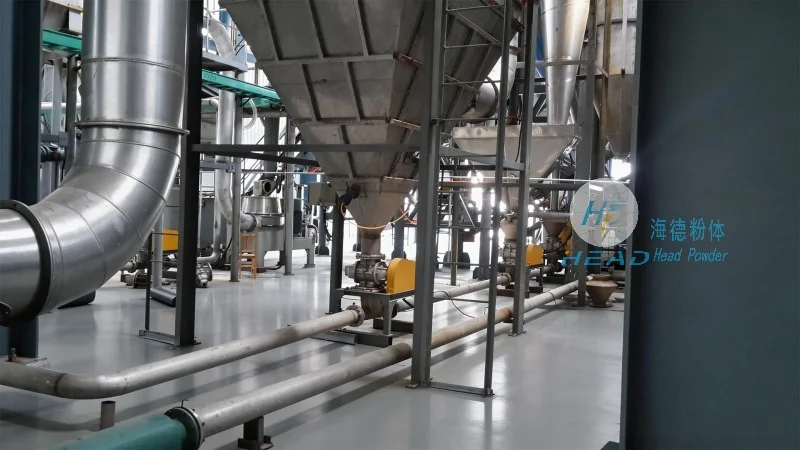
There are primarily two main categories of pneumatic conveying systems: positive pressure and negative pressure systems. Each type has distinct characteristics and is suitable for different operational needs.
Positive pressure systems operate by blowing air or gas into the conveying line, creating a pressure higher than ambient air pressure. This method is ideal for transporting white carbon black over long distances or through complex piping networks. The system typically includes a blower, a hopper for material storage, and a discharge point. High-pressure air forces the white carbon black particles through the pipeline, ensuring consistent flow and minimal clogging. Positive pressure systems are often preferred in applications where the material needs to be transported to multiple destinations or through long horizontal and vertical runs.
Negative pressure systems, also known as vacuum systems, operate by creating a vacuum in the conveying line, drawing the white carbon black particles into the system. This method is suitable for short to medium-distance transport and is commonly used in applications where the material is to be collected from a single source and transported to a central processing unit. The vacuum is generated by a vacuum pump, and the system includes a collection hopper and a discharge point. Negative pressure systems are effective in reducing dust emissions and are often used in environments where dust control is a priority.
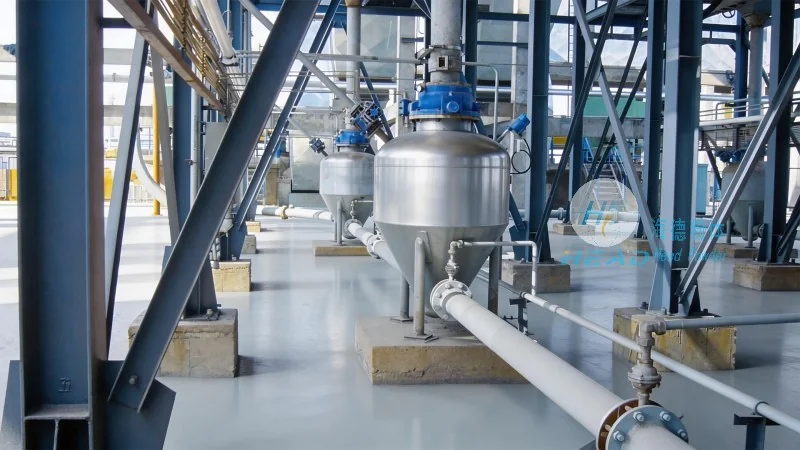
Mixed-pressure systems combine elements of both positive and negative pressure systems. They use a combination of a blower and a vacuum pump to achieve optimal performance. This type of system is versatile and can handle a wide range of white carbon black particle sizes and flow rates. Mixed-pressure systems are particularly useful in applications where the transport distance varies or where the system needs to handle both loading and unloading operations efficiently.
Pneumatic conveying systems for white carbon black find extensive use in various industrial applications. In the rubber industry, these systems are used to transport white carbon black from storage silos to mixing machines, ensuring a consistent and controlled addition of the additive. In the plastics industry, they are employed to feed white carbon black into extrusion and molding processes, enhancing the material's properties such as opacity and mechanical strength. The automotive and construction sectors also benefit from these systems, as white carbon black is used in tire manufacturing and building materials, where precise dosing and minimal contamination are critical.
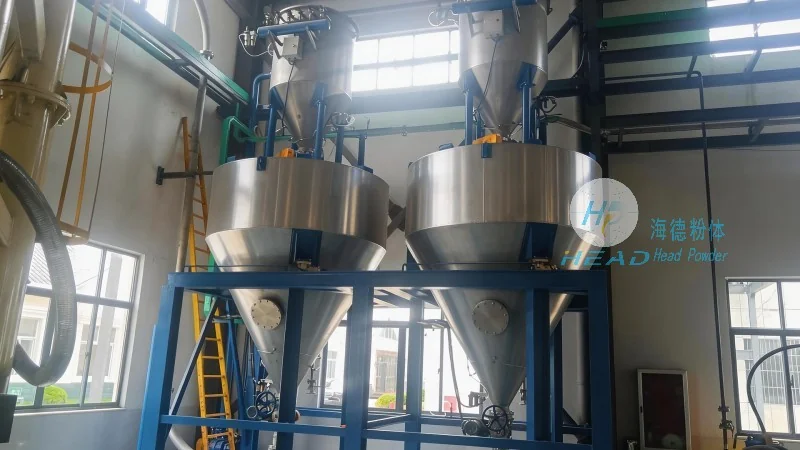
When selecting a pneumatic conveying system for white carbon black transport, several factors need to be considered to ensure optimal performance and efficiency. The first factor is the distance and layout of the transport route. Long-distance or complex layouts may require positive pressure systems, while shorter distances might be suitable for negative pressure systems. The second factor is the material characteristics, including particle size, density, and flowability. Coarser or more abrasive white carbon black particles may need specialized equipment to prevent wear and clogging. The third factor is the required flow rate and capacity, which determines the size of the blower or vacuum pump and the diameter of the conveying line. Additionally, the need for dust control and environmental compliance should be evaluated, as some systems offer better containment and filtration options.
Shandong HeadPowder Engineering Co., Ltd. has successfully implemented a positive pressure pneumatic conveying system in a rubber manufacturing plant. The system was designed to transport white carbon black from a bulk storage silo to a mixing line over a distance of 150 meters, with multiple vertical and horizontal turns. The system included a high-capacity blower, a hopper with a level indicator, and a discharge valve with a filter. The implementation resulted in a significant reduction in manual handling, improved material consistency, and reduced dust emissions. The plant reported a 20% increase in production efficiency and a lower maintenance cost due to the system's durability and reliability.
Pneumatic conveying systems are a vital technology for the efficient and safe transport of white carbon black in various industrial applications. The choice of system type depends on factors such as transport distance, material characteristics, and operational requirements. Positive pressure, negative pressure, and mixed-pressure systems each offer unique advantages and are selected based on specific needs. Companies like Shandong HeadPowder Engineering Co., Ltd. play a crucial role in designing and implementing these systems, ensuring that industrial processes run smoothly and efficiently. By leveraging the right pneumatic conveying system, industries can enhance productivity, maintain product quality, and comply with environmental regulations.

 Shandong Headpowder Engineering Co., Ltd.
 156-6277-7102(Manager Zhang)
  0531-83386006
  Zhangqiu District, Jinan City, Shandong Province, China
telephone
WeChatconsult
top