With more than 10‑year industry experience, Shandong Headpowder delivers full‑service pneumatic‑conveying systems and blowers, undertaking nationwide turn‑key powder‑handling projects.
White carbon black powder, a crucial additive in various industrial applications such as rubber, plastics, and coatings, requires efficient and reliable transportation methods to maintain product quality and operational efficiency. Pneumatic conveying systems have emerged as a preferred solution for handling fine powders like white carbon black, offering advantages over traditional mechanical conveying. This article provides a detailed comparison between positive pressure and negative pressure pneumatic conveying systems, focusing on their operational principles, characteristics, and suitability for white carbon black powder handling. The analysis is presented by Shandong HeadPowder Engineering Co., Ltd., a leading provider of specialized powder handling solutions in China.
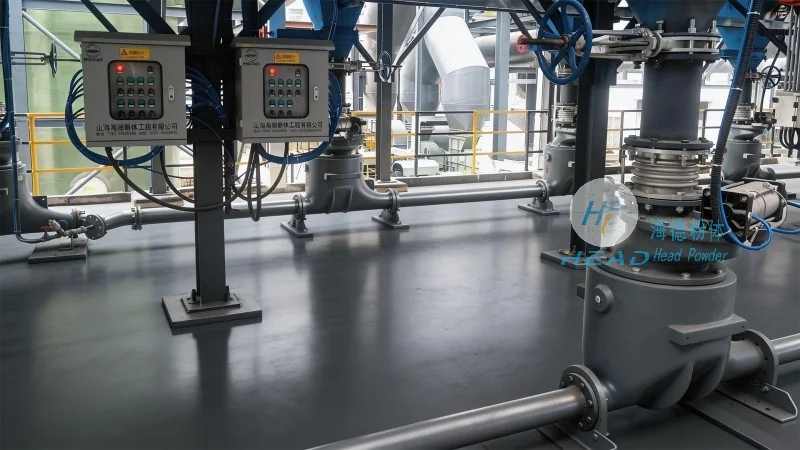
Positive pressure conveying, also known as pressure conveying, operates by blowing air or a carrier gas into the conveying line to move the powder. In this system, the entire pipeline is pressurized above atmospheric pressure, ensuring that the powder is continuously pushed forward. The headpowder company specializes in designing and manufacturing positive pressure conveying systems tailored for white carbon black powder, which often involves high-pressure blowers and robust pipeline networks. Key features of positive pressure systems include high conveying capacity, ability to handle long distances, and suitability for abrasive or corrosive powders. These systems are particularly effective when the material needs to be transported from a central storage to multiple processing points, as they can distribute the powder efficiently without the need for multiple vacuum sources.
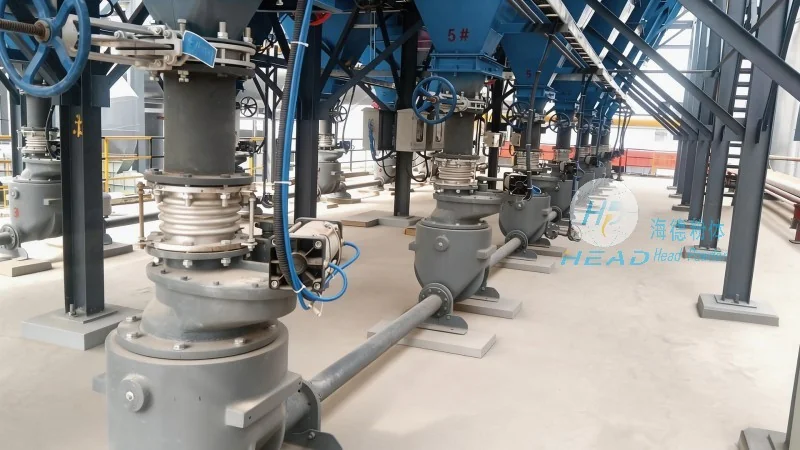
Positive pressure conveying offers several advantages when handling white carbon black powder. Firstly, it provides consistent and reliable flow rates, which is critical for maintaining uniform product quality in downstream processes. The high pressure ensures that the powder is not exposed to air for extended periods, reducing the risk of moisture absorption or agglomeration. Additionally, these systems can handle high volumes of material, making them ideal for large-scale production facilities. The robust construction of positive pressure pipelines and components, designed to withstand the pressure and abrasive nature of white carbon black, ensures long-term operational stability. Another significant advantage is the ability to integrate with existing industrial infrastructure, as the pressurized system can be connected to existing air compressors or blower units, reducing installation costs and complexity.
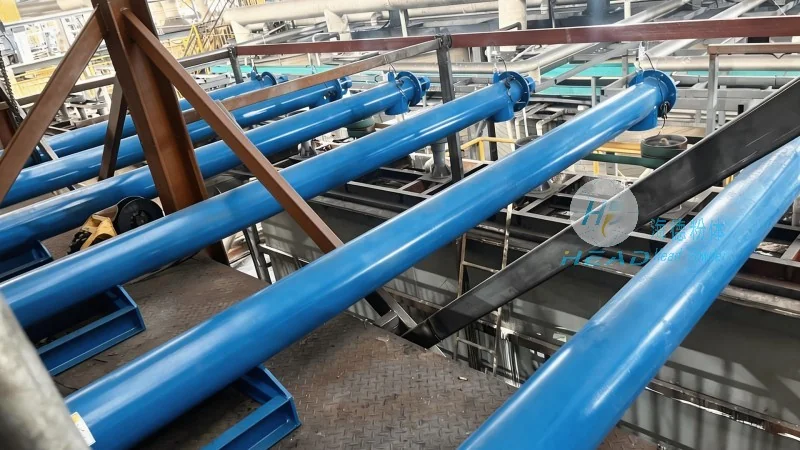
Negative pressure conveying, or vacuum conveying, works by creating a vacuum in the conveying line to draw the powder from the source. The system uses a vacuum pump to pull the powder through the pipeline, and the material is collected in a receiver under reduced pressure. HeadPowder also provides negative pressure conveying solutions for white carbon black powder, which are particularly useful for applications where the material needs to be transported from multiple points to a central location. Unlike positive pressure systems, negative pressure systems do not require high-pressure components, making them more energy-efficient in some scenarios. The vacuum pump operates at lower speeds and pressures, reducing energy consumption and maintenance requirements. However, negative pressure systems may have limitations in terms of conveying distance and material capacity compared to positive pressure systems.

 Shandong Headpowder Engineering Co., Ltd.
 156-6277-7102(Manager Zhang)
  0531-83386006
  Zhangqiu District, Jinan City, Shandong Province, China
telephone
WeChatconsult
top