With more than 10‑year industry experience, Shandong Headpowder delivers full‑service pneumatic‑conveying systems and blowers, undertaking nationwide turn‑key powder‑handling projects.
Pneumatic conveying systems are critical in the handling and transportation of aluminum battery components, particularly in industrial settings where efficiency and material integrity are paramount. Two primary methods dominate this field: positive pressure conveying and negative pressure conveying. Each method offers distinct advantages and is suited to different operational requirements, making a thorough comparison essential for selecting the optimal solution.
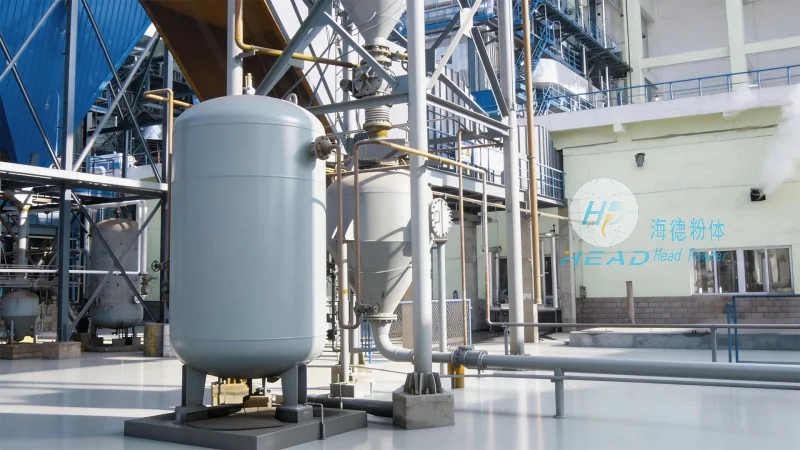
Positive pressure conveying, also known as pressure pneumatic conveying, operates by blowing air or a gas mixture into the conveying line to create a pressure differential that propels material forward. This method is often preferred for applications involving abrasive or sensitive materials, as it minimizes material degradation and provides better control over particle flow. The system typically consists of a blower, a hopper, and a pipeline, with the air pressure maintained above atmospheric pressure throughout the entire conveying path.
Key advantages of positive pressure systems include their ability to handle a wide range of particle sizes and densities, as well as their suitability for long-distance or high-capacity transport. They are also less prone to clogging compared to negative pressure systems, as the positive pressure helps keep the pipeline clear. However, these systems require robust equipment to withstand higher pressures and may generate more noise and require additional ventilation for air management.
Negative pressure conveying, or vacuum pneumatic conveying, works by creating a vacuum in the conveying line to draw material from the source into the system. This method is often used for applications where dust control is a priority, as the sealed pipeline prevents emissions from escaping. The system includes a vacuum pump, a hopper, and a pipeline, with the pressure inside the line being lower than atmospheric pressure.
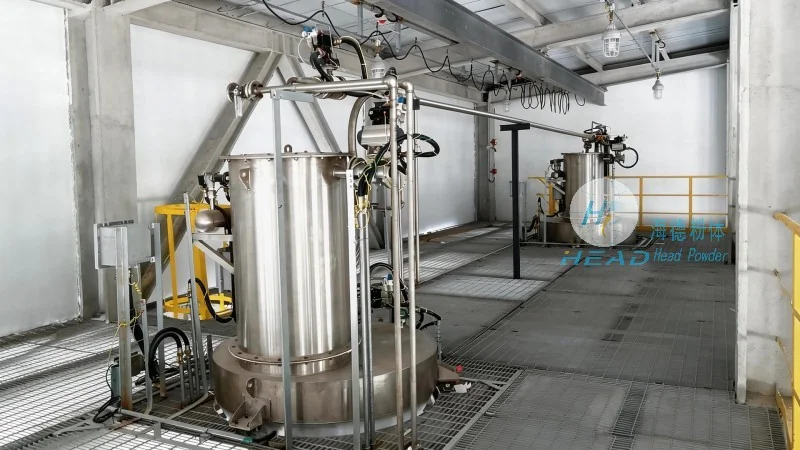
Advantages of negative pressure systems include better dust containment, lower noise levels, and the ability to handle materials from multiple sources or at varying heights. They are particularly effective for short-distance or low-capacity transport, where the vacuum can efficiently draw material without excessive energy consumption. However, these systems are more susceptible to clogging and may require more frequent maintenance to prevent blockages, especially with fine or cohesive materials.
When evaluating positive versus negative pressure conveying for aluminum battery applications, several factors must be considered to determine the most suitable method. These include the material characteristics, such as particle size, moisture content, and abrasiveness, as well as the operational parameters like distance, capacity, and environmental requirements.
For instance, if the aluminum battery components are large, coarse, or abrasive, positive pressure conveying may be the better choice due to its ability to handle such materials without damage. Conversely, if the application requires strict dust control or involves fine powders, negative pressure conveying could offer superior performance by minimizing particle loss and emissions.
Operational distance and capacity also play a crucial role. Positive pressure systems are generally more efficient for long-distance transport, as they can maintain consistent pressure and flow rates over extended pipelines. Negative pressure systems, while effective for shorter distances, may experience a drop in efficiency as the distance increases due to the increasing resistance to vacuum.
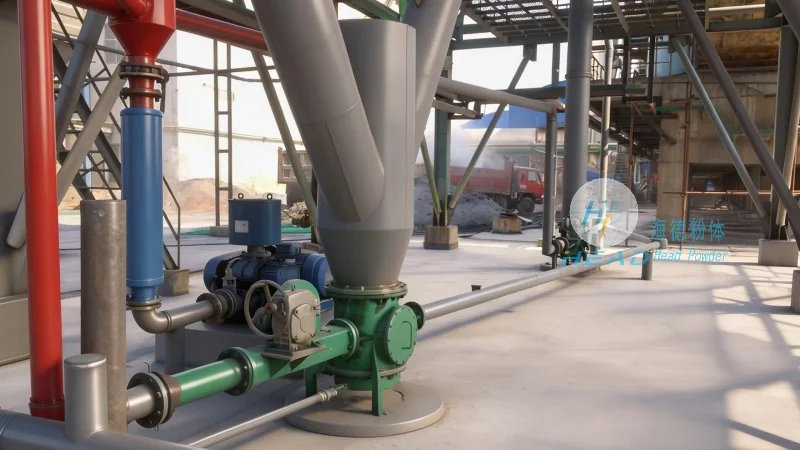
Shandong HeadPowder Engineering Co., Ltd., a leading provider of pneumatic conveying systems, specializes in designing and manufacturing customized solutions tailored to the unique needs of aluminum battery manufacturers. With decades of experience in the industry, HeadPowder has developed advanced technologies that optimize both positive and negative pressure conveying methods for enhanced performance and reliability.
The company’s expertise lies in understanding the specific challenges of aluminum battery production, such as material handling, dust control, and system integration. By leveraging cutting-edge engineering and material science, HeadPowder offers systems that ensure minimal material degradation, efficient transport, and compliance with industry standards. Their solutions are designed to adapt to varying production volumes and operational conditions, providing flexibility and long-term cost-effectiveness.
HeadPowder’s commitment to quality and innovation is reflected in their state-of-the-art manufacturing facilities and rigorous testing protocols. Each system is tailored to meet the client’s requirements, ensuring that the chosen pneumatic conveying method aligns with their operational goals and environmental regulations. Whether a client requires a positive pressure system for high-capacity transport or a negative pressure system for dust control, HeadPowder provides comprehensive support from design to installation and maintenance.

 Shandong Headpowder Engineering Co., Ltd.
 156-6277-7102(Manager Zhang)
  0531-83386006
  Zhangqiu District, Jinan City, Shandong Province, China
telephone
WeChatconsult
top