

Advantages and Disadvantages of Negative Pressure and Positive Pressure Pneumatic Conveying for Calc
When it comes to transporting calcium hydroxide, a common industrial material used in various applications such as construction, water treatment, and chemical manufacturing, the choice between negative pressure and positive pressure pneumatic conveying systems can significantly impact operational efficiency, cost, and safety. This article provides a detailed comparison of the advantages and disadvantages of both negative pressure and positive pressure pneumatic conveying methods for calcium hydroxide, helping industry professionals make informed decisions based on their specific operational needs.
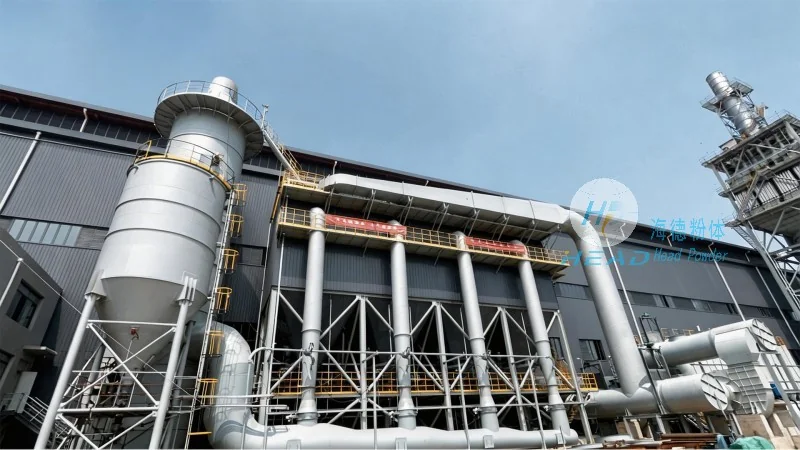
About Shandong HeadPowder Engineering Co., Ltd.
Shandong HeadPowder Engineering Co., Ltd., a leading provider of pneumatic conveying solutions, specializes in designing and manufacturing efficient systems tailored to the unique requirements of industrial materials like calcium hydroxide. With a strong presence in China, particularly in Shandong province, the company leverages advanced engineering and decades of industry experience to deliver reliable and cost-effective conveying solutions. Their expertise in both negative and positive pressure systems ensures that clients receive customized solutions that optimize performance and minimize operational challenges.
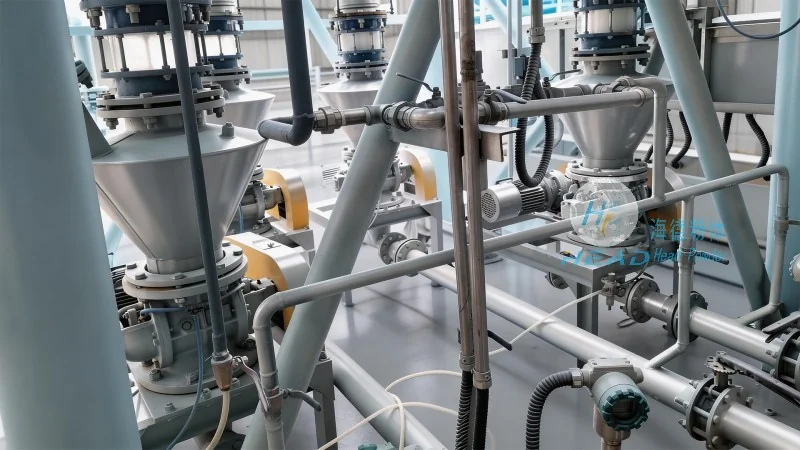
Negative Pressure Pneumatic Conveying for Calcium Hydroxide
Negative pressure, or suction, pneumatic conveying systems operate by creating a partial vacuum at the material inlet, drawing the calcium hydroxide particles into the conveying line using a fan or blower. This method is particularly suitable for applications where the material needs to be transferred from a higher elevation to a lower one, or where the material is sensitive to pressure changes. One of the key advantages of negative pressure systems is their ability to handle materials with a wide range of particle sizes and moisture content without causing excessive wear on the conveying components. Additionally, negative pressure systems are generally more energy-efficient for short to medium conveying distances, as they require less power to maintain the vacuum compared to positive pressure systems. However, these systems have some drawbacks, such as the need for a sealed system to prevent air leakage, which can lead to material loss and contamination. Moreover, negative pressure systems are less effective for long-distance conveying, as the vacuum pressure drops significantly over longer distances, potentially reducing the conveying capacity. Another challenge is the risk of backflow or material spillage if the system is not properly sealed or maintained.
Positive Pressure Pneumatic Conveying for Calcium Hydroxide
Positive pressure, or pressure, pneumatic conveying systems, on the other hand, use a blower or compressor to force air or gas through the conveying line, pushing the calcium hydroxide particles forward. This method is ideal for long-distance conveying, as the pressure can be maintained consistently over extended distances, ensuring a stable flow rate. Positive pressure systems are also better suited for applications where the material needs to be transported from a lower elevation to a higher one, as the pressure can overcome gravitational forces more effectively. A major advantage of positive pressure systems is their ability to handle abrasive or corrosive materials without causing excessive wear on the equipment, as the particles are not subjected to high vacuum forces. Additionally, these systems are generally more reliable for long-term operation, as they are less prone to system failures caused by air leaks or vacuum loss. However, positive pressure systems have higher energy consumption compared to negative pressure systems, especially for long-distance conveying, as they require more power to maintain the pressure. Another drawback is the potential for material degradation if the conveying air is not properly filtered or conditioned, as the particles may be exposed to high temperatures or moisture. Furthermore, positive pressure systems may require more extensive maintenance, as the components are subjected to higher pressure and wear, leading to increased operational costs over time.
Comparative Analysis and Recommendations
When comparing negative and positive pressure pneumatic conveying systems for calcium hydroxide, several factors should be considered to determine the most suitable option. For short-distance conveying with low to moderate material flow rates, negative pressure systems are often more cost-effective and energy-efficient. They are particularly suitable for applications where the material is sensitive to pressure changes or where the conveying line is relatively short. However, for long-distance conveying or applications requiring high material flow rates, positive pressure systems are generally more reliable and efficient. These systems are ideal for industrial settings where the material needs to be transported over significant distances or where the material is abrasive and requires minimal wear on the conveying components. Ultimately, the choice between negative and positive pressure systems depends on the specific operational requirements, including the distance of the conveying line, the material properties, and the desired flow rate. Shandong HeadPowder Engineering Co., Ltd. offers customized solutions that can be tailored to meet these specific needs, ensuring optimal performance and cost-effectiveness for calcium hydroxide transportation.