With more than 10‑year industry experience, Shandong Headpowder delivers full‑service pneumatic‑conveying systems and blowers, undertaking nationwide turn‑key powder‑handling projects.
Pneumatic conveying is a critical technology in the agricultural and food processing industries, particularly for handling bulk materials like potatoes. The method involves transporting materials through a pipeline using air pressure. Two primary approaches dominate this field: negative pressure (or suction) conveying and positive pressure (or pressure) conveying. Understanding the advantages and disadvantages of each system is essential for selecting the most suitable solution for potato processing operations.
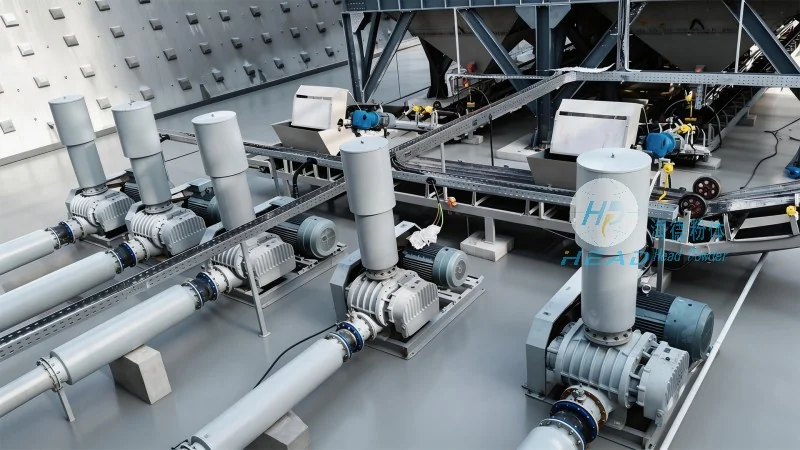
Negative pressure conveying, also known as suction conveying, operates by creating a vacuum in the conveying line. This vacuum draws the material from the source, such as a hopper or storage bin, into the pipeline. The system uses a fan or blower to create the negative pressure, and the material is carried along by the air flow. This approach is often preferred for applications where the material needs to be transported from a higher elevation to a lower one, or when the material is sensitive to high pressure.
One of the key advantages of negative pressure conveying is its ability to handle materials with high moisture content or those that are prone to caking. The lower air velocity and pressure in the system reduce the risk of material degradation or damage. Additionally, this method is generally more energy-efficient for short to medium distances, as it requires less power to maintain the vacuum compared to positive pressure systems. The system also allows for the conveyance of materials from multiple sources simultaneously, as the vacuum can be distributed across different inlets.
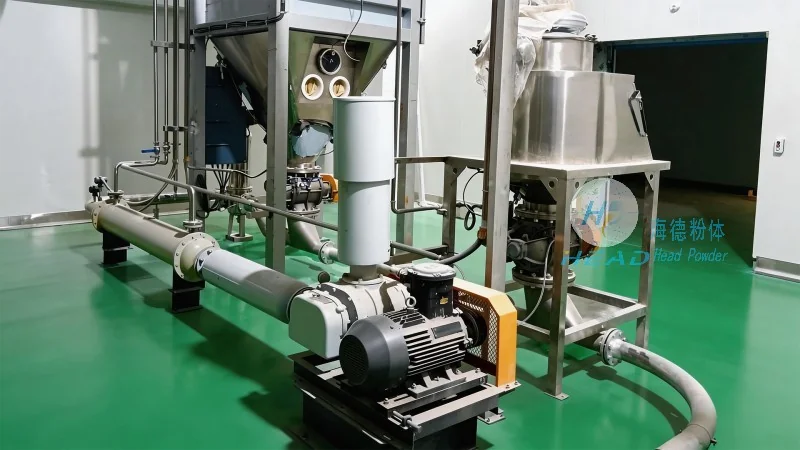
However, negative pressure conveying has several limitations. The main drawback is its lower conveying capacity compared to positive pressure systems. The vacuum limits the amount of material that can be transported at a given time, making it less suitable for high-volume operations. Another disadvantage is the higher risk of dust and particulate matter being drawn into the system, which can affect the air quality and require additional filtration. Furthermore, the system is more susceptible to blockages if the material contains large or irregularly shaped pieces, as the vacuum may not be sufficient to move them efficiently.
Positive pressure conveying, or pressure conveying, works by forcing air and material through the pipeline using a positive pressure fan or blower. The material is pushed from the source into the pipeline, and the air velocity is higher than in negative pressure systems. This method is typically used for transporting materials over longer distances or from a lower elevation to a higher one, where the pressure is needed to overcome gravity and friction.
Positive pressure conveying offers several advantages, particularly for high-volume and long-distance transport. The higher air velocity allows for the transportation of larger quantities of material in a shorter time, making it ideal for large-scale potato processing facilities. The system is also less prone to blockages, as the higher pressure can move even large or irregularly shaped pieces. Additionally, the positive pressure environment reduces the risk of dust and particulate matter being drawn into the system, improving air quality and reducing maintenance requirements.
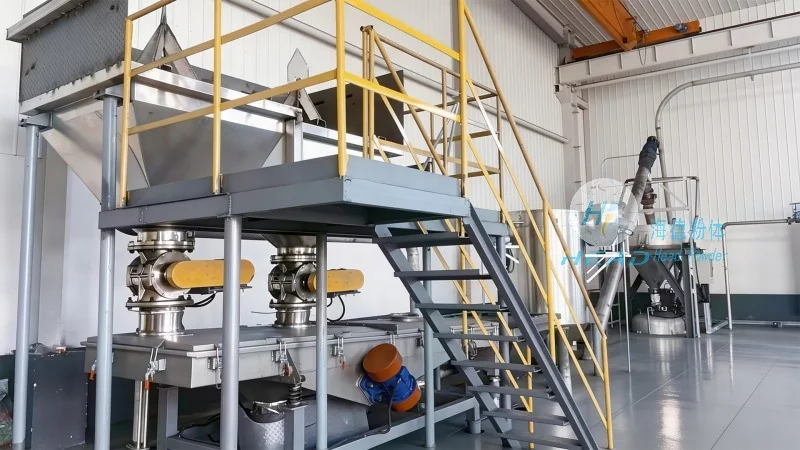
Despite its benefits, positive pressure conveying has its drawbacks. The primary disadvantage is higher energy consumption compared to negative pressure systems, especially for long-distance transport. The higher pressure and air velocity require more power from the fan or blower, increasing operational costs. Another issue is the potential for material degradation due to the higher air velocity and pressure, which can cause abrasion or breakage of the potato skins. Furthermore, the system is more complex to install and maintain, as it requires more robust components to handle the higher pressures and air flow rates.
When selecting between negative pressure and positive pressure conveying for potato transport, several factors must be considered. The first is the distance and elevation change between the source and destination. For short distances with a downward slope, negative pressure may be sufficient. For longer distances or upward transport, positive pressure is more appropriate. The second factor is the volume of material to be transported. High-volume operations require positive pressure systems due to their higher capacity. The third factor is the material characteristics, such as moisture content, size, and shape. Materials with high moisture or irregular shapes may be better suited for negative pressure systems to avoid damage. Finally, the operational costs and energy efficiency must be evaluated, as this can significantly impact the long-term profitability of the potato processing facility.

 Shandong Headpowder Engineering Co., Ltd.
 156-6277-7102(Manager Zhang)
  0531-83386006
  Zhangqiu District, Jinan City, Shandong Province, China
telephone
WeChatconsult
top