With more than 10‑year industry experience, Shandong Headpowder delivers full‑service pneumatic‑conveying systems and blowers, undertaking nationwide turn‑key powder‑handling projects.
When designing a pneumatic conveying system for fluorspar powder particles, several critical factors must be considered to ensure efficient, reliable, and cost-effective operation. The system's performance is directly influenced by the characteristics of the fluorspar material, the conveying requirements, and the overall system configuration. This article outlines key design considerations that are essential for optimizing the performance of such systems.
The first step in designing a pneumatic conveying system for fluorspar powder is to thoroughly understand the material's properties. Fluorspar, or fluorite, is a mineral composed primarily of calcium fluoride (CaF₂) and often contains impurities such as silica, clay, or other minerals. The particle size distribution, density, and moisture content are critical parameters that affect the system's design. For instance, fine particles may require higher air velocities to prevent settling or blockages, while larger particles may necessitate larger duct diameters and different air flow rates. The moisture content is also important as it can impact the material's flowability and the risk of caking or agglomeration, which can lead to system inefficiencies or blockages.
Choosing the appropriate system type is a fundamental decision in pneumatic conveying design. The two primary categories are dilute phase and dense phase systems. Dilute phase systems operate at relatively low solids loading (typically 1-10% by volume), using high air velocities to transport particles. This type is suitable for long-distance conveying and when the material is free-flowing. Dense phase systems, on the other hand, operate at higher solids loading (up to 15-20% by volume) and use lower air velocities, often with pulse or pressure control to move the material. Dense phase systems are ideal for short to medium distances, for handling abrasive or sensitive materials, or when the material has poor flow characteristics. For fluorspar powder, the choice between these systems depends on the specific application requirements, such as the distance to be covered, the material's flowability, and the desired system efficiency.
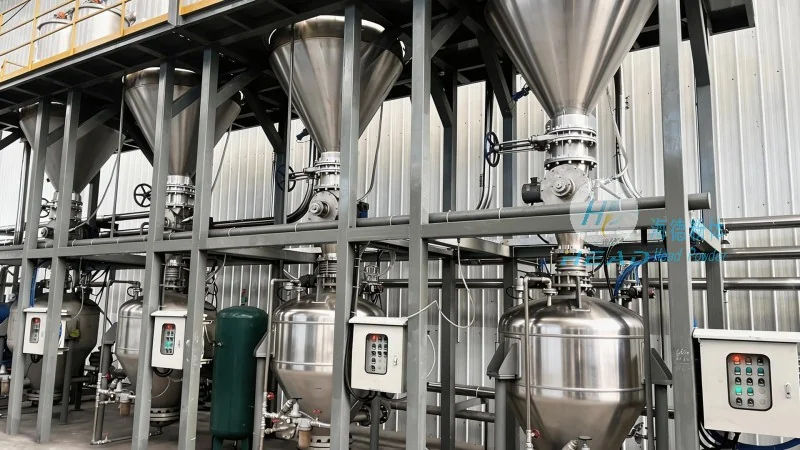
The design of the conveying line, including the duct diameter, length, and layout, is crucial for system performance. The duct diameter must be sized to accommodate the particle size and the required air velocity without causing excessive pressure drop or particle abrasion. A larger diameter reduces pressure drop but increases system cost and space requirements. Conversely, a smaller diameter increases pressure drop and may lead to particle degradation or blockages. For fluorspar powder, which can be abrasive, materials such as stainless steel or high-grade plastic are often used for the ductwork to withstand wear and corrosion.
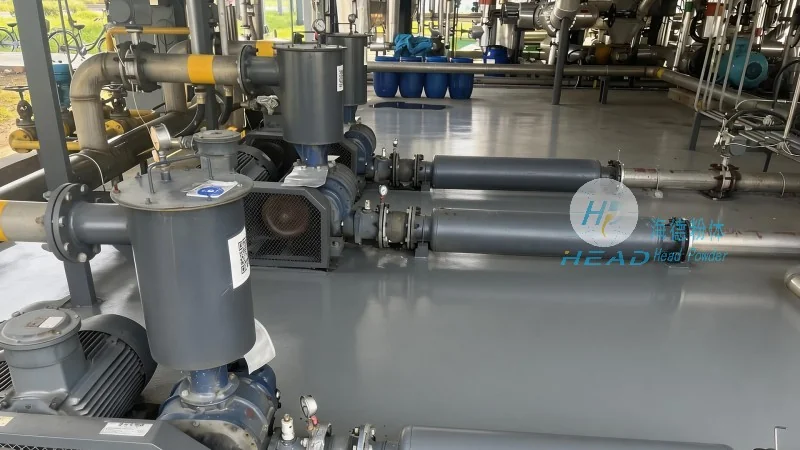
The air supply system, including the compressor and associated equipment, is a critical component of the pneumatic conveying system. The compressor must provide sufficient air volume and pressure to meet the system's requirements. The type of compressor (e.g., rotary lobe, screw, or centrifugal) and its capacity are selected based on the conveying distance, particle characteristics, and system pressure drop. For dilute phase systems, a positive displacement compressor is often used to maintain a consistent air flow rate. The air filtration and drying system is also important to remove contaminants and moisture from the air, which can affect the material's quality and the system's performance. Proper maintenance of the compressor and air handling equipment is essential to ensure long-term reliability and efficiency.
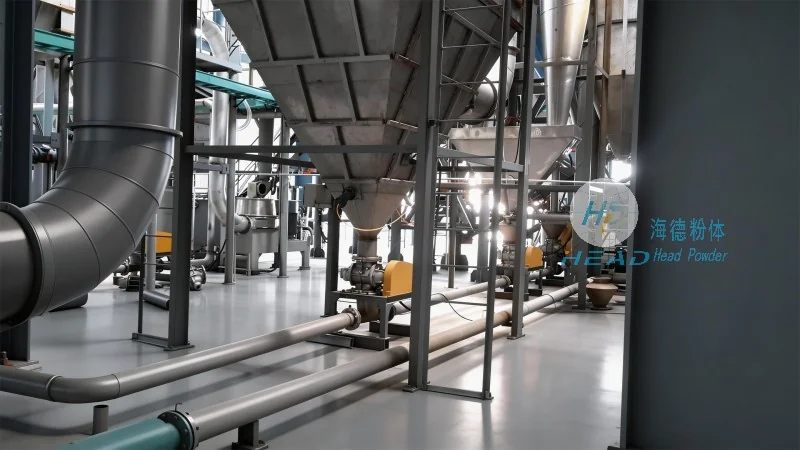
Proper material handling and conditioning are essential to ensure smooth operation of the pneumatic conveying system. This includes the use of feeders, hoppers, and pre-processing equipment to ensure consistent material flow into the system. For fluorspar powder, which may have poor flow characteristics due to moisture or agglomeration, a hopper with a cone or a vibratory feeder may be used to improve flow. Conditioning equipment, such as a dryer or a de-agglomerator, may also be incorporated to adjust the material's moisture content or break up agglomerates, reducing the risk of blockages and improving system performance. The feed system must be designed to avoid surging or pulsation, which can cause excessive wear on the equipment and reduce system efficiency.
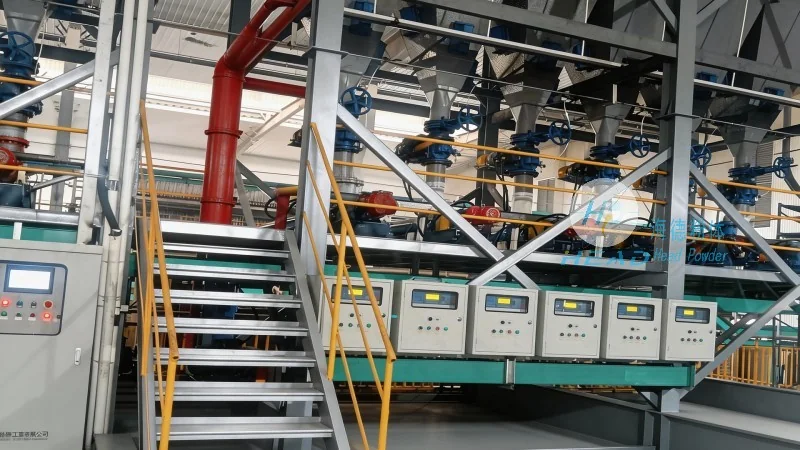
Implementing effective control and monitoring systems is vital for the reliable operation of the pneumatic conveying system. This includes pressure sensors, flow meters, and control valves to regulate the air flow and pressure. The system should be equipped with alarms and safety features to detect and respond to abnormal conditions, such as pressure drops or blockages. For example, a pressure sensor can detect a blockage in the line and trigger an alarm or automatically shut down the system to prevent further damage. The control system should also allow for remote monitoring and adjustment, enabling operators to optimize the system's performance based on real-time data. This not only improves system efficiency but also reduces downtime and maintenance costs.
Environmental and safety considerations are important aspects of pneumatic conveying system design. Fluorspar powder can be hazardous if inhaled, so the system must be designed to minimize dust emissions and ensure proper ventilation. The use of dust collection systems and enclosures can help to contain the material and prevent exposure to operators. Additionally, the system must comply with local regulations regarding noise and air quality. Safety features, such as emergency shut-off valves and interlocks, are essential to prevent accidents and ensure the safety of personnel. Proper training of operators and regular maintenance of the system are also critical to maintaining a safe working environment.
Shandong HeadPowder Engineering Co., Ltd., a leading provider of engineering solutions for powder handling systems, has successfully designed and implemented several pneumatic conveying systems for fluorspar powder. One notable project involved the design of a dilute phase system for a fluorspar processing plant in China. The system was designed to transport fluorspar powder from a storage silo to a processing unit over a distance of 200 meters. The system was optimized for the material's particle size distribution and flow characteristics, using a rotary lobe compressor and stainless steel ductwork. The system has been in operation for over five years, achieving high efficiency and reliability, with minimal downtime and maintenance. This case study highlights the importance of proper design and engineering in ensuring the successful implementation of pneumatic conveying systems for fluorspar powder.

 Shandong Headpowder Engineering Co., Ltd.
 156-6277-7102(Manager Zhang)
  0531-83386006
  Zhangqiu District, Jinan City, Shandong Province, China
telephone
WeChatconsult
top