With more than 10‑year industry experience, Shandong Headpowder delivers full‑service pneumatic‑conveying systems and blowers, undertaking nationwide turn‑key powder‑handling projects.
When designing a pneumatic conveying system for manganese carbonate, several critical factors must be carefully considered to ensure efficient operation, safety, and long-term reliability. The system's performance is directly influenced by the material's properties, the conveying distance, and the chosen equipment. This article outlines key design considerations to help engineers and operators optimize their pneumatic conveying systems for manganese carbonate applications.
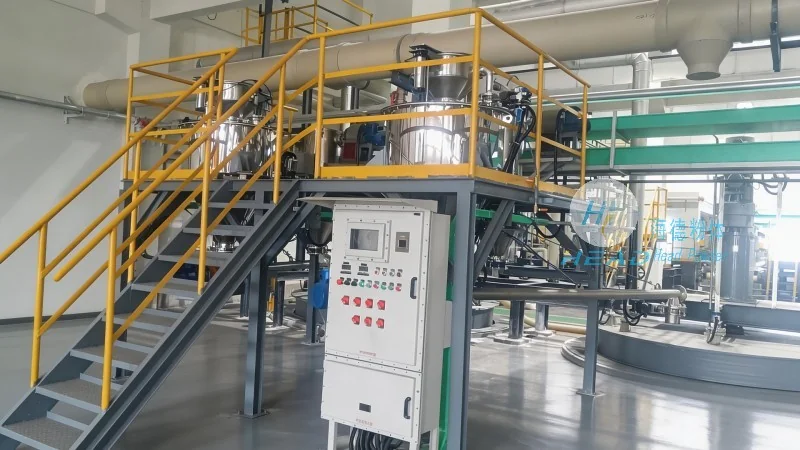
The physical and chemical properties of manganese carbonate significantly impact the design of a pneumatic conveying system. Manganese carbonate is typically a fine powder with specific density, particle size distribution, and moisture content. These characteristics affect how the material behaves under air pressure, influencing the required air velocity, pressure drop, and equipment selection. For instance, fine particles may require higher air velocities to maintain a stable flow, while larger particles might need more robust equipment to prevent blockages. Understanding the material's flowability, such as its angle of repose and compressibility, is essential for selecting appropriate hopper designs and feeding mechanisms.
The configuration of the pneumatic conveying system, including the type of conveying (e.g., dilute phase, dense phase) and the layout of components, plays a vital role in system performance. Key components include the hopper, feeder, air compressor, pipeline, and receiver. The hopper must be designed to minimize material bridging and ensure consistent feeding. The feeder, such as a rotary valve or screw feeder, should be selected based on the material's flow characteristics and the required flow rate. The air compressor must provide sufficient pressure and volume to overcome system resistance and maintain the desired conveying velocity. The pipeline design, including diameter, material, and bends, affects pressure drop and energy consumption. Properly sized and positioned components are crucial to avoid excessive wear, energy waste, and operational issues.
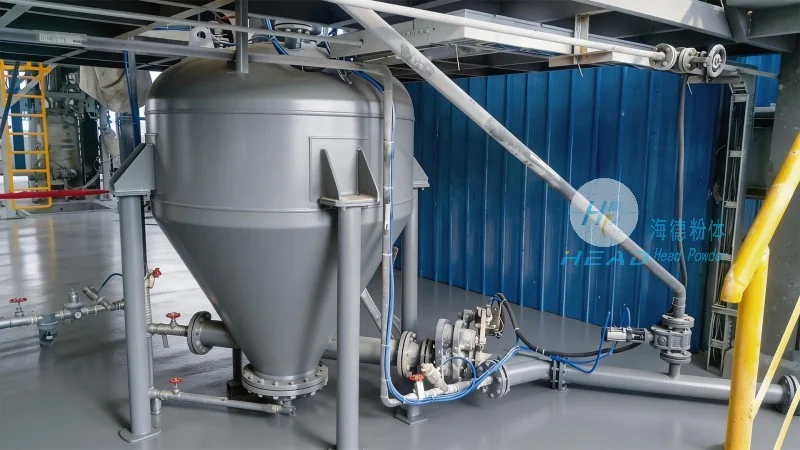
Managing pressure drop is a critical design consideration for pneumatic conveying systems. Excessive pressure drop increases energy consumption and reduces system efficiency. Factors influencing pressure drop include pipeline length, diameter, bends, and fittings. Engineers must calculate the pressure drop accurately to select the appropriate air compressor and ensure the system operates within its design limits. Energy efficiency can be improved by optimizing pipeline design, using smooth materials, and minimizing unnecessary bends. Additionally, selecting the right air velocity for the material's particle size and density helps balance conveying efficiency and energy use. Proper maintenance of components, such as regular cleaning of filters and checking for leaks, also contributes to energy savings and system longevity.
Safety is paramount when designing and operating pneumatic conveying systems for manganese carbonate. The system must comply with relevant safety regulations to prevent dust explosions, equipment failures, and environmental contamination. Dust explosion prevention measures, such as explosion venting, flame arrestors, and inert gas systems, are essential, especially for fine powders. Proper ventilation and dust collection systems are necessary to maintain a safe working environment and comply with environmental standards. Additionally, the system should be designed to handle potential material buildup and blockages, which can lead to pressure surges and equipment damage. Regular inspections and maintenance are crucial to identify and address safety hazards before they become critical issues.
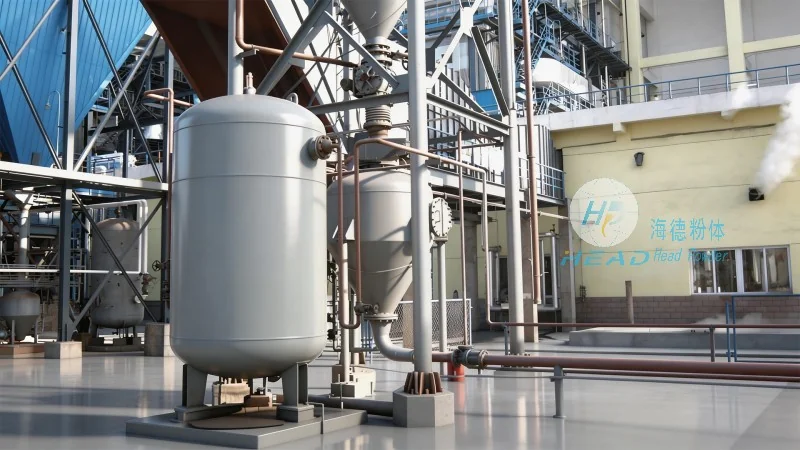
Integrating the pneumatic conveying system with existing processes and ensuring scalability are important considerations for long-term operation. The system should be designed to work seamlessly with upstream and downstream equipment, such as storage silos, processing units, and packaging systems. Scalability allows the system to adapt to changing production demands or future expansion. Engineers must consider the system's capacity, flexibility, and compatibility with other components. For example, a modular design can enable easy adjustments to flow rates or conveying distances without major modifications. Proper integration also involves coordinating with other plant systems, such as air compressors and dust collection, to ensure overall plant efficiency and safety.
Shandong HeadPowder Engineering Co., Ltd., a leading provider of pneumatic conveying solutions, has extensive experience in designing systems for manganese carbonate applications. The company's expertise in material handling and system design ensures that their solutions meet the specific needs of clients. By considering factors such as material properties, system configuration, and safety, HeadPowder has successfully implemented efficient pneumatic conveying systems for various industries. Their case studies demonstrate the effectiveness of their designs in improving operational efficiency, reducing energy consumption, and enhancing safety. The company's commitment to quality and customer satisfaction has made them a trusted partner in the field of pneumatic conveying for manganese carbonate.

 Shandong Headpowder Engineering Co., Ltd.
 156-6277-7102(Manager Zhang)
  0531-83386006
  Zhangqiu District, Jinan City, Shandong Province, China
telephone
WeChatconsult
top