With more than 10‑year industry experience, Shandong Headpowder delivers full‑service pneumatic‑conveying systems and blowers, undertaking nationwide turn‑key powder‑handling projects.
When designing a pneumatic conveying system for polypropylene (PP), several critical factors must be considered to ensure efficient operation, reliability, and longevity. Proper system design is essential to handle the unique properties of PP, which include its density, flow characteristics, and potential for static electricity. These considerations are vital for optimizing material handling processes in industrial applications.
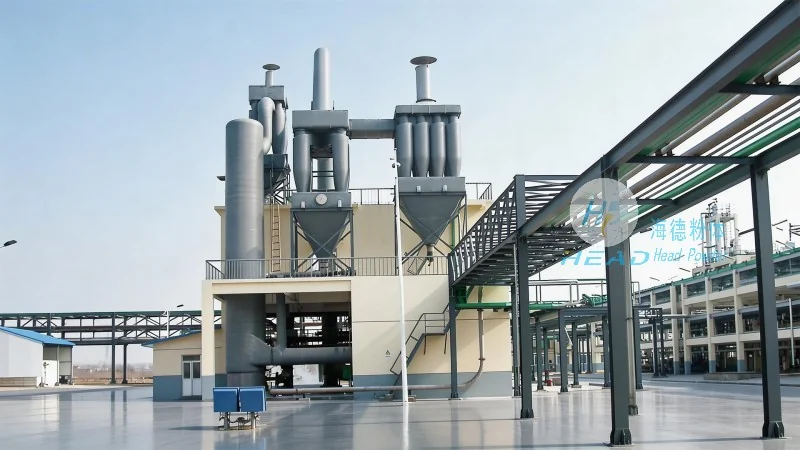
Polypropylene is a thermoplastic polymer with a density typically ranging from 0.90 to 0.92 g/cm³. Its flow characteristics are influenced by moisture content, temperature, and particle size. In pneumatic conveying, the material's tendency to aggregate or form bridging can affect system performance. Additionally, PP is prone to generating static electricity, which may require anti-static measures such as grounding or using conductive components to prevent material buildup and ensure safe operation. Understanding these properties is the first step in designing an effective PP conveying system.
The configuration of a pneumatic conveying system for PP involves selecting the appropriate type of system—such as pressure or vacuum systems—and matching it with suitable components. Key components include the hopper, feeder, conveying line, and receiver. The hopper design must accommodate the bulk density and flow characteristics of PP, often incorporating a cone or wedge to facilitate material discharge. The feeder, typically a rotary valve or screw feeder, ensures a consistent material feed rate, which is crucial for maintaining system stability. The conveying line, made of materials resistant to PP and its potential contaminants, must be sized appropriately to handle the material's velocity and pressure requirements. The receiver, where the material is deposited, should be designed to prevent material spillage and facilitate easy access for maintenance.
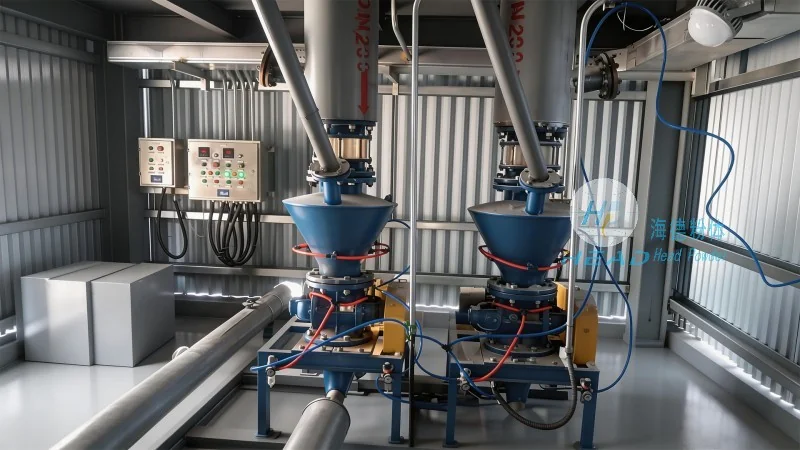
Choosing between a pressure or vacuum conveying system depends on the application's specific requirements, including the distance, elevation, and material handling needs. Pressure systems use compressed air to push the material through the line, which is suitable for short to medium distances and when the material needs to be conveyed against gravity. Vacuum systems, on the other hand, use suction to draw the material, making them ideal for long distances or when the material must be conveyed from a lower to a higher elevation. For PP, pressure systems are often preferred for their ability to handle larger particle sizes and prevent material degradation due to friction. However, vacuum systems can be more energy-efficient for certain applications. The selection process should consider factors like material flow rate, system pressure limits, and the overall cost of operation.
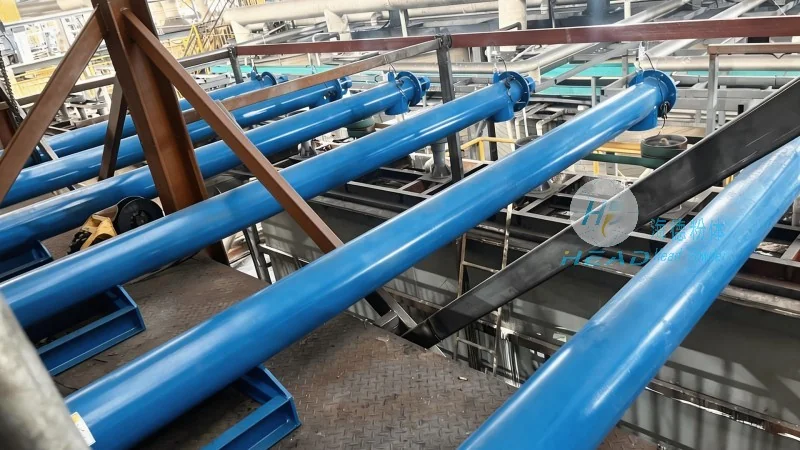
Handling PP in a pneumatic system presents unique challenges, such as material bridging in hoppers, blockages in the conveying line, and the need for anti-static measures. Bridging can be mitigated by designing hoppers with proper angles and incorporating vibrators or air knives to break up material agglomerates. Blockages in the line may occur due to the material's tendency to stick to the pipe walls, especially at low velocities. Using smooth, corrosion-resistant materials for the conveying line and maintaining appropriate air velocities can help prevent this. Anti-static measures are critical to prevent material buildup and ensure safe operation, as static electricity can lead to sparks and potential fire hazards in environments where PP is handled. Proper grounding of components and the use of conductive materials in the system can effectively mitigate these risks.
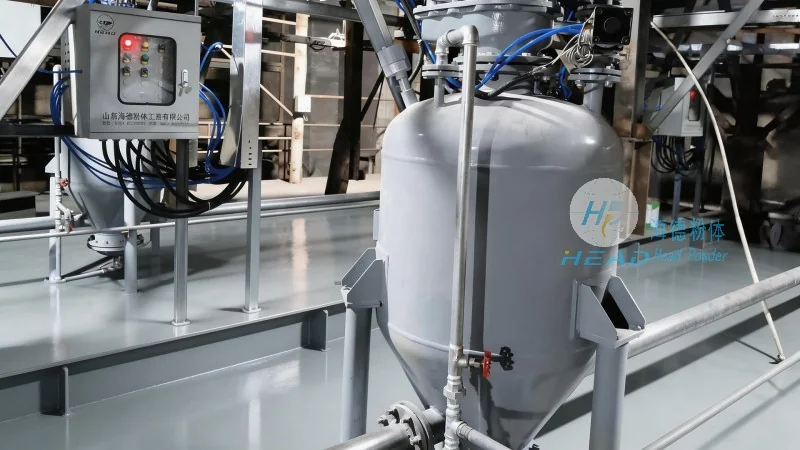
Regular maintenance is essential to ensure the longevity and efficiency of a PP pneumatic conveying system. This includes inspecting components for wear and tear, cleaning the system to remove accumulated material, and checking for leaks or pressure drops. The hopper and feeder should be cleaned periodically to prevent material buildup that could affect flow rates. The conveying line should be inspected for signs of corrosion or damage, which could compromise the system's performance. Additionally, monitoring the system's pressure and flow rates can help identify potential issues before they become major problems. By implementing a regular maintenance schedule, operators can ensure the system operates at optimal efficiency and minimize downtime.
Shandong HeadPowder Engineering Co., Ltd., a leading provider of material handling solutions, has successfully implemented PP pneumatic conveying systems for various industrial applications. One notable project involved a plastic manufacturing facility that needed to transport PP pellets from a storage silo to a processing line over a distance of 50 meters. The system was designed as a pressure system with a rotary valve feeder and a stainless steel conveying line. The system was equipped with anti-static components and regular cleaning mechanisms to prevent material buildup. The implementation resulted in a significant improvement in material handling efficiency, with reduced downtime and increased production capacity. This case study highlights the importance of proper system design and maintenance in achieving successful PP conveying operations.

 Shandong Headpowder Engineering Co., Ltd.
 156-6277-7102(Manager Zhang)
  0531-83386006
  Zhangqiu District, Jinan City, Shandong Province, China
telephone
WeChatconsult
top