With more than 10‑year industry experience, Shandong Headpowder delivers full‑service pneumatic‑conveying systems and blowers, undertaking nationwide turn‑key powder‑handling projects.
For industrial applications involving artificial graphite, the efficient and reliable transfer of this material is crucial. Pneumatic conveying systems offer a versatile solution, but the design and selection of equipment require careful consideration to ensure optimal performance and cost-effectiveness. This article provides a comprehensive overview of the design calculations and equipment selection process for pneumatic conveying of artificial graphite, tailored to the needs of industrial operations.
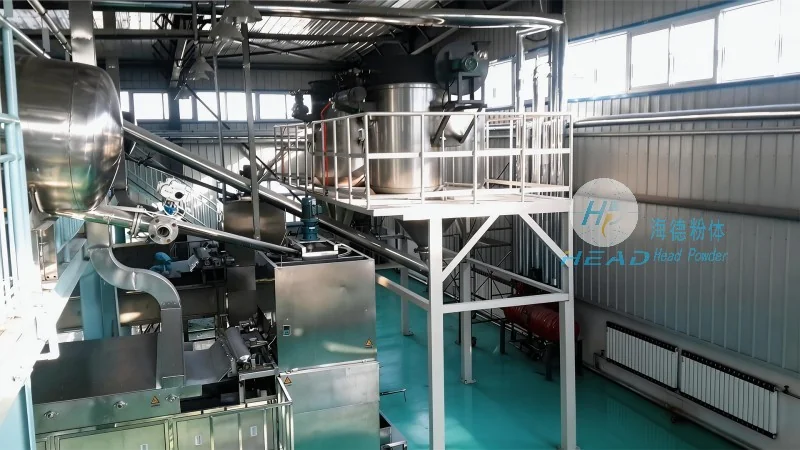
Artificial graphite, a synthetic material with high thermal and electrical conductivity, is widely used in various industries such as battery manufacturing, refractory production, and chemical processing. The handling of this material often presents challenges due to its fine particle size and abrasive nature. Pneumatic conveying, which uses air or other gases to transport bulk materials, provides a non-contact method that minimizes product degradation and contamination. However, the design of a pneumatic conveying system for artificial graphite must account for factors like particle size distribution, density, and flow characteristics to achieve stable and efficient transport.
The first step in designing a pneumatic conveying system for artificial graphite is to determine the required conveying capacity. This is typically based on the production rate of the material and the desired throughput. The calculation involves estimating the mass flow rate of the graphite and the air velocity needed to maintain the material in suspension. Key parameters include the material's bulk density, particle size, and the system's pressure or vacuum level. The design also considers the length and layout of the conveying line, as well as the presence of bends, elbows, and other components that may affect the flow.
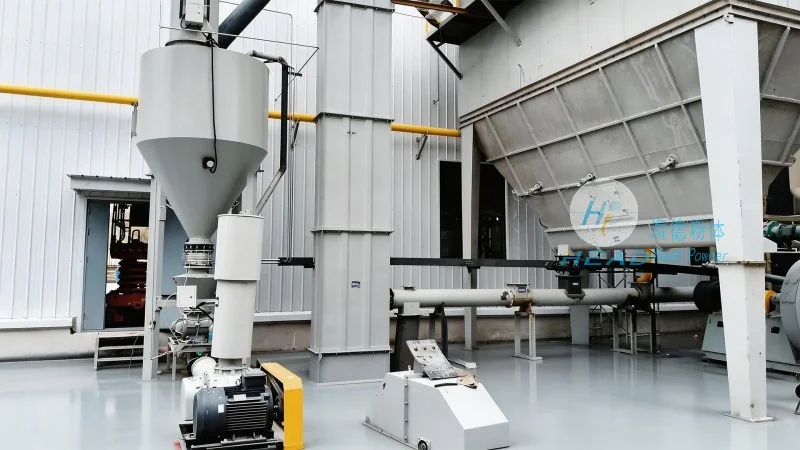
Pressure drop calculations are critical for determining the power requirements of the system. The pressure drop across the conveying line is influenced by factors such as the air velocity, pipe diameter, and the frictional resistance of the material-air mixture. Using established formulas, engineers can estimate the total pressure drop and ensure that the blower or vacuum pump can provide sufficient pressure to overcome these losses. Additionally, the selection of the appropriate air velocity is essential to prevent particle deposition and ensure smooth flow. For artificial graphite, a typical air velocity range is between 20 to 30 m/s, depending on the particle size and system configuration.
HeadPowder Engineering, a leading provider of bulk material handling solutions, offers a range of equipment tailored for the pneumatic conveying of artificial graphite. The selection process involves evaluating different components to match the specific requirements of the application. Key equipment includes feeders, hoppers, and conveying lines, each designed to handle the unique properties of artificial graphite.
Feeding equipment, such as rotary valves or screw feeders, is used to introduce the graphite into the conveying line at a controlled rate. These devices ensure a consistent flow and prevent blockages, which can occur due to the material's cohesive nature. Hoppers are designed with smooth surfaces and appropriate angles to minimize material buildup and facilitate uniform feeding. The choice of feeder depends on the particle size and the required flow rate, with rotary valves being suitable for fine powders and screw feeders for larger particles.
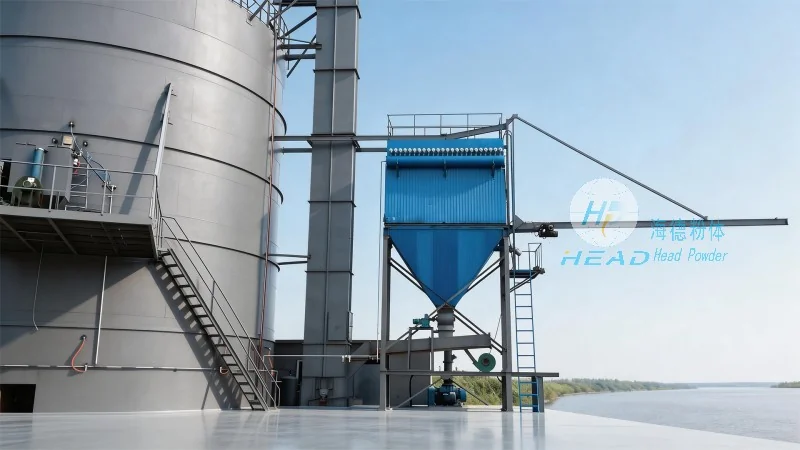
The conveying line itself is typically made of stainless steel or other corrosion-resistant materials to withstand the abrasive properties of artificial graphite. The pipe diameter is selected based on the required air velocity and the material's bulk density. For example, a 100 mm diameter pipe may be used for low to medium capacity systems, while larger diameters are required for high-capacity applications. The system may include bends and elbows with smooth transitions to minimize pressure losses and prevent particle accumulation.
Blowers or vacuum pumps are the primary power sources for pneumatic conveying systems. The selection of the right type of equipment depends on the system's operating pressure and the required airflow. Positive displacement blowers are commonly used for pressure conveying, providing consistent pressure and flow rates. Vacuum pumps are preferred for suction conveying, especially when the material is to be transported from a lower to a higher elevation. The capacity and efficiency of the blower are critical factors in determining the overall system performance and energy consumption.
Effective integration of the pneumatic conveying system with other process equipment is essential for seamless operation. HeadPowder Engineering provides comprehensive solutions that include the integration of feeders, hoppers, and conveying lines with downstream processes such as storage silos or processing units. This ensures that the artificial graphite is transferred efficiently and without interruptions.
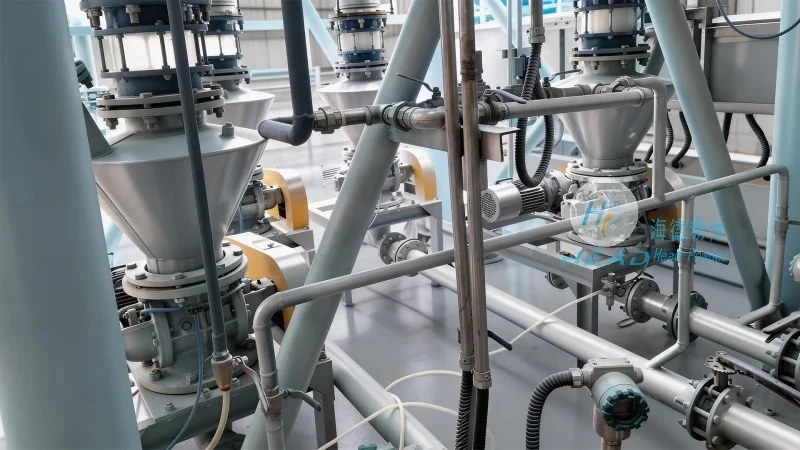
Maintenance of the system is another important aspect to consider. Regular inspection and cleaning of the conveying line and equipment are necessary to prevent clogging and maintain performance. The use of filters and cyclones can help remove dust and debris from the air stream, extending the life of the equipment and improving overall system efficiency. Additionally, the selection of wear-resistant materials for components such as hoppers and elbows can reduce maintenance costs and increase the system's lifespan.
Designing and selecting the appropriate equipment for pneumatic conveying of artificial graphite requires a thorough understanding of the material's properties and the system's operational requirements. By following the design calculations and equipment selection guidelines outlined in this article, industrial operations can achieve efficient and reliable material transfer. HeadPowder Engineering, with its expertise in bulk material handling, offers tailored solutions that meet the specific needs of artificial graphite applications, ensuring optimal performance and long-term reliability.

 Shandong Headpowder Engineering Co., Ltd.
 156-6277-7102(Manager Zhang)
  0531-83386006
  Zhangqiu District, Jinan City, Shandong Province, China
telephone
WeChatconsult
top