With more than 10‑year industry experience, Shandong Headpowder delivers full‑service pneumatic‑conveying systems and blowers, undertaking nationwide turn‑key powder‑handling projects.
Limestone powder, a vital component in numerous industrial processes including construction, chemical manufacturing, and environmental remediation, demands efficient and reliable transportation from storage to processing units. The choice of conveying method directly impacts operational efficiency, cost, and safety. This article provides a comprehensive comparison of common limestone powder conveying methods, focusing on their advantages and disadvantages to assist industrial operators in making informed decisions.
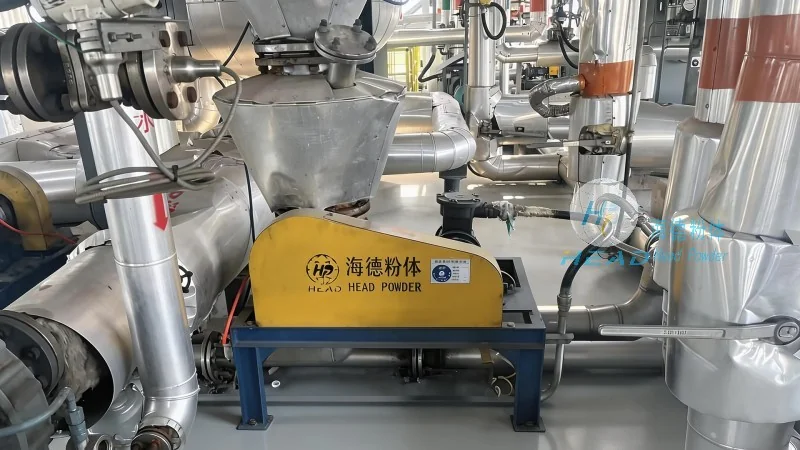
Pneumatic conveying, or air conveying, is a prevalent method for transporting limestone powder due to its capability to handle fine powders and provide a closed system for dust containment. This technique utilizes air pressure or vacuum to move material through a pipeline. The primary advantages of pneumatic conveying include high efficiency in moving materials over long distances, minimal product degradation, and effective dust control, which is essential for maintaining a safe working environment. However, it has notable drawbacks. High energy consumption is a major issue, as continuous air flow is required to sustain material movement. Additionally, the system is prone to blockages if the powder is too wet or contains agglomerates, leading to operational disruptions. The initial investment for a pneumatic system is also relatively high compared to other methods, making it less suitable for low-volume or budget-constrained applications.
Screw conveyors, or auger conveyors, are another common option for limestone powder transport. These systems employ a rotating screw (auger) inside a tube to push material forward. Screw conveyors are particularly effective for horizontal or slightly inclined transport, offering a compact design that requires less floor space. Their advantages include low maintenance costs, as they have fewer moving parts compared to other systems, and the ability to handle a wide range of particle sizes without special adjustments. They are also relatively inexpensive to install and operate. The main disadvantages of screw conveyors are their limited capacity for very fine powders, as the screw can cause particle attrition and clogging. Additionally, they are not suitable for vertical lifting over significant heights, as the torque required increases with the vertical distance, leading to higher energy consumption and potential system failure. The enclosed design helps with dust control but may not be as effective as pneumatic systems for very fine powders.
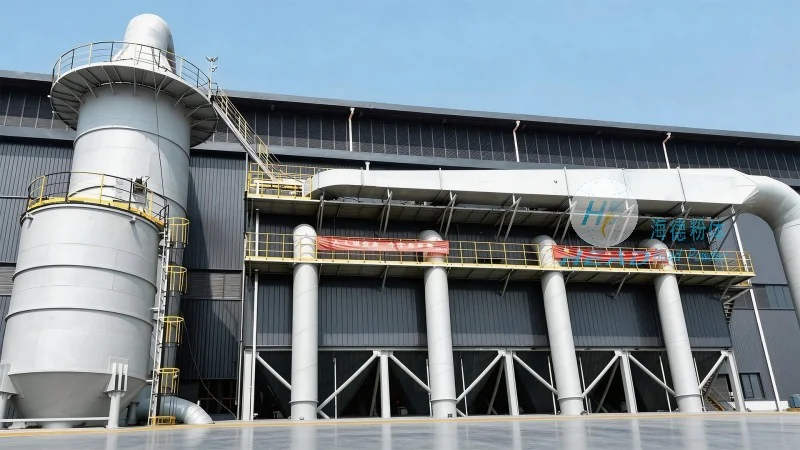
Belt conveyors are a classic and widely adopted method for transporting limestone powder, especially in bulk material handling applications. These systems use a continuous belt that moves over rollers to transport material from one point to another. Belt conveyors excel in handling large volumes of material and can cover long distances with minimal maintenance. Their advantages include high throughput capacity, durability, and the ability to transport materials over both horizontal and inclined paths. They are also relatively easy to install and can be integrated with other equipment such as feeders and elevators. However, belt conveyors have several drawbacks. The primary concern is dust generation, as the open design allows fine particles to escape, posing health and safety risks. Regular cleaning and maintenance are required to prevent dust accumulation and belt wear. Additionally, belt conveyors are not suitable for fine powders that can cause belt slippage or material buildup, leading to operational inefficiencies. The initial cost of a belt conveyor system is moderate, but ongoing maintenance and replacement of belts can increase long-term expenses.
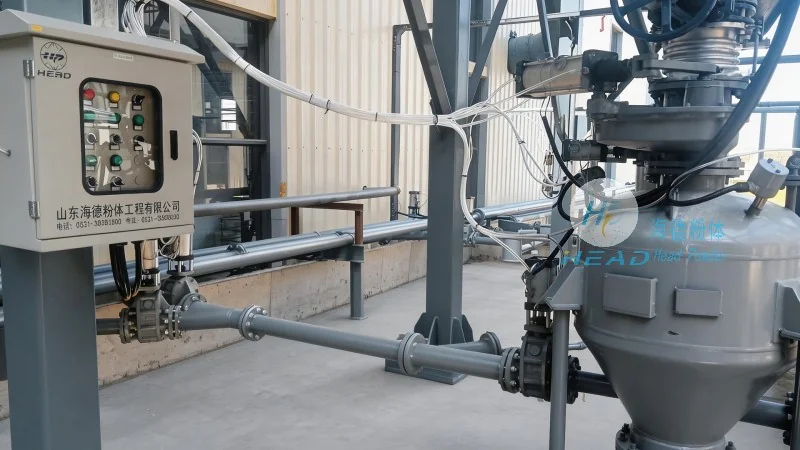
Hydraulic conveying, or slurry transport, involves mixing limestone powder with water to form a slurry, which is then pumped through pipelines. This method is particularly effective for transporting very fine powders or materials with high moisture content. The advantages of hydraulic conveying include the ability to handle extremely fine particles that are difficult to move with other methods, and the capacity to transport materials over long distances with relatively low energy consumption compared to pneumatic systems. The system is also less prone to blockages as the slurry flows continuously. However, hydraulic conveying has significant disadvantages. The most critical issue is the need for a wastewater treatment system to handle the slurry after use, as the water contains fine particles that must be disposed of or recycled. This adds complexity and cost to the overall operation. Additionally, the system requires regular cleaning of pipelines to prevent scaling and clogging, which can be time-consuming and expensive. The initial investment for hydraulic equipment is also substantial, and the maintenance of pumps and pipelines is more complex than for other conveying methods.
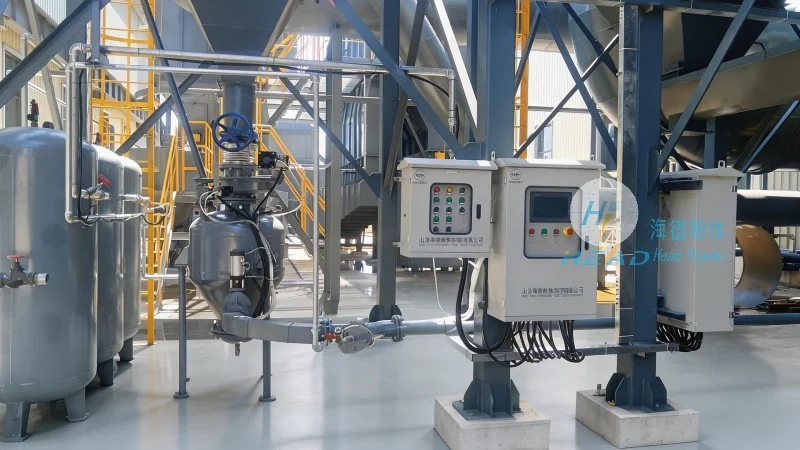
When selecting a limestone powder conveying method, several factors must be considered to ensure the best fit for a specific application. The volume and particle size of the material are primary considerations. For large volumes of fine powders, pneumatic or hydraulic systems may be more suitable, while screw or belt conveyors are better for moderate volumes or coarser materials. The distance and layout of the transport route also play a role. For short horizontal distances, screw or belt conveyors may suffice, but for long distances or vertical lifts, pneumatic or hydraulic systems are preferred. Cost is another critical factor. While pneumatic systems have high initial costs and energy consumption, they offer low maintenance. Screw and belt conveyors have lower initial costs but higher maintenance. Environmental regulations and dust control requirements are also important, as some methods are better at containing dust than others. Ultimately, the choice of conveying method should balance operational efficiency, cost, and safety to optimize overall performance.
Each limestone powder conveying method has its own set of advantages and disadvantages, making the selection process crucial for industrial applications. Pneumatic conveying is ideal for fine powders and long-distance transport but requires high energy and maintenance. Screw conveyors are cost-effective and low-maintenance for moderate volumes but limited by particle size and vertical lifting. Belt conveyors offer high throughput and durability but suffer from dust issues and are unsuitable for fine powders. Hydraulic conveying is effective for very fine or wet materials but involves additional costs for wastewater treatment. To make an informed decision, industrial operators should evaluate their specific needs, including material characteristics, transport distance, budget, and environmental regulations. By carefully considering these factors, they can choose the most suitable conveying method to enhance operational efficiency and safety. As a leading provider in the field, Shandong HeadPowder Engineering Co., Ltd. offers tailored solutions and expertise to help clients select and implement the optimal limestone powder conveying system for their requirements.

 Shandong Headpowder Engineering Co., Ltd.
 156-6277-7102(Manager Zhang)
  0531-83386006
  Zhangqiu District, Jinan City, Shandong Province, China
telephone
WeChatconsult
top