With more than 10‑year industry experience, Shandong Headpowder delivers full‑service pneumatic‑conveying systems and blowers, undertaking nationwide turn‑key powder‑handling projects.
This document provides an overview of pneumatic conveying systems designed for handling Polyvinylidene Chloride (PVDC), a specialized polymer widely recognized for its exceptional chemical resistance, thermal stability, and mechanical strength. PVDC is commonly used in applications requiring exposure to harsh chemicals, high temperatures, or aggressive environments, making it a critical material in industries such as chemical processing, pharmaceuticals, and aerospace. The pneumatic conveying system is engineered to efficiently transport PVDC powders or granules from storage to processing equipment, ensuring minimal product degradation and optimal operational efficiency. This overview will explore the key components, structural design, working principles, and technical considerations of such systems, highlighting their importance in maintaining product quality and process reliability.
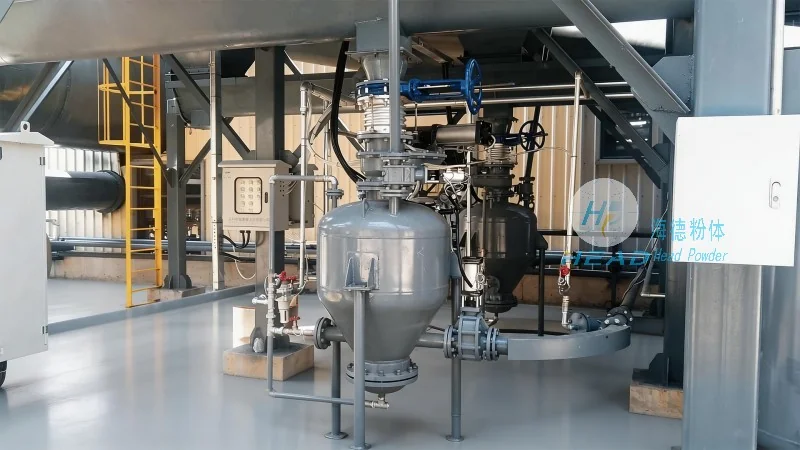
The pneumatic conveying system for PVDC typically consists of several core components, each playing a critical role in the overall functionality. The primary components include a hopper for material storage, a rotary valve for controlled material discharge, a conveying line (often equipped with pulse jets or airlocks), and a receiver for product collection. The structural design emphasizes durability and corrosion resistance, as PVDC is sensitive to certain environmental factors and requires a system that can withstand potential exposure to moisture or chemicals. The materials used for the system's construction, such as stainless steel or specialized polymers, are selected to maintain the integrity of the PVDC material during transport. Additionally, the system incorporates anti-static features to prevent dust accumulation and ensure safe operation, as PVDC powders can be prone to static charge buildup under certain conditions.
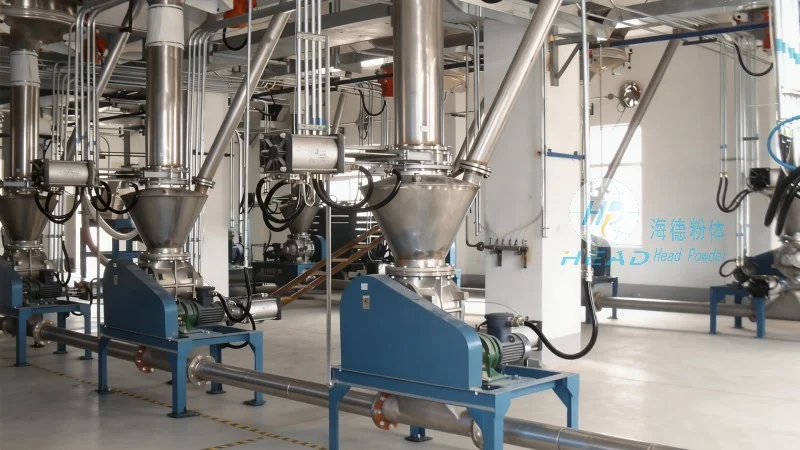
The working principle of the pneumatic conveying system operates on the principle of air movement to transport solid materials. In this system, compressed air is introduced into the conveying line, creating a flow that draws the PVDC material from the hopper through the rotary valve into the pipeline. The air velocity is carefully controlled to ensure the material is carried without excessive abrasion or degradation. The system may utilize either a positive pressure or negative pressure (suction) method, depending on the specific application requirements. Positive pressure systems are commonly used for long-distance or high-volume transport, as they can maintain consistent air pressure and prevent material backflow. Negative pressure systems, on the other hand, are suitable for applications where dust control is a priority, as they create a sealed environment that minimizes particle release. The system's design also includes filtration and cleaning mechanisms to maintain air quality and prevent contamination of the PVDC material.
Technical specifications for the PVDC pneumatic conveying system are tailored to meet the unique demands of handling this polymer. Key parameters include the system's capacity, which can range from low to high flow rates depending on the production scale, and the air pressure requirements, typically between 4 to 10 bar for positive pressure systems. The conveying line diameter and length are also critical factors, as they directly impact the system's efficiency and energy consumption. For PVDC, which is prone to static charge buildup, the system incorporates anti-static measures, such as grounding and conductive materials, to prevent dust explosions or material sticking. Additionally, the system is designed with easy access points for maintenance and cleaning, ensuring that the equipment can be serviced without disrupting production operations. The system's control system, often integrated with sensors and automation, allows for real-time monitoring of material flow and air pressure, enhancing operational efficiency and reducing downtime.
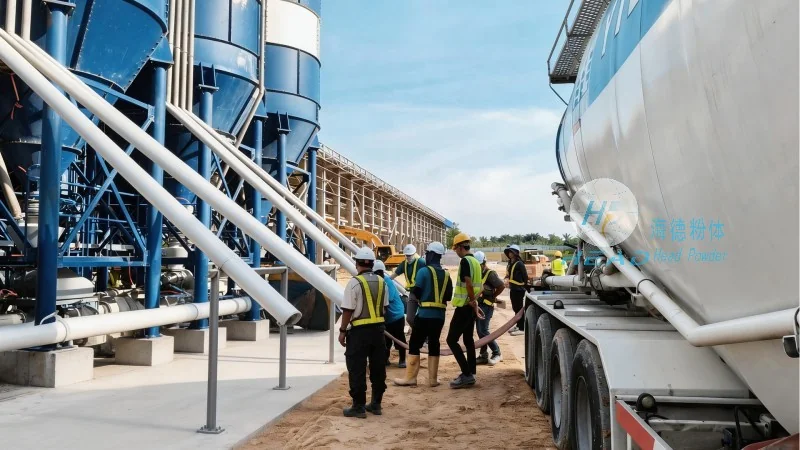
Shandong HeadPowder Engineering Co., Ltd., based in Shandong, China, specializes in the design, manufacturing, and installation of advanced material handling systems, including pneumatic conveying solutions for specialty polymers like PVDC. The company leverages years of industry experience to provide customized solutions that meet the specific needs of clients in various sectors, such as chemical manufacturing, pharmaceuticals, and food processing. HeadPowder's commitment to quality and innovation ensures that their systems are reliable, efficient, and compliant with international standards. For inquiries or further information regarding PVDC pneumatic conveying systems, please contact the company directly.

 Shandong Headpowder Engineering Co., Ltd.
 156-6277-7102(Manager Zhang)
  0531-83386006
  Zhangqiu District, Jinan City, Shandong Province, China
telephone
WeChatconsult
top