With more than 10‑year industry experience, Shandong Headpowder delivers full‑service pneumatic‑conveying systems and blowers, undertaking nationwide turn‑key powder‑handling projects.
For industries dealing with ceramic particles, efficient material handling is crucial. Pneumatic conveying systems offer a reliable solution for transporting these materials from one location to another. This equipment is designed to handle the unique characteristics of ceramic powders, ensuring minimal product degradation and optimal operational performance. The following content will explore the operation process and working principles of such systems, providing insights into how they function and why they are essential in modern material handling applications.
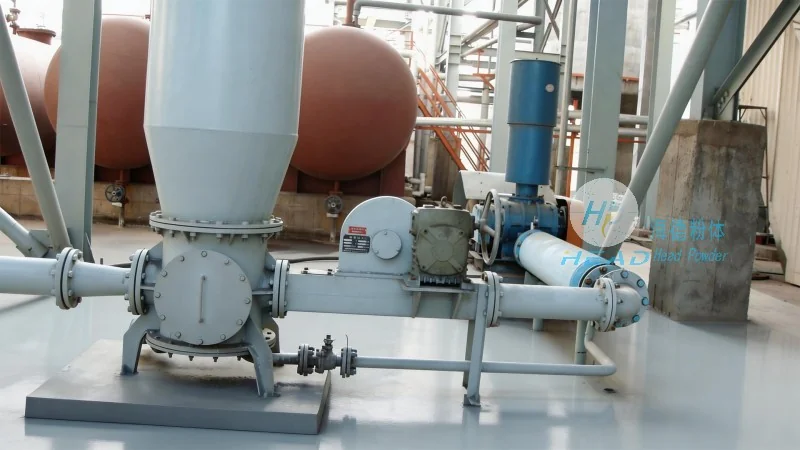
The effectiveness of a pneumatic conveying system for ceramic particles depends on several key components. These typically include a hopper for material storage, a feeder to control the flow rate, a conveying line (often with bends and filters), and a receiver for the discharged material. Each component plays a vital role in maintaining the integrity of the ceramic particles and ensuring smooth operation. The hopper is designed to prevent material bridging and ensure a consistent feed to the feeder. The feeder, often a rotary valve or a screw feeder, regulates the amount of material entering the conveying line, preventing overloading and maintaining a stable flow. The conveying line, usually made of stainless steel or other corrosion-resistant materials, is equipped with filters to capture any fine particles and prevent them from escaping into the environment. The receiver at the end of the line collects the conveyed material, often with a discharge valve to control the release.
The operation process of a ceramic particle pneumatic conveying system involves several sequential steps. First, the ceramic particles are loaded into the hopper from a storage silo or a batch container. The hopper ensures that the material is stored in a way that prevents agglomeration and maintains a uniform feed. Next, the feeder is activated to control the flow rate of the particles into the conveying line. The feeder adjusts the amount of material based on the system's requirements, ensuring that the conveying line operates within its capacity. As the particles enter the conveying line, they are propelled by a stream of air, which can be either positive pressure (blowing air into the line) or negative pressure (sucking air out of the line). The air flow is carefully controlled to maintain the correct velocity, preventing particle degradation and ensuring efficient transport. The conveying line may include bends and turns, which are designed to minimize pressure loss and maintain the flow of particles. At the receiving end, the particles are collected in the receiver, and the system may include a discharge mechanism to release the material as needed. The entire process is monitored by sensors and control systems to ensure that the operation is stable and efficient.
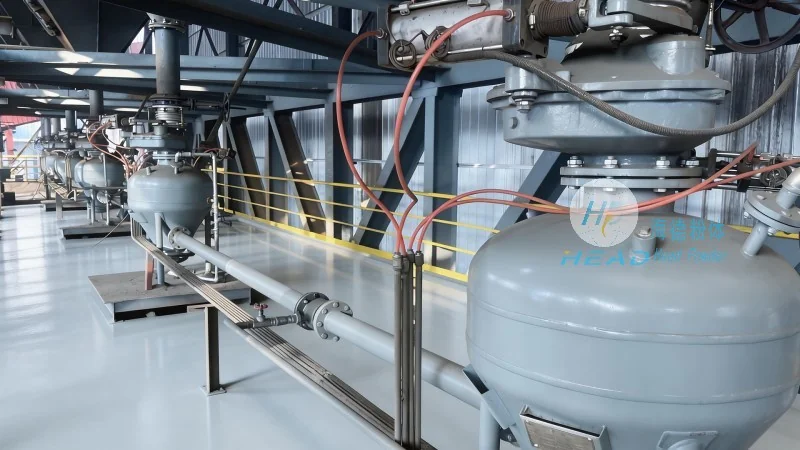
The working principle of a pneumatic conveying system for ceramic particles is based on the interaction between the material and the air flow. In positive pressure systems, a blower or a compressor generates a high-pressure air stream that pushes the particles through the conveying line. The air velocity is maintained above the minimum fluidization velocity of the ceramic particles, ensuring that they remain suspended and transported. In negative pressure systems, a vacuum pump creates a low-pressure environment that draws the particles into the line. The air flow in both systems is designed to keep the particles in a fluidized state, preventing them from settling or clogging the line. The choice between positive and negative pressure depends on factors such as the distance to be conveyed, the particle size, and the system's layout. For ceramic particles, which are often fine and abrasive, the system must be designed to minimize wear and maintain the integrity of the particles. This includes using smooth, corrosion-resistant materials for the conveying line and ensuring that the air flow is controlled to prevent excessive particle impact.
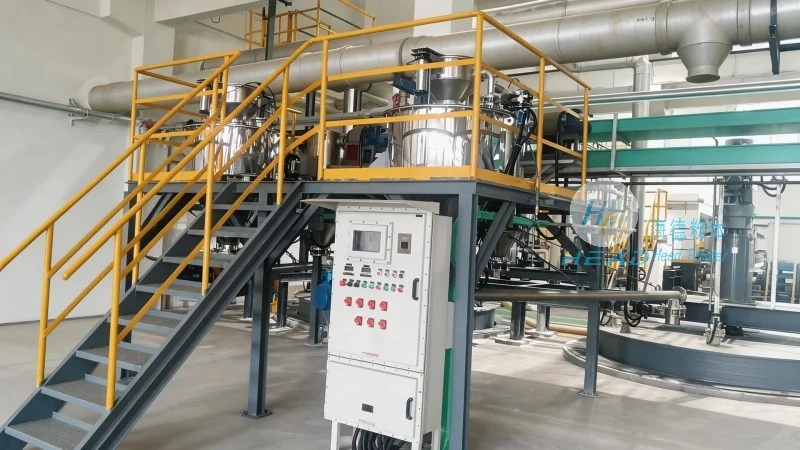
There are several advantages to using pneumatic conveying equipment for ceramic particle materials. First, it offers a closed system, which helps to contain dust and prevent environmental contamination. This is particularly important for ceramic powders, which can be hazardous if released into the air. Second, the system is highly efficient, as it can transport materials over long distances with minimal energy consumption. Third, it reduces the risk of product contamination, as the material is not in contact with other substances during transport. Fourth, the system is flexible, as it can be easily integrated into existing production lines and adapted to different material types. Finally, it improves safety by eliminating the need for manual handling of bulk materials, reducing the risk of accidents and injuries.
Shandong HeadPowder Engineering Co., Ltd., also known as headpowder, is a leading manufacturer of pneumatic conveying equipment for ceramic particle materials. The company is based in Shandong, China, and has been providing high-quality solutions for material handling in the ceramics industry for many years. HeadPowder specializes in designing and manufacturing customized pneumatic conveying systems that meet the specific needs of their clients. The company's products are known for their reliability, efficiency, and durability, and are used in a wide range of applications, from small-scale production to large industrial facilities. HeadPowder's team of engineers and technicians is dedicated to providing excellent customer service and support, ensuring that their clients get the best possible solution for their material handling needs.

 Shandong Headpowder Engineering Co., Ltd.
 156-6277-7102(Manager Zhang)
  0531-83386006
  Zhangqiu District, Jinan City, Shandong Province, China
telephone
WeChatconsult
top