With more than 10‑year industry experience, Shandong Headpowder delivers full‑service pneumatic‑conveying systems and blowers, undertaking nationwide turn‑key powder‑handling projects.
HeadPowder, a leading engineering company headquartered in Shandong, China, specializes in the design, manufacturing, and installation of advanced pneumatic conveying systems tailored for transporting limestone and gypsum powders. These systems are engineered to handle bulk materials efficiently, ensuring minimal product degradation and consistent operational performance. This article provides a detailed overview of the operation process and working principles of such systems, highlighting their efficiency, reliability, and industrial applications.
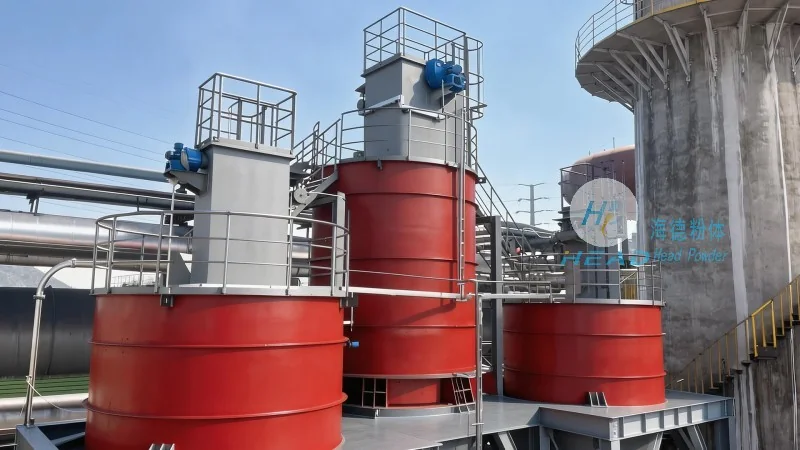
The core of a pneumatic conveying line for limestone and gypsum powders lies in the use of air as the primary medium to transport bulk materials. The system typically operates on one of two fundamental principles: the suction (or negative pressure) method and the pressure (or positive pressure) method. In the suction system, a vacuum is created at the material inlet to draw the powder into the conveying line. Conversely, the pressure system uses compressed air to push the material through the pipeline. Both methods are designed to handle different material characteristics and operational requirements, providing flexibility in industrial applications.
A pneumatic conveying line for limestone and gypsum powders comprises several critical components, each playing a vital role in the overall system. The primary components include:
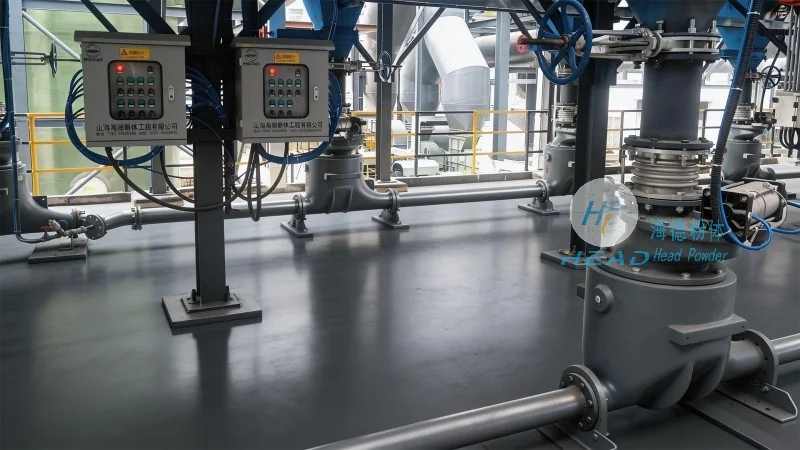
The operation of a limestone and gypsum powder pneumatic conveying line involves a sequential process that ensures efficient material transport. The workflow typically begins with the material being loaded into the feed hopper. From there, the rotary valve or airlock controls the flow of powder into the conveying line. Simultaneously, the air compressor generates the necessary air pressure or vacuum, depending on the system configuration.
As the air and material mixture travels through the pipeline, the centrifugal force in the cyclone separator causes the powder to separate from the air. The separated powder is collected in the receiver hopper, while the air is directed to the dust collector for filtration. The clean air is then either released or recirculated back into the system, depending on the design. This continuous cycle ensures that the material is transported from the source to the destination with minimal loss and maximum efficiency.
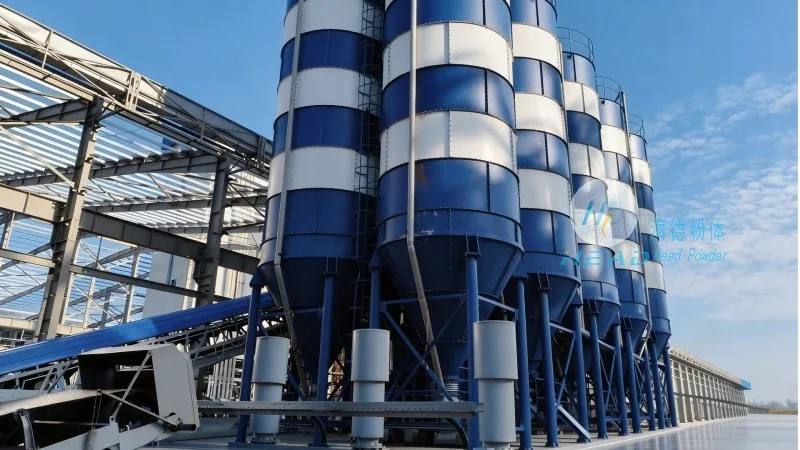
Pneumatic conveying systems offer several advantages when handling limestone and gypsum powders. These include:
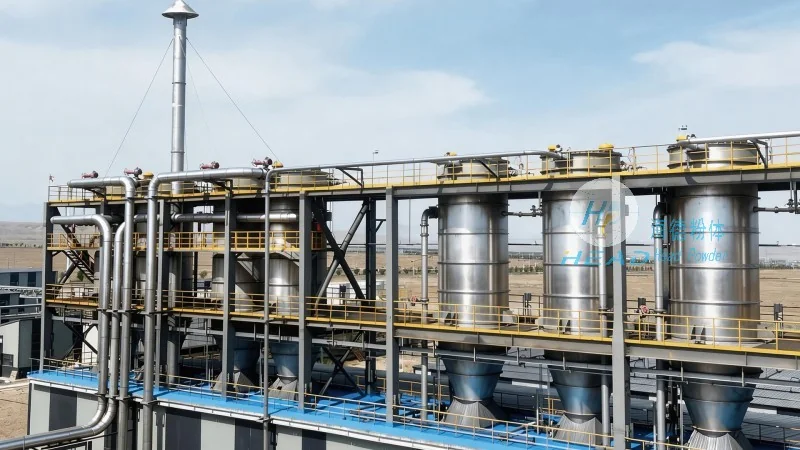
Limestone and gypsum powder pneumatic conveying systems are widely used in various industrial sectors, including:
HeadPowder's expertise in designing and implementing pneumatic conveying lines for limestone and gypsum powders ensures that industrial facilities can achieve efficient, reliable, and cost-effective material transport. By understanding the operation process and working principles of these systems, businesses can optimize their material handling processes, enhance productivity, and maintain product quality. The advanced engineering and robust design of these systems make them a preferred choice for industries requiring consistent and safe bulk material transportation.

 Shandong Headpowder Engineering Co., Ltd.
 156-6277-7102(Manager Zhang)
  0531-83386006
  Zhangqiu District, Jinan City, Shandong Province, China
telephone
WeChatconsult
top