With more than 10‑year industry experience, Shandong Headpowder delivers full‑service pneumatic‑conveying systems and blowers, undertaking nationwide turn‑key powder‑handling projects.
HeadPowder, a leading engineering company based in Shandong, China, specializes in the design, manufacturing, and installation of advanced pneumatic conveying systems for handling gypsum particle materials. This article provides a detailed overview of the operation process and working principles of such systems, highlighting the efficiency and reliability they offer in industrial applications.
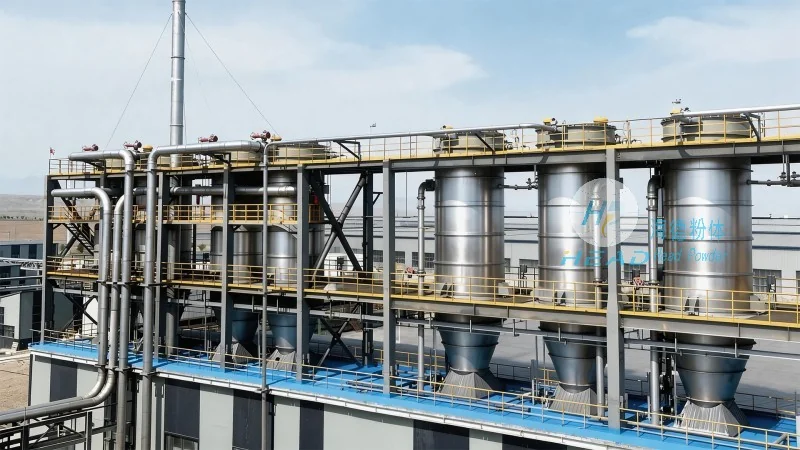
Pneumatic conveying is a method of transporting bulk materials like gypsum particles through a pipeline using a stream of air or other gas. Unlike traditional mechanical conveying systems, which rely on belts, buckets, or screws, pneumatic systems utilize the force of moving air to move materials, making them ideal for applications where dust control, minimal maintenance, and flexibility are critical. The technology is widely used in the construction, mining, and chemical industries due to its ability to handle a wide range of particle sizes and moisture content.
A typical gypsum particle pneumatic conveying system consists of several key components that work in tandem to ensure efficient material transport. These components include a material feeder, a conveying pipeline, a blower or air compressor, a separation or filtration system, and a discharge device. Each component plays a crucial role in the overall operation, and their proper integration is essential for optimal performance.
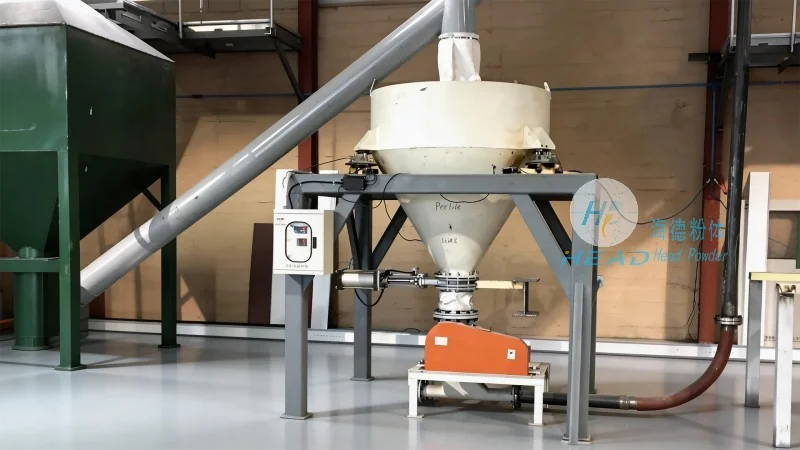
The operation process of a gypsum particle pneumatic conveying system begins with the material feeder, which feeds the gypsum particles into the conveying pipeline. The feeder is designed to maintain a consistent flow rate, ensuring that the material is continuously supplied to the system. Next, the blower or air compressor generates a high-pressure air stream that travels through the pipeline. As the air moves through the pipeline, it picks up the gypsum particles and transports them to the discharge point. The separation or filtration system is then used to remove any excess air or fine particles from the material stream, ensuring that the gypsum particles are delivered in a clean and dry state.
The working principle of a gypsum particle pneumatic conveying system is based on the principle of fluidization and suspension. The air stream in the pipeline creates a low-pressure zone that allows the gypsum particles to be suspended and carried along with the air. The velocity of the air is carefully controlled to ensure that the particles remain in suspension without settling or clogging the pipeline. The system operates under a pressure or vacuum condition, depending on the specific application, and the air flow rate is adjusted to match the material flow rate, ensuring that the conveying process is efficient and energy-efficient.
There are several advantages to using pneumatic conveying systems for gypsum particle materials. First, the system offers excellent dust control, as the material is contained within the pipeline and does not come into contact with the environment. This reduces the risk of dust exposure and improves workplace safety. Second, pneumatic systems are highly flexible and can be easily modified to accommodate changes in material flow rates or pipeline layout. Third, the system requires minimal maintenance, as there are no moving parts in direct contact with the material, reducing the risk of wear and tear. Finally, the system is energy-efficient, as the air flow rate is optimized to match the material flow rate, minimizing energy consumption.

Gypsum particle pneumatic conveying systems are used in a wide range of industrial applications, including the construction industry for transporting gypsum for wallboard production, the mining industry for transporting gypsum from mines to processing facilities, and the chemical industry for transporting gypsum as a raw material for various products. The systems are also used in the food and pharmaceutical industries for transporting gypsum as a food additive or a pharmaceutical ingredient.
HeadPowder's expertise in designing and manufacturing gypsum particle pneumatic conveying systems ensures that industrial facilities can achieve efficient, reliable, and safe material transport. By understanding the operation process and working principles of such systems, companies can make informed decisions about their material handling needs and select the most appropriate system for their specific requirements. With its advanced technology and commitment to quality, HeadPowder continues to be a leading provider of pneumatic conveying solutions for the gypsum industry.

 Shandong Headpowder Engineering Co., Ltd.
 156-6277-7102(Manager Zhang)
  0531-83386006
  Zhangqiu District, Jinan City, Shandong Province, China
telephone
WeChatconsult
top