With more than 10‑year industry experience, Shandong Headpowder delivers full‑service pneumatic‑conveying systems and blowers, undertaking nationwide turn‑key powder‑handling projects.
For industrial applications requiring efficient and reliable material handling, dry sand pneumatic conveying lines offer a sophisticated solution. This article provides an in-depth exploration of the operation process and working principle of such systems, highlighting the technical aspects and practical applications that make them indispensable in various sectors.
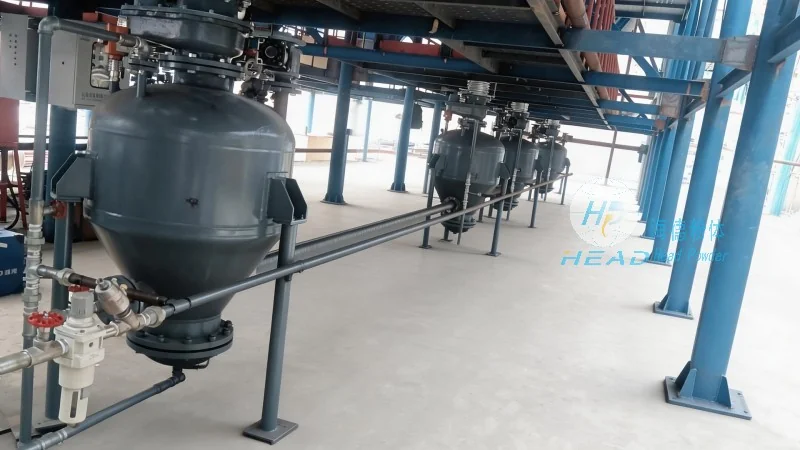
HeadPowder, a leading manufacturer in the field, specializes in the design, production, and installation of pneumatic conveying systems. With a strong presence in Shandong, China, the company has built a reputation for delivering high-quality equipment tailored to the specific needs of clients. The company’s commitment to innovation and precision engineering ensures that each dry sand pneumatic conveying line is built to meet stringent industry standards and operational requirements.
The core of a dry sand pneumatic conveying line is the pneumatic transport mechanism, which utilizes air as the medium to move dry sand particles from a source to a destination. The system operates on the principle of creating a pressure differential between the inlet and outlet of the conveying line. At the source, a fan or blower generates a high-pressure airflow that draws the dry sand particles into the pipeline. The sand particles are then suspended in the air stream and transported through the system. The process involves several key components, including a hopper for material storage, a feeder to control the flow rate, a pipeline network for transport, and a receiver for material discharge. The air flow is carefully managed to ensure optimal particle suspension and minimal pressure loss, which is crucial for maintaining the efficiency of the conveying process.
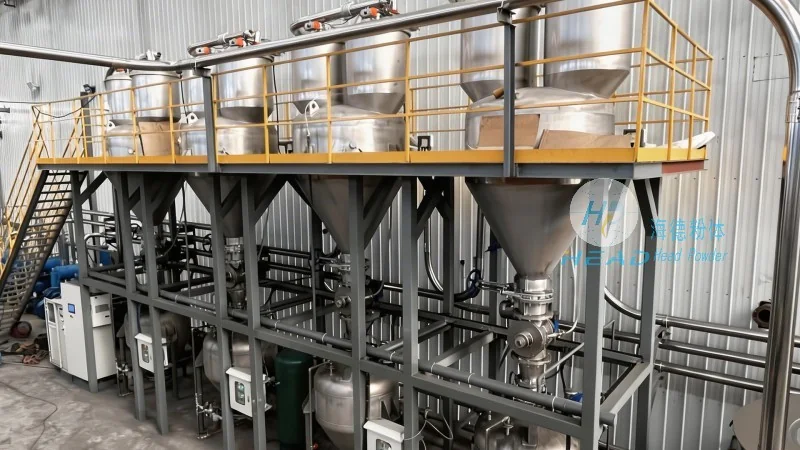
The operation of a dry sand pneumatic conveying line typically follows a systematic sequence. First, the dry sand is loaded into the hopper. The feeder then regulates the amount of sand released into the pipeline, ensuring a consistent flow rate. The fan or blower then activates, generating the necessary airflow to transport the sand. As the sand travels through the pipeline, it is continuously suspended by the air stream, moving towards the receiver. The receiver is designed to separate the sand from the air, allowing the sand to be discharged while the air is either recirculated or vented. The entire process is controlled by a system of valves, sensors, and control panels, which monitor pressure, flow rate, and other parameters to maintain optimal performance. This automated control system ensures that the conveying operation is efficient, reliable, and safe, minimizing downtime and maximizing productivity.
Several critical components work in tandem to ensure the smooth operation of a dry sand pneumatic conveying line. The hopper serves as the storage container for the dry sand, providing a consistent supply of material. The feeder, often a rotary valve or a screw feeder, controls the rate at which sand is introduced into the pipeline, preventing overloading and ensuring a steady flow. The fan or blower is the primary driver, generating the airflow that propels the sand particles. The pipeline network, typically made of stainless steel or other corrosion-resistant materials, transports the sand and air mixture. The receiver, equipped with a dust collection system, separates the sand from the air, ensuring that the discharged material is clean and free from contaminants. Additionally, the control system, which includes sensors for pressure and flow, and a control panel for operation, manages the entire process, allowing for real-time adjustments and monitoring.
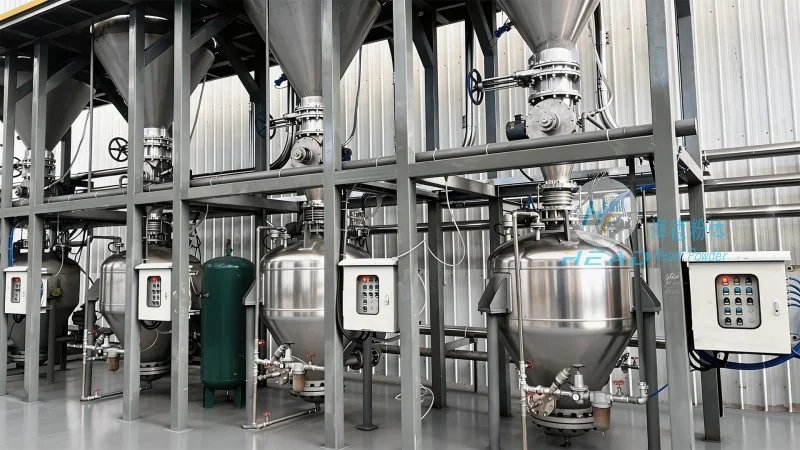
Compared to traditional material handling methods, dry sand pneumatic conveying lines offer several advantages. They provide a dust-free and hygienic environment, which is particularly important for applications involving food or pharmaceutical products. The system is also highly flexible, allowing for changes in the conveying route or capacity without major modifications. Additionally, the enclosed pipeline design minimizes material loss and contamination, ensuring that the quality of the dry sand is maintained throughout the process. The automated operation reduces labor costs and increases productivity, making it an economical choice for large-scale industrial applications. Furthermore, the system is compact and can be installed in various configurations, making it suitable for both new construction and retrofitting in existing facilities.
Dry sand pneumatic conveying lines are widely used in various industries due to their versatility and efficiency. In the construction industry, they are used to transport sand for concrete mixing and other applications. In the mining sector, they help in the transport of sand and other minerals from processing plants to storage or processing facilities. The food and beverage industry utilizes these systems for the handling of sand-based ingredients, ensuring that the material is handled hygienically and efficiently. Additionally, in the chemical and pharmaceutical industries, the systems are employed to transport sand or other dry materials that require a dust-free environment. The adaptability of the dry sand pneumatic conveying line makes it a valuable asset in any industry where efficient material handling is critical.

 Shandong Headpowder Engineering Co., Ltd.
 156-6277-7102(Manager Zhang)
  0531-83386006
  Zhangqiu District, Jinan City, Shandong Province, China
telephone
WeChatconsult
top