With more than 10‑year industry experience, Shandong Headpowder delivers full‑service pneumatic‑conveying systems and blowers, undertaking nationwide turn‑key powder‑handling projects.
Shandong HeadPowder Engineering Co., Ltd., headquartered in Shandong, China, specializes in the design and manufacturing of advanced material handling systems. This article delves into the principle and working scene characteristics of unmanned material feeding conveying lines, highlighting their role in modern industrial automation and efficiency.
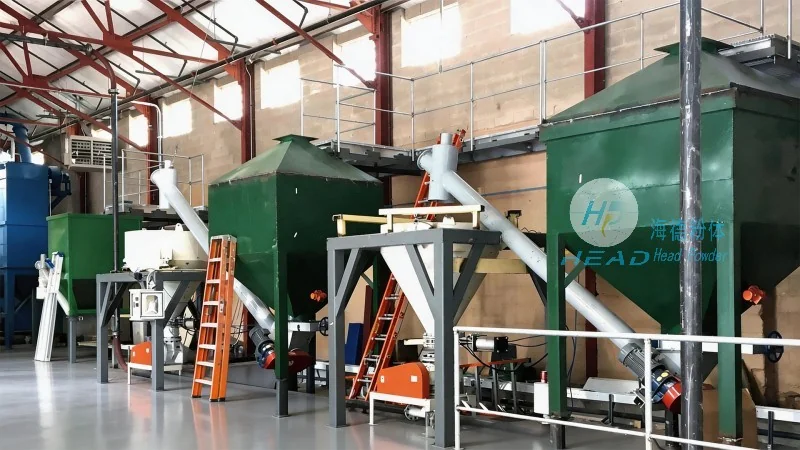
Unmanned material feeding conveying lines are sophisticated automated systems engineered to transport materials without human intervention. The fundamental principle revolves around the integration of mechanical components, sensors, and control technologies to achieve precise, continuous material handling. At the heart of these systems are conveyor mechanisms—such as belt, chain, or screw conveyors—that move materials along a designated path. Automated feeding devices, including hoppers, vibratory feeders, or dispensers, ensure materials are introduced into the conveyor at a controlled rate. Sensors, like photoelectric or proximity sensors, detect material presence and position, enabling the system to adjust operations dynamically. A central control unit, often equipped with programmable logic controllers (PLCs) or industrial computers, coordinates all functions, providing real-time monitoring and data logging. This closed-loop system ensures reliability, minimizing downtime and maximizing productivity.
The effectiveness of an unmanned material feeding conveying line depends on several critical components and operational mechanics. The feeding mechanism is paramount, as it must handle diverse material types—such as powders, granules, liquids, or solid objects—without causing blockages or uneven flow. Vibratory feeders, for instance, use mechanical vibration to move bulk materials, while automated dispensers handle smaller, packaged items. The conveyor itself is tailored to the material and application: belt conveyors for general-purpose transport, chain conveyors for heavy loads, and screw conveyors for inclined or vertical movement. Safety sensors and emergency stop mechanisms are integrated to protect both equipment and personnel. The control system, often linked to software for performance tracking, allows operators to monitor the line’s status, identify anomalies, and implement adjustments. This automation ensures consistent operation, reducing human error and enhancing safety.
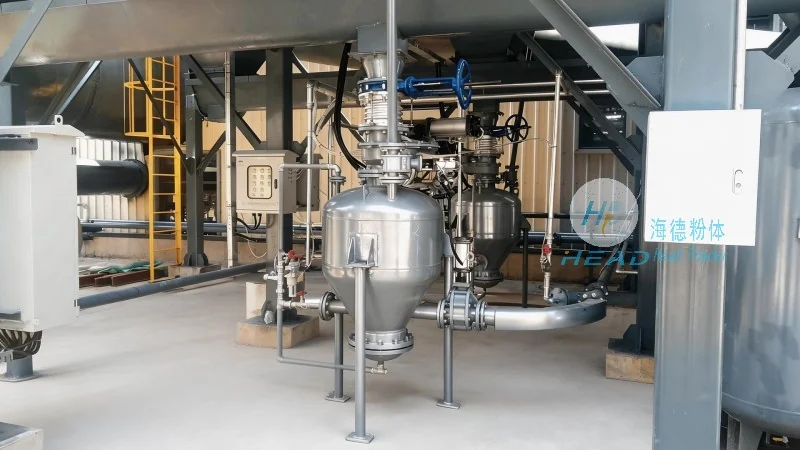
The working scene characteristics of unmanned material feeding conveying lines are tailored to meet the demands of diverse industrial environments. These systems are widely used in manufacturing facilities, warehouses, and processing plants where automated material movement is essential. A key characteristic is their adaptability to varying production scales, from small-scale operations to large-scale industrial plants. They are suitable for industries including food processing, pharmaceuticals, chemicals, and electronics, handling materials ranging from raw ingredients to finished products. In manufacturing, these lines feed raw materials to processing machines, streamlining production lines and reducing manual labor. In warehousing, they transport goods between storage areas and packaging stations, improving inventory management. The working scene also emphasizes space efficiency and flexibility. Many systems are modular, allowing easy expansion or reconfiguration to accommodate changing production needs. Advanced technologies, such as artificial intelligence and machine learning, enable predictive maintenance and performance optimization, further enhancing operational efficiency.
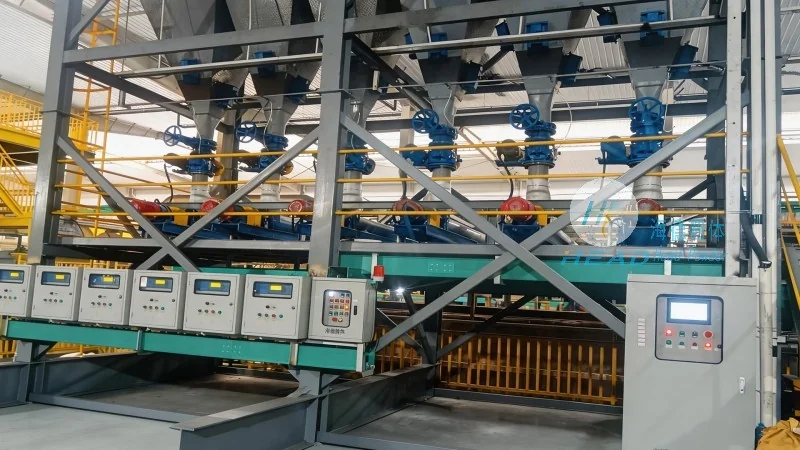
Implementing unmanned material feeding conveying lines offers significant advantages for industrial operations. One primary benefit is labor cost reduction and error minimization. Automation eliminates the need for manual material handling, cutting expenses and reducing human-related mistakes like misplacement or overloading. Safety is another critical advantage, as workers avoid hazardous environments with moving parts or heavy machinery. Production throughput and consistency improve due to continuous, 24/7 operation, leading to higher productivity and shorter lead times. Real-time monitoring and data collection provide insights for process optimization and predictive maintenance, reducing unexpected downtime. From a practical standpoint, these systems require minimal maintenance due to robust design and automated diagnostics, ensuring long-term reliability.
In summary, unmanned material feeding conveying lines represent a pivotal advancement in industrial automation, delivering efficient, reliable, and safe material handling solutions. Their principle of integration—combining mechanical, sensor, and control technologies—enables effective operation across diverse working scenes. As technology evolves, these systems will likely incorporate AI-driven optimization and predictive analytics, further enhancing performance. The adaptability, space efficiency, and integration capabilities make them indispensable for modern industrial operations. For companies seeking to enhance productivity and reduce costs, such systems are a valuable investment. Shandong HeadPowder Engineering Co., Ltd. remains committed to providing innovative solutions that meet the evolving needs of the industrial sector, ensuring unmanned material feeding conveying lines continue to play a crucial role in the future of manufacturing and logistics.

 Shandong Headpowder Engineering Co., Ltd.
 156-6277-7102(Manager Zhang)
  0531-83386006
  Zhangqiu District, Jinan City, Shandong Province, China
telephone
WeChatconsult
top