

What is Soapstone Material Pneumatic Conveying Equipment? What Are Its Design Principles?
For industries dealing with soapstone materials, efficient and reliable material handling is crucial. Pneumatic conveying systems offer a solution that minimizes contamination, reduces labor costs, and enhances overall operational safety. This article explores the fundamentals of soapstone material pneumatic conveying equipment, detailing its design principles and the key factors that contribute to its effectiveness in industrial applications, as designed by Shandong HeadPowder Engineering Co., Ltd.
Understanding Pneumatic Conveying Systems
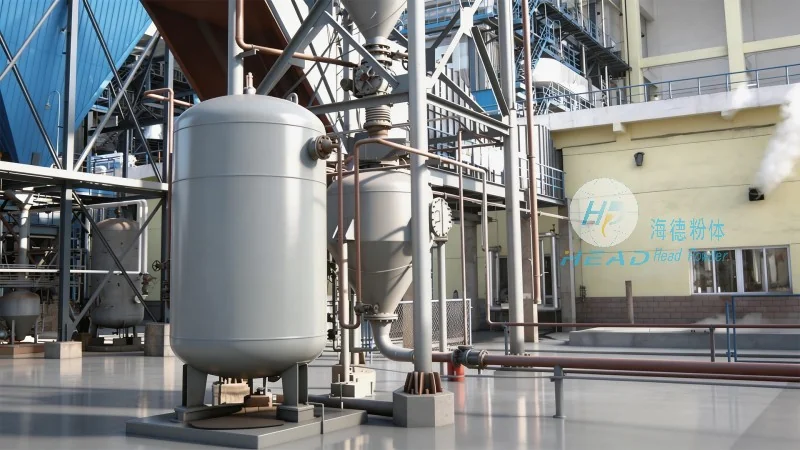
Pneumatic conveying, also known as air conveying, is a method of transporting bulk materials through a pipeline using compressed air. Unlike mechanical systems that rely on belts, screws, or buckets, pneumatic systems utilize air pressure to move materials, making them particularly suitable for materials like soapstone that may be abrasive or sensitive to mechanical wear. The core components of a pneumatic conveying system include a material feed hopper, a conveying line, a dust collector, and a discharge outlet. Each component plays a critical role in ensuring the smooth and efficient transport of soapstone from the source to the destination.
Design Principles for Soapstone Material Conveying
The design of a soapstone material pneumatic conveying system must consider several key factors to ensure optimal performance. First, the material's physical properties, such as particle size, density, and moisture content, directly influence the system's design. Soapstone particles are typically irregularly shaped and can vary in size, which affects the air velocity required for effective transport. Engineers must calculate the appropriate air velocity to prevent material settling or blockages in the pipeline. Second, the system's pressure and flow rate must be carefully balanced. High-pressure systems are suitable for long-distance or high-resistance conveying, while low-pressure systems are ideal for short distances or low-resistance applications. The choice of pressure and flow rate directly impacts energy consumption and system efficiency.
Key Components and Their Functions
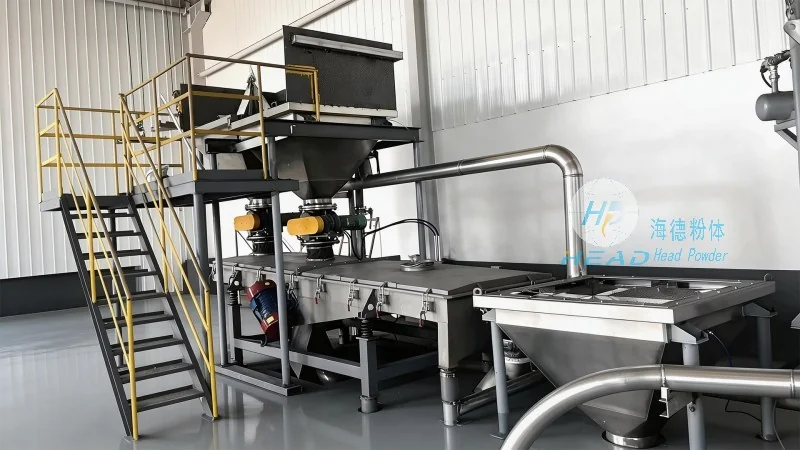
1. Material Feed Hopper: The hopper is responsible for storing and feeding the soapstone material into the conveying line. It is designed with a wide opening to accommodate bulk material and features a discharge valve that controls the flow rate. The hopper's design must prevent material bridging or segregation, which can lead to uneven feeding and system inefficiencies. For soapstone, a hopper with a sloped bottom and a rotating or vibrating mechanism may be used to ensure consistent material flow.
2. Conveying Line: The pipeline is the main component of the pneumatic system, responsible for transporting the soapstone particles through the system. The material is suspended in the air stream and carried along the pipeline. The diameter and length of the line are critical factors. Larger diameter lines reduce pressure drop and energy consumption, but they increase the system's footprint and cost. The line is typically made of stainless steel or other corrosion-resistant materials to withstand the abrasive nature of soapstone. Additionally, the line may include bends, elbows, or expansion joints to accommodate changes in direction or elevation.
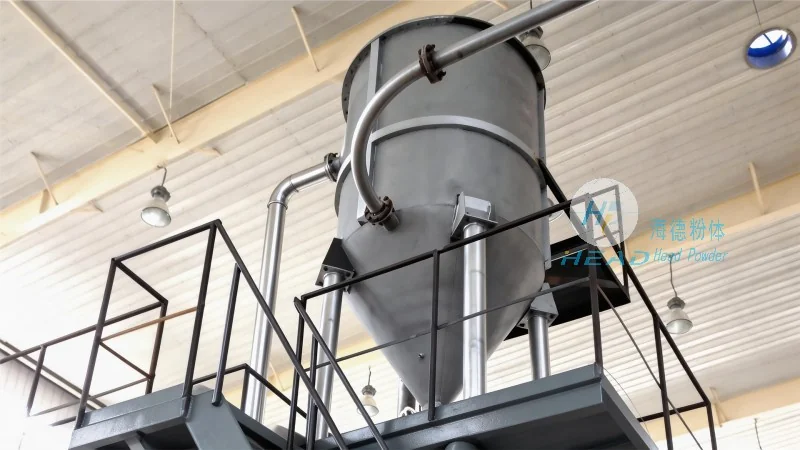
3. Dust Collector: A dust collector is essential for capturing and removing fine particles that may escape from the conveying line. Soapstone is a fine material, and without proper filtration, it can cause air pollution and affect the health of workers. The dust collector uses a filter bag or cartridge to trap the particles, which are then collected in a hopper for disposal. The system must be designed to handle the specific particle size and loading of soapstone, ensuring efficient filtration and minimal pressure drop.
4. Discharge Outlet: The discharge outlet is where the soapstone material is released from the conveying line. It is typically a valve or a hopper that controls the flow of material to the final destination, such as a storage silo or a processing unit. The outlet must be designed to prevent material backflow or clogging, which can disrupt the entire system. For soapstone, a discharge outlet with a smooth interior and a self-cleaning mechanism may be used to ensure consistent material discharge.
Advantages of Pneumatic Conveying for Soapstone
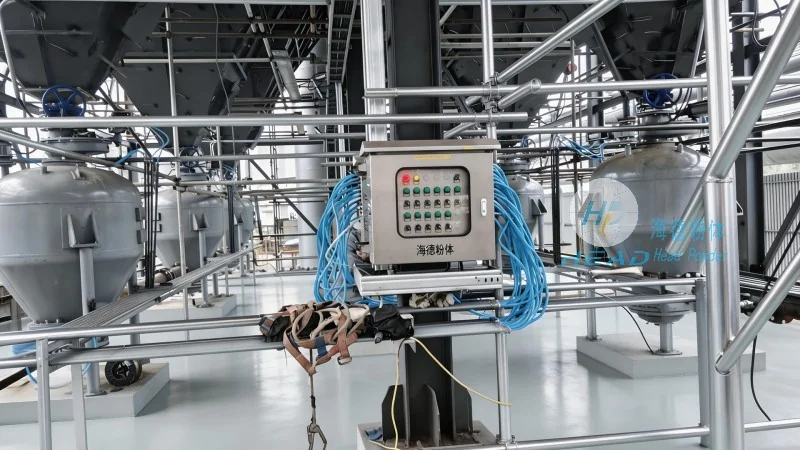
Compared to traditional mechanical conveying systems, pneumatic conveying offers several advantages for soapstone material handling. First, it minimizes material contamination, as the material is not in direct contact with mechanical parts. This is particularly important for soapstone, which is often used in applications where purity is critical, such as in the production of soapstone products or in the pharmaceutical industry. Second, pneumatic systems reduce labor costs by automating the material handling process. The system can operate continuously without the need for manual intervention, increasing productivity and reducing labor expenses. Third, pneumatic conveying enhances operational safety by eliminating the need for workers to handle heavy or abrasive materials manually. The system is enclosed, reducing the risk of dust exposure and physical injury. Finally, pneumatic systems are flexible and can be easily modified to accommodate changes in production volume or material type.
Applications of Soapstone Material Pneumatic Conveying
Soapstone material pneumatic conveying systems are widely used in various industries. In the manufacturing sector, they are used to transport soapstone from storage silos to processing machines, such as grinding or mixing equipment. In the construction industry, they are used to transport soapstone for use in countertops, flooring, or decorative elements. In the pharmaceutical industry, they are used to transport soapstone for use in the production of soap or other personal care products. The versatility of pneumatic conveying makes it suitable for a wide range of applications, from small-scale operations to large industrial plants.