With more than 10‑year industry experience, Shandong Headpowder delivers full‑service pneumatic‑conveying systems and blowers, undertaking nationwide turn‑key powder‑handling projects.
For industries dealing with inorganic salts, efficient and reliable powder handling is crucial. An inorganic salt powder conveying line is a specialized system engineered to transport these materials from one location to another with precision and minimal loss. This article explores the fundamental aspects of such systems, focusing on their design principles and practical applications.
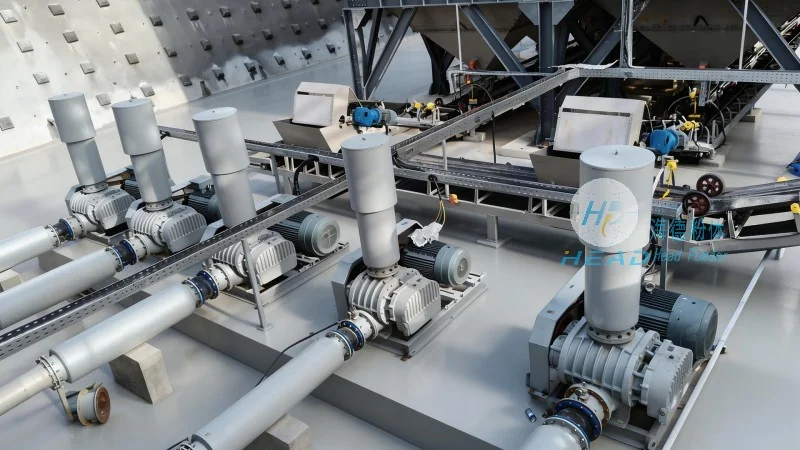
Shandong HeadPowder Engineering Co., Ltd., commonly known as HeadPowder, is a leading manufacturer in the field of powder handling equipment. With a strong commitment to innovation and quality, the company has established itself as a trusted partner for businesses requiring advanced solutions for material transport and processing. HeadPowder’s expertise lies in designing customized conveying systems tailored to the unique needs of various industries, including chemical, pharmaceutical, and food processing.
The design of an inorganic salt powder conveying line is built on several key principles to ensure optimal performance. First, the system must address the specific properties of inorganic salts, such as their particle size, moisture content, and flow characteristics. These factors influence the choice of conveying method—whether it involves pneumatic, mechanical, or hybrid systems. For example, pneumatic conveying is often preferred for fine powders due to its ability to handle high volumes and minimize material degradation. Mechanical conveying, on the other hand, may be more suitable for bulkier or heavier particles, offering greater control over flow rates.
Second, the design emphasizes energy efficiency and operational safety. Modern conveying lines incorporate advanced control systems that regulate air pressure, flow rates, and material movement, reducing energy consumption and preventing accidents. Additionally, the system’s components are constructed from materials resistant to corrosion and wear, ensuring long-term durability and reliability. This is particularly important when handling inorganic salts, which can be abrasive and chemically reactive.
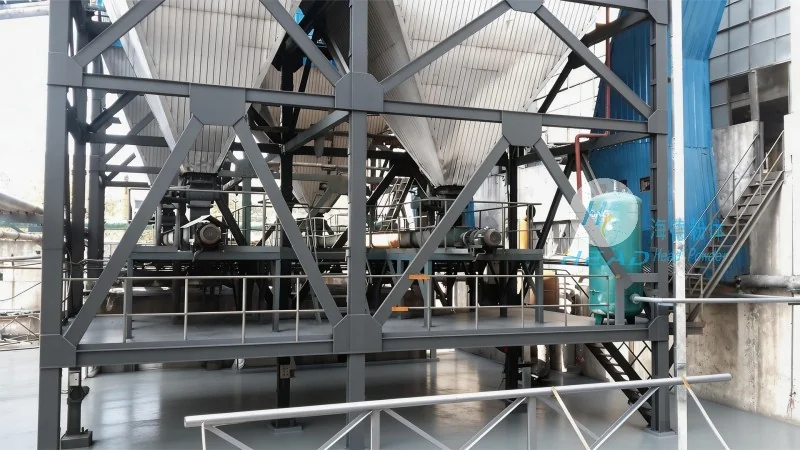
Third, the design prioritizes flexibility and adaptability. Many industries require conveying lines that can handle different types of inorganic salts or adjust to varying production volumes. HeadPowder’s solutions often include modular components that can be easily reconfigured or expanded to meet changing operational demands. This flexibility allows businesses to scale their operations without significant capital investment.
An inorganic salt powder conveying line typically consists of several interconnected components, each playing a critical role in the overall process. The primary components include a hopper for material storage, a feeder to control the flow rate, a conveying duct or pipeline, and a receiver for the final destination. The hopper is designed to accommodate bulk quantities of inorganic salts, with features like a discharge gate to regulate material release. The feeder, often a rotary or vibratory type, ensures a consistent and controlled flow of powder into the conveying system, preventing blockages and maintaining system efficiency.
The conveying duct is the central part of the system, responsible for transporting the powder from the feeder to the receiver. In pneumatic systems, this duct is usually made of metal or plastic, with smooth interior surfaces to minimize friction and particle buildup. The duct may also include bends, elbows, or expansion joints to accommodate changes in direction or elevation. For mechanical systems, the duct may consist of screw conveyors or belt conveyors, which use mechanical force to move the material. The receiver, typically a storage bin or processing unit, collects the conveyed material and prepares it for further use.
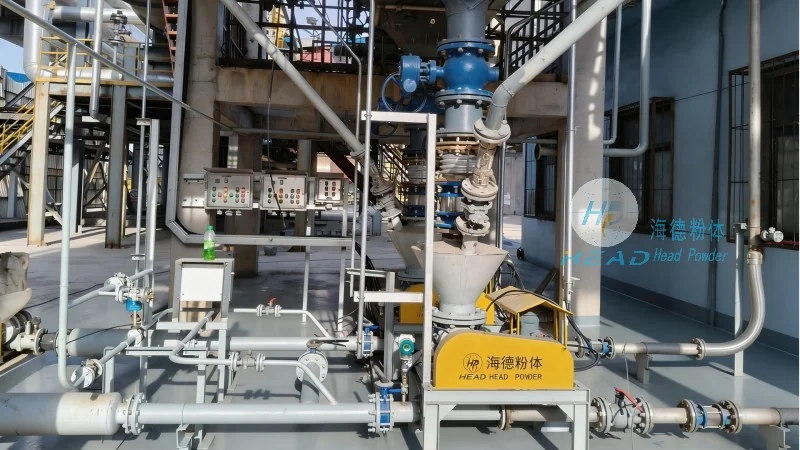
Advanced features may also be integrated into the system, such as dust collection and filtration systems to maintain air quality and comply with environmental regulations. These components help to capture and remove airborne particles, ensuring a clean and safe working environment. Additionally, sensors and monitoring devices are often included to track the system’s performance, detect anomalies, and provide real-time data for maintenance and optimization.
Inorganic salt powder conveying lines are widely used across various industries due to their versatility and efficiency. The chemical industry, for instance, relies heavily on these systems to transport raw materials like sodium chloride, potassium chloride, and calcium carbonate. These materials are often used in the production of fertilizers, detergents, and other chemical products, where consistent and reliable transport is essential for maintaining production schedules.
The pharmaceutical industry also benefits from inorganic salt conveying lines, particularly when handling raw materials like calcium carbonate or magnesium sulfate. These salts are critical components in drug formulations, and the precision of the conveying system ensures that the correct quantities are delivered to the production line, minimizing waste and improving product quality. Additionally, the pharmaceutical industry’s stringent quality control requirements make the use of advanced, cleanable systems a necessity.

 Shandong Headpowder Engineering Co., Ltd.
 156-6277-7102(Manager Zhang)
  0531-83386006
  Zhangqiu District, Jinan City, Shandong Province, China
telephone
WeChatconsult
top