With more than 10‑year industry experience, Shandong Headpowder delivers full‑service pneumatic‑conveying systems and blowers, undertaking nationwide turn‑key powder‑handling projects.
Compound fertilizer pneumatic conveying equipment is a specialized system designed to transport bulk powders, such as compound fertilizers, from one location to another using air pressure. This technology has become increasingly vital in the agricultural and industrial sectors due to its efficiency, safety, and ability to handle delicate or abrasive materials without causing damage. Understanding the structure and operational principles of such equipment is essential for optimizing material handling processes and ensuring smooth operations in fertilizer production and distribution.
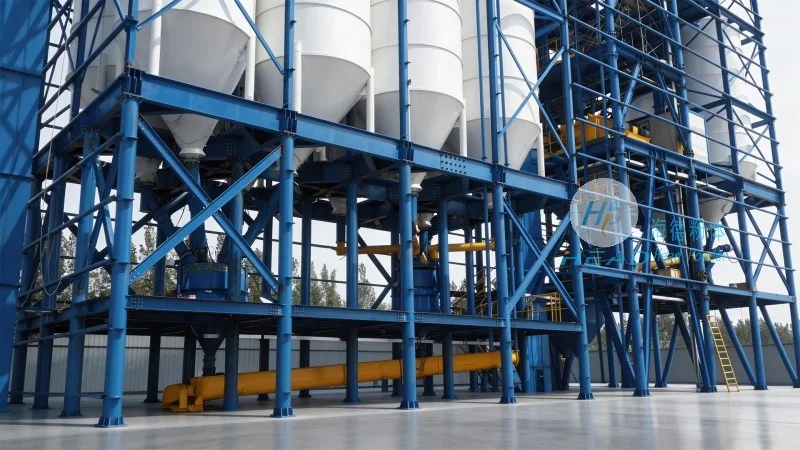
The core components of a compound fertilizer pneumatic conveying system typically include a hopper for material storage, a feeder to control the flow rate, a conveying pipeline network, a blower or compressor to generate air pressure, and a separator or cyclone to separate the material from the air stream. The system operates by introducing air into the material, creating a mixture that is then transported through the pipeline to the destination point. At the receiving end, the material is separated from the air, often using a cyclone or bag filter, and the air is either recirculated or vented.
1. Hopper (Storage Bin): The hopper serves as the primary storage vessel for the compound fertilizer. It is designed to hold a large volume of material and features a discharge outlet connected to the feeder. The hopper may include a level indicator to monitor the material level and a venting system to prevent pressure buildup.
2. Feeder (Metering Device): The feeder controls the rate at which material is released from the hopper into the conveying system. Common types include rotary valves, screw feeders, or vibratory feeders, which ensure a consistent and controlled flow of material to maintain system efficiency and prevent blockages.
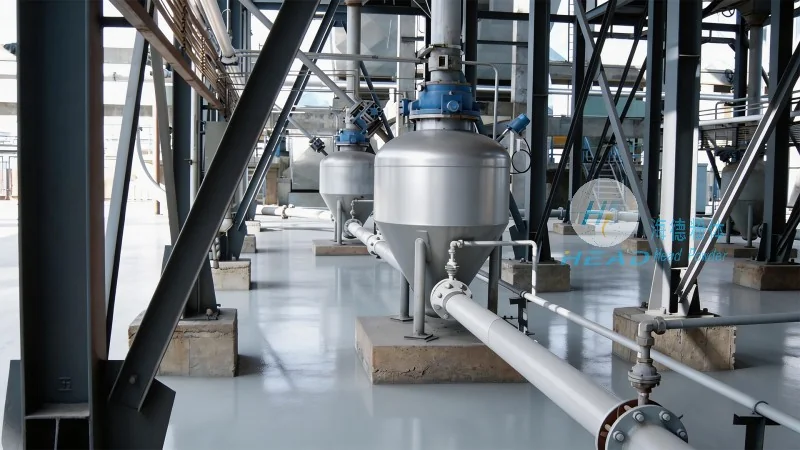
3. Conveying Pipeline: The pipeline is the main pathway for transporting the material-air mixture. It is typically made of stainless steel or other corrosion-resistant materials to withstand the abrasive nature of fertilizers and the effects of air pressure. The pipeline may include bends, elbows, and expansion joints to accommodate changes in direction and accommodate thermal expansion.
4. Air Source (Blower/Compressor): The blower or compressor generates the necessary air pressure to move the material through the pipeline. The air is introduced into the material stream at the inlet of the pipeline, creating a low-pressure zone that draws the material into the air stream. The air source is selected based on the required flow rate, pressure, and the characteristics of the material being conveyed.
5. Separator (Cyclone or Bag Filter): At the receiving end, the material-air mixture enters a separator, which separates the material from the air. The separator works by using centrifugal force (in a cyclone) or filtration (in a bag filter) to separate the solid particles from the air. The separated material is collected in a discharge bin, while the air is either recirculated back to the system or vented to the atmosphere.
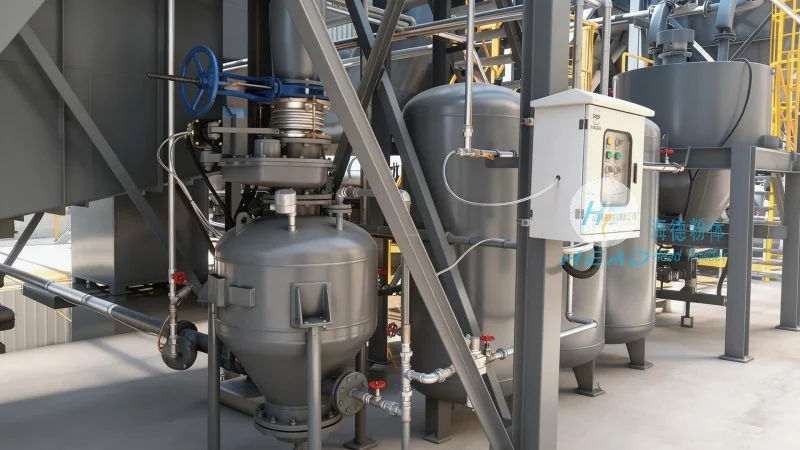
The operation of a compound fertilizer pneumatic conveying system follows a sequential process. First, the hopper is filled with compound fertilizer. The feeder then regulates the flow of material into the conveying pipeline. Simultaneously, the blower generates air pressure and introduces it into the pipeline at the inlet. The air and material mix, creating a dense phase or dilute phase flow, depending on the system design. The mixture travels through the pipeline to the receiving end, where the separator separates the material from the air. The separated material is collected and prepared for further processing or distribution. The air, now free of material particles, is either recirculated to improve energy efficiency or vented to the environment. This continuous cycle ensures efficient and reliable transport of compound fertilizers.
Implementing pneumatic conveying systems for compound fertilizer transport offers several significant advantages. Firstly, it provides high efficiency in material handling, as the system can transport large volumes of material over long distances with minimal labor. Secondly, it enhances safety by eliminating the need for manual handling of bulk powders, reducing the risk of dust explosions or material exposure. Thirdly, the system is highly flexible, allowing for changes in the conveying route or flow rate without major modifications. Additionally, pneumatic conveying systems are more hygienic and easier to clean compared to mechanical systems, which is crucial for maintaining product quality and compliance with industry standards. Finally, the technology is energy-efficient, as the air can be recirculated, reducing energy consumption and operational costs.
For businesses involved in the production and distribution of compound fertilizers, investing in a well-designed pneumatic conveying system is a strategic decision that can enhance operational efficiency, improve safety, and ensure compliance with industry regulations. By understanding the structure and principles of such equipment, companies can make informed choices that align with their specific needs and operational goals. Shandong HeadPowder Engineering Co., Ltd., a leading manufacturer based in China, specializes in providing high-quality pneumatic conveying solutions tailored to the unique requirements of fertilizer processing and transport. With a focus on innovation and customer satisfaction, HeadPowder offers reliable equipment that meets the demands of modern agricultural and industrial applications.

 Shandong Headpowder Engineering Co., Ltd.
 156-6277-7102(Manager Zhang)
  0531-83386006
  Zhangqiu District, Jinan City, Shandong Province, China
telephone
WeChatconsult
top