With more than 10‑year industry experience, Shandong Headpowder delivers full‑service pneumatic‑conveying systems and blowers, undertaking nationwide turn‑key powder‑handling projects.
Carbon black and coal powder are critical raw materials across multiple industrial sectors, including rubber, plastics, and energy production. The efficient and safe transportation of these fine powders is essential for maintaining production efficiency and ensuring product quality. Pneumatic conveying systems have become a preferred solution for handling such materials due to their ability to transport bulk solids through a pipeline network using air or other gases.
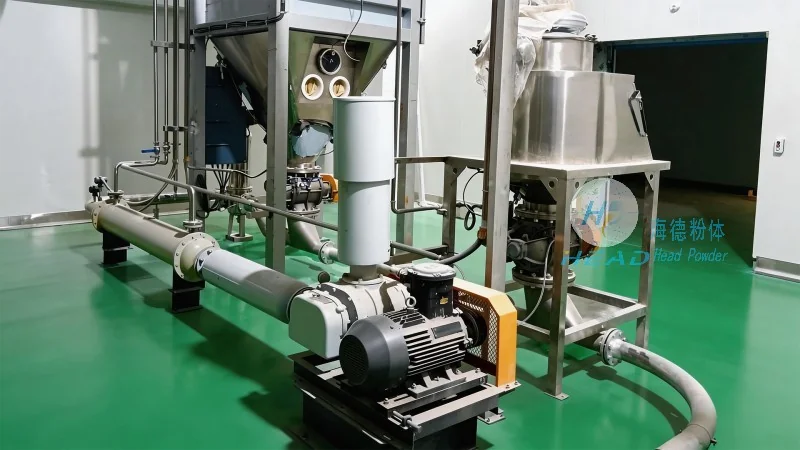
Pneumatic conveying systems utilize the force of air or gas to move bulk materials through a closed pipeline system. These systems are widely adopted in industries such as chemical processing, food processing, and mining, where the handling of fine powders is common. The primary benefit of pneumatic conveying is its ability to transport materials over long distances without the need for mechanical components like conveyors or elevators, which can suffer from maintenance issues and material degradation.
A typical pneumatic conveying system consists of several essential components that work in concert to ensure efficient material transport. These components include a material feed hopper, a conveyor line (operating under positive or negative pressure), a dust collector, and a discharge point. The material feed hopper stores and feeds the carbon black or coal powder into the system. The conveyor line is the main pipeline through which the material travels, and it can operate under either positive pressure (air is blown into the line to push the material) or negative pressure (air is drawn out to pull the material). The dust collector is crucial for removing airborne particles, ensuring compliance with environmental regulations and preventing material loss. The discharge point is where the material is released from the system, typically into a storage bin or processing equipment.
The working principle of a pneumatic conveying system for carbon black and coal powder involves creating a gas-solid flow within the pipeline. In a positive pressure system, a blower or compressor generates high-pressure air that is introduced into the conveyor line. The material is then introduced into the line, and the air flow carries the particles along the pipeline. The air velocity is carefully controlled to keep the particles suspended and prevent settlement or deposition on the pipeline walls. In a negative pressure system, a vacuum pump draws air out of the line, creating a suction force that pulls the material from the feed hopper into the pipeline. The material is then transported to the discharge point by this suction force.
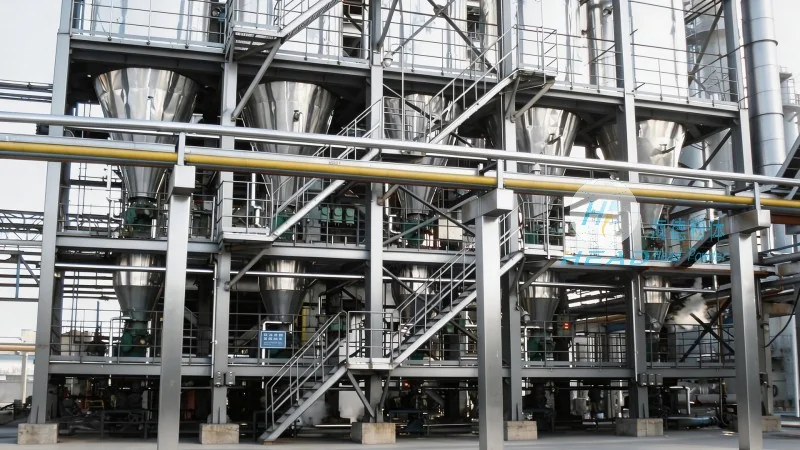
Pneumatic conveying systems offer several advantages when handling carbon black and coal powder. One key advantage is the closed system operation, which prevents contamination from external sources and reduces dust emissions. This is particularly important for carbon black, a fine powder that poses inhalation hazards. The closed system also helps maintain material quality by preventing moisture absorption or oxidation. Another advantage is the flexibility of the system, which can be easily modified to accommodate changes in production volume or material type. Pneumatic conveying systems can handle a wide range of particle sizes, from very fine powders to larger granules, making them suitable for diverse applications.
Pneumatic conveying systems are widely used in the handling of carbon black and coal powder across various industrial processes. In the rubber industry, for example, carbon black is used as a reinforcing agent in tire manufacturing. Pneumatic conveying systems transport carbon black from storage silos to mixing equipment, ensuring consistent and uniform blending. In the coal industry, pneumatic conveying is used to transport coal from mines to power plants or processing facilities. The systems can handle large volumes of coal and transport it over long distances without additional equipment. In the chemical industry, pneumatic conveying is used to transport coal powder as a fuel source for boilers or as a raw material in chemical reactions.
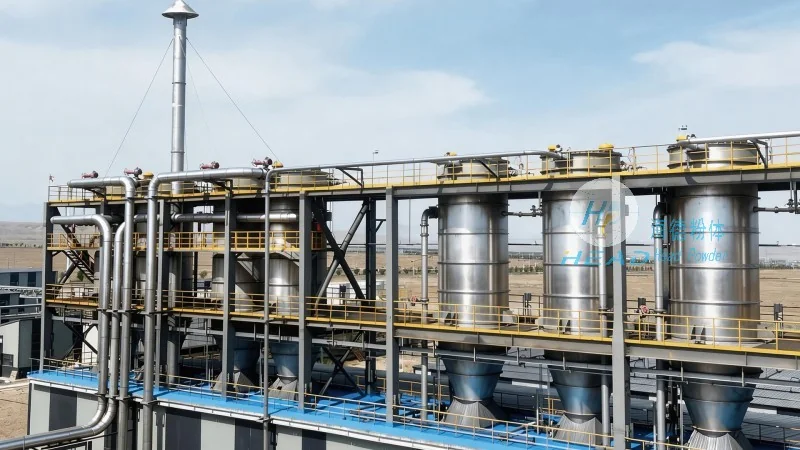
When designing a pneumatic conveying system for carbon black and coal powder, several factors must be considered to ensure optimal performance. The first is the particle size and density of the material. Particle size affects flow characteristics and required air velocity to keep particles suspended. Material density impacts pressure drop along the pipeline and power requirements. The second is the distance and elevation change of transport. Longer distances or greater elevation changes increase pressure drop and require more powerful blowers or vacuum pumps. The third is system layout and pipeline design. The layout should minimize bends and fittings to reduce pressure losses and material deposition. Pipeline sizing must accommodate flow rates and prevent blockages.
Maintenance is critical for long-term system performance. Regular checks include inspecting the conveyor line for wear or damage, checking the feed hopper for blockages or wear, and cleaning the dust collector to prevent clogging. If performance issues arise, troubleshooting is necessary. Common problems include pipeline blockages, excessive pressure drop, or poor material flow. These can stem from incorrect air velocity, clogged filters, or worn components. Proper maintenance and troubleshooting prevent downtime and ensure consistent material transport.
Pneumatic conveying systems are an effective and efficient method for handling carbon black and coal powder in industrial applications. They offer advantages like closed system operation, flexibility, and compatibility with various particle sizes. When properly designed and maintained, these systems provide reliable material transport, enhancing production efficiency and product quality. As demand for carbon black and coal powder grows, the adoption of pneumatic conveying systems will likely increase, further solidifying their role in material handling across industries.

 Shandong Headpowder Engineering Co., Ltd.
 156-6277-7102(Manager Zhang)
  0531-83386006
  Zhangqiu District, Jinan City, Shandong Province, China
telephone
WeChatconsult
top